What Do Bees Eat in Winter? Feeding, Stores, and Survival in Cold Climates
This post contains affiliate links. As an Amazon Associate, I earn from qualifying purchases at no extra cost to you.
Bees eat honey in winter. That is the short answer, and for most of beekeeping history it was the only answer. But modern cold-climate beekeeping has added layers to this - supplemental feeding with sugar syrup in fall, emergency fondant in late winter, and protein patties for spring buildup. I have watched colonies starve in February with honey frames just inches away from the cluster because the bees could not move to reach it in sustained cold. Understanding not just what bees eat but how they access food in winter is what separates colonies that survive from colonies that do not.
Safety Note: When preparing sugar syrup, use caution with large volumes of boiling or near-boiling water. Hot syrup causes severe burns. Allow syrup to cool to room temperature before placing feeders on hives. Never feed bees with syrup that contains additives, artificial sweeteners, or high-fructose corn syrup with hydroxymethylfurfural (HMF) - these are toxic to honeybees.
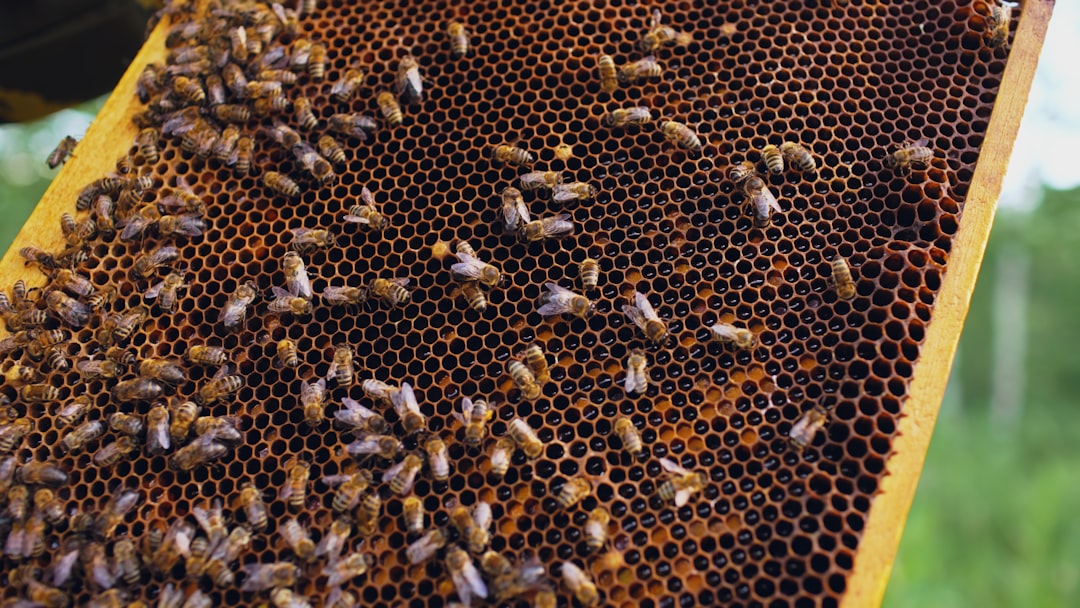
Photo by Vitaly Gariev on Unsplash
How Bees Eat During Winter
Honeybees do not hibernate. They form a tight cluster inside the hive and maintain a core temperature of approximately 35C (95F) at the center by vibrating their flight muscles. The bees on the outside of the cluster insulate those on the inside, and they rotate positions so no individual bee stays on the cold exterior for too long.
This process requires constant energy, and that energy comes from consuming stored honey. The cluster slowly moves through the hive as it eats, migrating upward and across frames as stores are depleted. In a healthy colony with adequate stores, this is a gradual, sustainable process that continues through the entire winter.
The problem arises when the cluster reaches the edge of available food and cannot bridge a gap to the next frame of honey. In sustained cold below -20C, the cluster contracts so tightly that bees physically cannot break away to move even a few inches. I have opened dead colonies in spring and found frames of capped honey on either side of a starved cluster - the food was right there, but the bees could not reach it. This is why the placement and distribution of stores matters as much as the total quantity.
Honey: The Primary Winter Food
How Much Honey Does a Colony Need?
In cold climates with 4-5 month winters (Manitoba, Minnesota, Alberta, northern Ontario, the Dakotas), a double-deep Langstroth colony needs 80-90 pounds of stored honey to survive from November through April. This is not a conservative estimate - it is the minimum for reliable survival.
In moderate cold climates with shorter winters (zones 5-6, roughly Ohio to Virginia), 60-70 pounds is typically sufficient.
You can estimate stores by hefting the hive from the back in late September. A full double-deep with 80+ pounds of honey is heavy - noticeably difficult for one person to tilt. If you can lift the back easily, the colony is underweight and needs supplemental feeding.
What Kind of Honey?
The bees’ own honey is the best winter food because it is the food they evolved to consume. Different nectar sources produce honey with different moisture content and crystallization properties. Canola honey, common in prairie regions, crystallizes rapidly and can become rock-hard in the comb. This is not ideal for winter consumption because bees have difficulty processing crystallized honey in cold temperatures.
If your bees are heavily foraging canola in summer, consider feeding 2:1 sugar syrup in fall to replace some of the canola honey with stores that remain liquid and accessible throughout winter.
Supplemental Feeding: Sugar Syrup
When a colony does not have adequate honey stores by late September, you supplement with sugar syrup. This is not a replacement for honey - it is a backup plan. The goal is always to have enough natural stores that feeding is unnecessary, but reality does not always cooperate.
Fall Feeding (September-October)
Feed heavy 2:1 sugar syrup (two parts white granulated sugar to one part water by weight). This mimics the sugar concentration of nectar that bees naturally process and store. Use a hive top feeder that holds several gallons so you can feed in volume without repeatedly opening the hive as temperatures drop.
Feed aggressively in September while nighttime temperatures are still above 10C (50F). Bees need warmth to process syrup - they evaporate the water content and cap the cells with wax, just as they do with nectar. Once sustained cold arrives, they can no longer dehydrate liquid feed effectively, and uncapped syrup will ferment.
The Cutoff
Stop feeding liquid syrup when nighttime temperatures consistently drop below 10C (50F). In most northern climates, this is mid to late October. After this point, switch to dry or semi-solid feed options.
What NOT to Feed
Brown sugar or raw sugar. Contains impurities that cause dysentery in bees during winter confinement. Use only white granulated cane or beet sugar.
Honey from unknown sources. Honey from other colonies or purchased honey can carry American foulbrood spores. Never feed honey from outside your own apiary.
High-fructose corn syrup. While commercial operations sometimes use HFCS, it can contain HMF (hydroxymethylfurfural) at levels toxic to bees, especially if stored at warm temperatures. White sugar syrup is safer and cheaper for backyard beekeepers.
Emergency Winter Feeding
If you discover in January or February that a colony is dangerously light on stores, you need to provide emergency feed without fully opening the hive and chilling the cluster. There are several options.
Fondant
Fondant is a soft, pliable sugar candy that bees can consume without adding water. You can buy baker’s fondant or make your own by heating sugar and water to the soft ball stage (240F/116C) and letting it cool. Place a 2-3 pound slab of fondant directly on top of the frames above the cluster.
The bees consume fondant slowly and the moisture from their own respiration helps soften it. It is not a long-term food source, but a 5-pound block can sustain a cluster for 3-4 weeks in an emergency.
Sugar Boards (Mountain Camp Method)
Spread 10-15 pounds of dry white granulated sugar on a sheet of newspaper placed directly on top of the frames. Mist lightly with water to create a crust that holds the sugar in place. The bees consume the sugar granules as needed, using the moisture from their cluster respiration to dissolve it.
Sugar boards are the simplest emergency feed. No cooking, no special equipment, just sugar and newspaper. I keep a 5-pound bag of granulated sugar in my bee shed all winter specifically for emergency feeding.
Candy Boards
A candy board is a more structured version of the sugar board - a frame that sits on top of the brood box filled with hardened sugar candy. Commercial candy boards include built-in ventilation and moisture management. They are more expensive than DIY options but provide a cleaner, more controlled feed.
How to Apply Emergency Feed
Crack the inner cover just enough to slide the feed in on top of the frames. Do not remove the outer cover and inner cover completely - this dumps cold air onto the cluster. A quick, minimal opening is all you need. The entire process should take under 60 seconds.
If you are using a moisture quilt, you may need to temporarily remove it to place feed directly above the cluster, then replace the quilt on top of the feed.
Spring Feeding: Stimulating Buildup
Once daytime temperatures begin reaching 10C (50F) consistently in early spring, you can switch back to liquid 1:1 syrup to stimulate brood rearing and comb building. Spring feeding mimics a nectar flow and tells the colony it is safe to start expanding.
Feed 1:1 syrup (equal parts sugar and water) in moderate amounts. The goal is not to fill the hive with syrup stores but to stimulate the queen to increase her laying rate. Stop feeding when natural nectar begins flowing or when the bees stop taking the syrup, whichever comes first.
Protein patties (pollen substitute) can also be placed on top of the brood frames in early spring to support brood rearing when natural pollen is not yet available. This is especially valuable in northern climates where the first pollen sources (willow, dandelion) may not bloom until late April or May.
For detailed research on honeybee winter nutrition and feeding strategies, the Ontario Beekeepers’ Association publishes seasonal management guides specific to cold-climate conditions.
FAQ
Can bees starve with honey still in the hive? Yes. This is one of the most common winter losses in cold climates. The cluster contracts in extreme cold and cannot move to reach honey frames that are just inches away. This is why distributing stores evenly across the brood box in fall (rather than having all honey on one side) improves survival. Some beekeepers rearrange frames in October to ensure honey flanks the cluster on both sides.
How do I know if my bees are running low on food in winter? Heft the hive from the back. A dangerously light hive is easy to tilt with one hand. You can also listen - a colony that is buzzing loudly and erratically rather than producing a steady, low hum may be stressed from food shortage. If in doubt, add emergency feed. The risk of feeding unnecessarily is zero. The risk of not feeding when needed is colony death.
Should I leave a honey super on the hive for winter? In cold climates, yes - if the brood boxes are not fully packed with stores. An extra medium super of honey above the brood nest provides a buffer that can mean the difference between survival and starvation. The bees will move up into it as they consume the stores below.
Do bees eat pollen in winter? Bees consume stored pollen (bee bread) primarily during brood rearing, which drops dramatically in winter but does not stop entirely. A small patch of brood is typically maintained throughout winter, so some pollen consumption continues. However, the primary energy source is honey. Pollen stores become critical in late winter and early spring when brood rearing ramps up rapidly.
Is it normal for dead bees to accumulate at the bottom of the hive in winter? Yes. Bees have a lifespan of roughly 4-6 months for winter bees. Some natural attrition occurs throughout winter, and dead bees accumulate on the bottom board. Undertaker bees remove dead bees on warmer days. If the entrance gets blocked by dead bees, clear it gently with a thin stick or wire so the colony can ventilate and take cleansing flights on warm days.
Related Reading
- How to Winter Bees in Cold Climates
- Best Hive Insulation for Cold Winters
- Beginner’s Guide to Starting a Beehive
Preparing for your first winter? Read our complete wintering guide for the full process from fall preparation through spring unwrapping.
About the Author
MB Beekeeping covers cold-climate beekeeping with a focus on practical techniques for northern winters. Our guides draw on hands-on experience keeping bees through prairie winters - we write about what actually works when temperatures drop below -30.