How to Read Brood Patterns and Spot Problems Early
This post contains affiliate links. As an Amazon Associate, I earn from qualifying purchases at no extra cost to you.
Learning to read your brood frames is one of the most important skills in beekeeping. A healthy brood pattern tells you the colony is thriving; an irregular one is often your first warning that something is wrong. In our experience working hives through the seasons, we have found that most problems - from spotty laying to disease - show up in the brood long before they become emergencies.
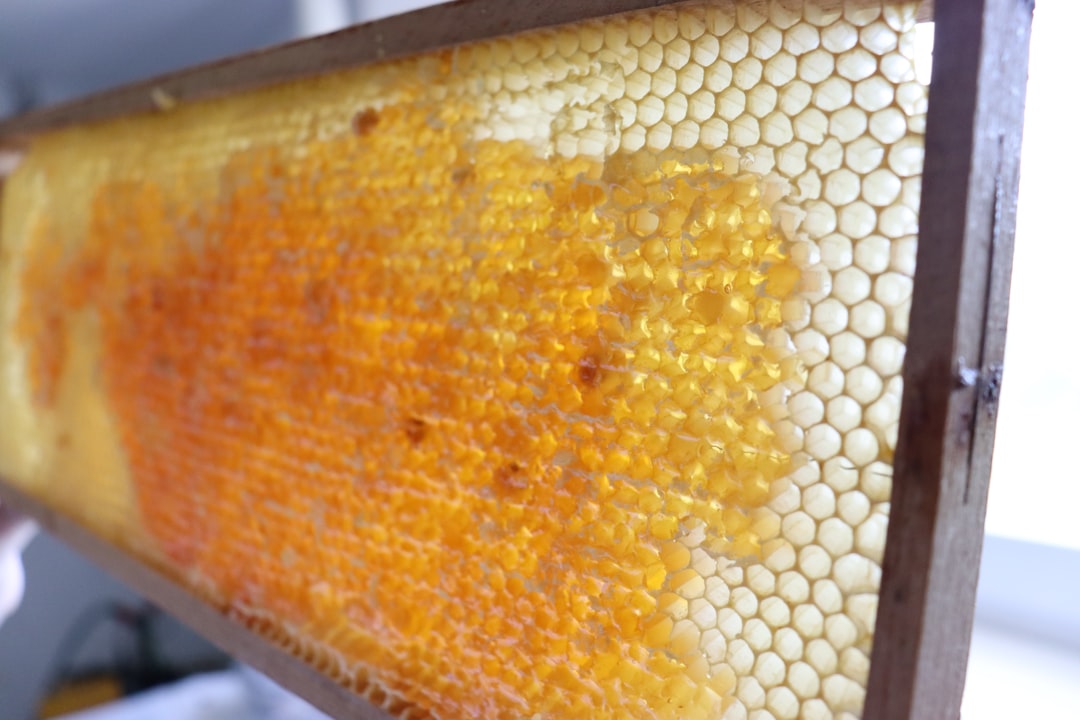
Photo by Sierk Horn on Unsplash
This guide walks you through what a healthy brood pattern looks like, what warning signs to watch for, and how to make sense of what you are seeing frame by frame. If you are just getting started with inspections, pair this with our guide on your first hive inspection: what to look for before you open the hive.
What Is Brood and Why Does It Matter?
Brood is the term for bees in their immature stages - eggs, larvae, and pupae - housed in the comb. The brood nest is the central region of the hive where the queen lays and workers raise the next generation. It typically occupies the lower boxes and the center frames, with honey and pollen stored in a ring around the outside edges.
Reading the brood frame gives you a direct window into the queen’s laying performance, the health of the larvae, and the presence of disease. A quick look at the brood nest during each inspection can catch problems weeks before they become colony-threatening.
What a Healthy Brood Pattern Looks Like
A healthy brood pattern is often described as “solid” or “compact.” When you pull a frame and hold it up to the light, you want to see cells that are consistently capped or consistently open, with very few empty cells scattered through the middle.
Here is what to look for on a frame with healthy capped brood:
- Cappings are uniform in color - tan to medium brown, slightly convex, and dry-looking. The surface should look slightly rough, not sunken or wet.
- The pattern is dense - at least 80 to 90 percent of cells in the brood area are occupied. Some beekeepers describe this as looking like a “football” shape on the frame.
- No unusual odors - healthy brood has a faintly sweet, warm smell. Anything sharp, sour, or putrid is a red flag.
On open (uncapped) brood frames, healthy larvae look pearly white, moist, and coiled in a C-shape at the bottom of each cell. They should be uniform in size within each stage and free from discoloration.
We have found that holding the frame at a slight angle with the sun at your back gives the best view of cell contents without shadows.
Spotty Brood Patterns: What They Mean
A spotty brood pattern - meaning many empty, skipped, or mismatched cells mixed through the brood area - is the most common sign that something is off. But the cause can vary widely.
Poor Queen Performance
The most common cause of a spotty pattern is a failing or poorly mated queen. If the queen is not laying consistently, you will see gaps throughout the brood nest. Compare the pattern to what you saw on your last inspection. A pattern that is getting progressively spottier over two or three visits points to queen trouble.
If you are uncertain whether the queen is the issue, check out our guide on how to identify the queen bee to confirm she is present and laying.
Varroa Mite Damage
A high Varroa load causes a very recognizable pattern: capped cells that are punctured or chewed open, deformed wings on emerging bees, and larvae or pupae pulled out of cells by workers (called “hygienic behavior”). You may also see discolored or sunken cappings as a secondary sign.
In our experience, Varroa-related brood damage tends to cluster in areas where capping density is highest - the center of the brood nest - because mites prefer cells that are about to be capped. If you are seeing these signs, do a mite wash as soon as possible. The University of Minnesota Extension has a detailed guide on Varroa monitoring methods that we reference regularly for threshold guidelines.
Laying Workers
If a colony has been queenless for several weeks, worker bees can develop the ability to lay unfertilized eggs. These produce drones only, and the pattern is extremely scattered - often with multiple eggs per cell, eggs on the cell walls (not centered on the floor), and small bullet-shaped cappings across the frame. The brood area will shrink quickly as no new worker brood is being raised.
Reading Capped Brood: Sunken and Punctured Cells
Cappings tell you a great deal about what is happening inside. Healthy cappings are uniformly convex and tan. Here is a quick reference for abnormal cappings:
Sunken or concave cappings: Workers may uncap and rechape cappings over dying pupae. Sunken cappings in a scattered pattern, especially with a foul smell, can indicate American foulbrood (AFB) - a serious bacterial disease that is regulated in most states. If you smell something like rotting gym socks and can pull a rubbery “rope” from a cell with a toothpick, stop the inspection and contact your state apiarist.
Punctured or chewed-open cappings with living pupae visible: This is often Varroa-related or a sign of sacbrood virus. Sacbrood causes dead pupae with a watery sac visible inside; the cappings are typically dark and slightly sunken.
Dark, greasy-looking cappings over open larvae: European foulbrood (EFB) kills young larvae before capping. The larvae may appear twisted or melted, yellow to brown in color, and may smell slightly sour. EFB is less lethal to the colony than AFB but still warrants treatment.
How to Inspect a Frame Systematically
A consistent inspection routine helps you catch subtle changes from visit to visit. Here is the approach we use:
- Smoke lightly and wait 60 seconds before opening the hive. This gives the smoke time to work.
- Pull a mid-frame first - this is usually where the heaviest brood is. Hold it vertically with both hands.
- Scan the frame in sections - top to bottom, left to right. Look at the cappings first (color, shape, uniformity), then tilt the frame to see open cells.
- Use a frame grip if the frame is heavy or your gloves reduce dexterity - a good grip lets you rotate the frame safely without risking a drop.
- Note the ratio of capped to open brood - a normal ratio in the brood nest during the active season is roughly 3:1 capped to open (because each stage takes different amounts of time).
- Check 3-4 frames on each side of the center to get a full picture of the brood nest.
Keep a simple inspection log - even a few notes on your phone. Tracking the pattern across visits is far more informative than a single snapshot.
Recommended Products
The right tools make a real difference when you are inspecting brood closely. These are the items we rely on for every inspection.
Goodland Bee Supply Stainless Steel Hive Tool - A durable J-hook hive tool makes prying frames apart clean and easy, especially in older comb where propolis has sealed everything tight. Worth having a second one as a backup.
Goodland Bee Supply Frame Grip Lifter - Once you have pulled a heavy frame, a frame grip lets you hold it at arm’s length and rotate it for a closer look at both sides without awkward glove fumbling.
Honey Keeper Stainless Steel Bee Smoker - Calm bees make for accurate inspections. A quality stainless smoker holds a coal longer and gives you consistent output through the whole inspection.
For supplemental larval health reference cards and printed disease identification guides, Mann Lake’s beekeeping supplies section carries laminated hive inspection guides that are worth keeping in your bee bag.
For beekeeping books and AFB testing kits, Dadant & Sons carries disease prevention supplies and identification resources that we have found useful when something does not look right on the frame.
As an Amazon Associate we earn from qualifying purchases at no extra cost to you.
A Note on Notifiable Diseases
If you suspect American foulbrood based on the rope-test or smell, do not move frames between hives and do not try to treat it with home remedies. AFB is a regulated disease in most U.S. states, and your state apiarist needs to be notified. Moving infected equipment spreads the spores and can devastate apiaries for miles around.
Bookmark this guide and check out our full hive inspection walkthrough to see how brood reading fits into your complete inspection routine.