How to Identify Common Bee Diseases
This post contains affiliate links. As an Amazon Associate, I earn from qualifying purchases at no extra cost to you.
Most new beekeepers lose their first colony not to bad luck but to a disease they didn’t recognize in time. A healthy-looking hive can deteriorate in weeks once an infection takes hold. Learning to identify common bee diseases during routine inspections is one of the most valuable skills a backyard beekeeper can develop, and it costs nothing but attention.
This guide covers the diseases you’re most likely to encounter: varroa mite infestations, American foulbrood, European foulbrood, nosema, chalkbrood, and sacbrood. For each one, you’ll learn what to look for, what it smells like, and what to do when you find it.
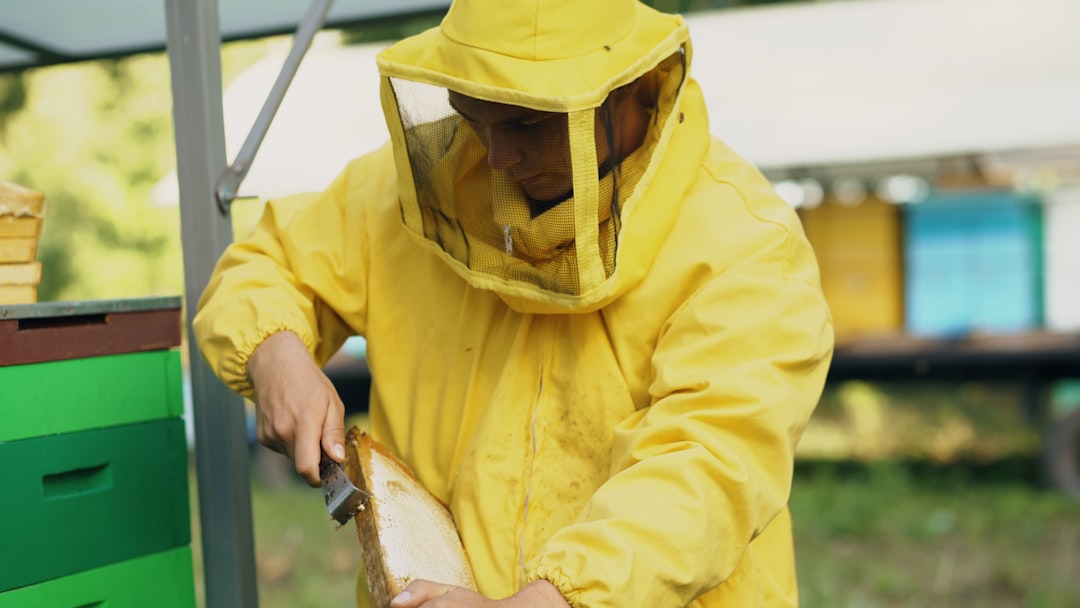
Photo by Vitaly Gariev on Unsplash
Why Disease Identification Matters for Every Beekeeper
Catching a disease early is the difference between a treatable problem and a dead colony. Some bee diseases, like American foulbrood, are so contagious that a single infected frame can spread to neighboring hives through drifting bees and robbing behavior. Others, like nosema, suppress the immune system quietly until the population collapses.
Regular inspections are your early warning system. If you’re not sure what a healthy hive looks like, start with our guide to your first hive inspection: what to look for. Once you have a baseline for normal, abnormalities become easier to spot.
The conditions that trigger many bee diseases are predictable: poor nutrition, moisture stress, high varroa loads, and overcrowding. Managing those factors reduces your disease exposure significantly. But no matter how carefully you manage your hives, diseases can still appear. When they do, you need to act quickly and correctly.
Varroa Mites: The Number One Threat to Hive Health
Varroa destructor is a parasitic mite that feeds on developing bee larvae and adult bees. It is present in virtually every managed colony worldwide and is the primary driver of colony collapse in unmanaged hives. Varroa doesn’t just weaken bees directly. It transmits deformed wing virus, sacbrood virus, and other pathogens as it feeds.
What to look for:
- Mites on adult bees, usually visible on the thorax or between abdominal segments. They appear as reddish-brown dots, roughly the size of a pinhead.
- Bees with shriveled, deformed wings crawling near the entrance (deformed wing virus, transmitted by varroa).
- Pupae with brown, spotted cappings rather than flat, uniform tan.
- A mite count above 2 per 100 bees on a sugar roll or alcohol wash indicates treatment is needed. Our post on how to read brood patterns covers the brood signs in more detail.
What to do:
If your mite count exceeds the treatment threshold, act before the next brood cycle. Two treatments we’ve used with good results:
- Apivar 2.0 Varroa Mite Treatment uses amitraz-impregnated strips placed between brood frames. Leave them in for 6-8 weeks per the label.
- Vita Bee Health Apiguard uses thymol gel and works well in warmer weather when hive temperatures support evaporation.
For oxalic acid, see our dedicated guide on how to do an oxalic acid treatment. Mann Lake also stocks a full range of varroa treatments and hive medications if you want to compare options before buying.
Safety note: Always read and follow the label before applying any varroa treatment. Wear gloves and wash hands thoroughly after handling Apivar strips. Do not apply amitraz-based treatments when honey supers are on the hive. Thymol treatments require temperatures between 59-105 degrees F to be effective.
American Foulbrood vs. European Foulbrood: How to Tell Them Apart
Foulbrood is the name for two bacterial diseases that attack bee larvae. They are caused by unrelated bacteria with similar names, and telling them apart matters because they require completely different responses.
| Feature | American Foulbrood (AFB) | European Foulbrood (EFB) |
|---|---|---|
| Pathogen | Paenibacillus larvae | Melissococcus plutonius |
| Stage affected | Capped larvae | Uncapped larvae (younger) |
| Appearance | Sunken, discolored cappings; larvae turn brown then black | Twisted, melted-looking larvae; yellow to brown color |
| Smell | Distinctly foul, like rotting flesh | Less severe; slightly sour |
| Ropiness test | Ropes out 1+ inch when a stick is inserted | Does not rope |
| Spore persistence | Spores survive in equipment for 50+ years | Does not form persistent spores |
| Treatment | No approved treatment; reportable disease; burn or irradiate | Requeening and improved nutrition often resolves mild cases |
| Spreadability | Extremely contagious | Less contagious |
American Foulbrood is the most serious bee disease you can encounter. If you insert a toothpick into a suspect cell and pull it out slowly, AFB-infected larvae will rope out in a stringy, elastic mass roughly 1-2 centimeters long. No other bee disease produces this result. The smell is unmistakable: a sharp, putrid odor unlike anything else in beekeeping.
AFB is a notifiable disease in most U.S. states and many countries. If you suspect AFB, stop moving frames between hives, contact your state apiarist, and do not attempt to treat or sell infected equipment. In most jurisdictions, infected colonies must be destroyed.
European Foulbrood usually appears in spring when the colony is expanding rapidly and the brood may outpace the nurse bees’ ability to keep larvae fed. Larvae infected with EFB die before their cells are capped, so the visual pattern is scattered dead larvae in an otherwise normal brood area. The larvae appear twisted and discolored but do not rope. In our experience with EFB, a strong requeening combined with supplemental feeding often clears up a mild case within a brood cycle.
The Penn State Extension field guide to honey bee maladies is an excellent free reference for visual identification in the field.
Nosema, Chalkbrood, and Sacbrood: Three More Diseases to Know
Beyond foulbrood and varroa, three other diseases come up regularly in backyard apiaries.
Nosema
Nosema is caused by a microsporidian fungal parasite (Nosema ceranae is now the dominant strain in North America) that infects the bee’s gut cells. Unlike older strains, N. ceranae does not always produce the classic symptom of brown streaking on the outside of the hive.
Signs of nosema include a slow spring buildup despite good queen performance, adult bees unable to fly, crawling near the entrance, and population decline that doesn’t match weather or foraging conditions. Definitive diagnosis requires microscopy to examine bee gut contents, but a field presumption is reasonable when the population is declining without other obvious cause.
Good nutrition is the best prevention. Hives with ample pollen stores going into winter are significantly less susceptible. Fumagillin is no longer available in the U.S. Current management focuses on requeening with hygienic stock and improving colony nutrition.
Chalkbrood
Chalkbrood (Ascosphaera apis) is a fungal disease that mummifies bee larvae. Infected pupae harden into white, chalky pellets that the house bees eject from cells and deposit near the hive entrance or on the landing board. These small white or grey pellets, sometimes called “mummies,” are the diagnostic sign.
Chalkbrood is more unsightly than fatal. Hives often clear it on their own in warm, dry weather. Persistent chalkbrood usually signals a moisture problem inside the hive, a weak colony that can’t remove infected cells quickly, or a queen whose offspring lack genetic hygienic tendency. Requeening with hygienic stock is the most effective long-term fix.
Sacbrood
Sacbrood virus causes larvae to die just before they pupate. The larva turns into a fluid-filled sac with a characteristic dried shape: the head curls upward while the tail stays flat, giving it a canoe-like appearance. Infected cells have sunken cappings similar to AFB, but the ropiness test is negative and the smell is mild.
Most colonies clear sacbrood on their own. If it persists across multiple brood cycles, requeening is recommended. In our experience with mild sacbrood cases, colonies with strong hygienic behavior resolved the problem without intervention within 4-6 weeks.
How to Identify Common Bee Diseases During a Hive Inspection
A structured inspection routine takes the guesswork out of disease spotting. Here is the approach we use on every inspection.
Step 1: Observe before you open. Watch the entrance for 1-2 minutes. Are bees returning with pollen? Are there crawlers near the entrance? Any dead bees with deformed wings? Dead or ejected larvae on the landing board? This exterior check often flags a problem before you open the box.
Step 2: Check for smell when you remove the cover. A healthy hive smells like warm wax and honey. A sharp, rotten odor before you even pull a frame is a warning sign for foulbrood. Note it immediately.
Step 3: Inspect brood frames systematically. Hold each frame at an angle to the light so it illuminates the cell bottoms. Look for:
- Uniform tan cappings (healthy sealed brood)
- Any sunken, wet, or punctured cappings (possible AFB or EFB)
- Scattered dead larvae in open cells (possible EFB or sacbrood)
- Mummies on the bottom board or near cells (chalkbrood)
- Discolored cappings with pinhole punctures (varroa in capped cells, often created by hygienic bees)
Step 4: Do the ropiness test if something looks off. Insert a stick or grass stem into any suspicious capped cell. If the contents rope out more than 1 cm when you withdraw it, treat it as AFB until confirmed otherwise. Stop the inspection, bag the frame, and contact your state apiarist.
Step 5: Check adult bees. Look at bees on the comb surface. Any with shriveled wings or distended abdomens? Any that look hairless or have K-wings (where the hindwing separates from the forewing at an angle)? These signs point to viral infections often carried by varroa.
Step 6: Record what you find. Even “hive looks healthy” is a useful data point. Date, colony ID, and any observations. A written record makes it much easier to track whether a problem is improving or worsening over time.
Common Mistakes When Diagnosing Common Bee Diseases
Even experienced beekeepers make these errors. Knowing them in advance saves time and colonies.
Misidentifying varroa as a disease. Varroa is a parasite, not a disease, but its damage is often diagnosed as disease. Deformed wing virus is caused by a virus, but varroa is the vector. Treating for disease when the real problem is mite load will fail every time. Always do a mite count before assuming a viral cause.
Confusing chalkbrood with sacbrood. Both produce hardened or dried larvae in cells. Chalkbrood mummies are chalky white or grey pellets; sacbrood larvae have a distinctive sac shape with the head curled upward. Mixing them up leads to different and incorrect management responses.
Assuming a spotty brood pattern means disease. Spotty brood has many causes: a failing queen, poor mating, laying workers, chilled brood after a cold snap, or a queen whose egg-laying slowed due to a nectar dearth. Disease is one possible cause, but it is not the only one. Inspect the capped brood quality before jumping to a disease diagnosis.
Moving frames between hives after noticing a problem. This is how AFB spreads. Once you see anything unusual, do not move frames until you know what you’re dealing with.
Treating without a confirmed mite count. Over-treating for varroa builds treatment resistance and stresses the colony unnecessarily. Always count before you treat. We’ve seen hives with apparently healthy populations that had mite levels requiring immediate intervention, and stressed-looking hives with counts well below the treatment threshold.
Delaying the call to your state apiarist. If you suspect AFB, make the call the same day. Apiarists are not there to fine you. They are there to help you, and early intervention limits spread to neighboring beekeepers.
Frequently Asked Questions
Can I treat American foulbrood with antibiotics?
No. Antibiotics like oxytetracycline (Terramycin) were historically used for AFB prevention but do not kill the spores that cause recurrence. In most jurisdictions they are no longer approved for this use. AFB spores survive in equipment for decades and will reinfect a new colony if the old combs are reused. Infected equipment must be burned or treated by irradiation. Contact your state apiarist before taking any action.
How do I tell healthy brood from sick brood at a glance?
Healthy sealed brood has a uniform, slightly convex tan or light brown capping with no holes or sunken areas. The cappings have a slight texture but are consistent across the frame. Sick or problematic brood typically shows sunken or perforated cappings, irregular coloration darker or patchier than surrounding cells, or cells that appear wet when light hits them at an angle. A frame with scattered empty cells mixed through brood that should be solid is worth a closer look.
My hive smells bad. Does that mean foulbrood?
A bad smell during an inspection warrants attention but is not automatically foulbrood. Dead bees decomposing, a dead mouse inside the hive, or a blocked entrance trapping moisture can produce unpleasant odors. The AFB smell is specific: sharp, acrid, and unmistakably like decomposing meat. If you are unsure, do the ropiness test on any suspect cells. No ropiness means AFB is unlikely, though not impossible.
What does nosema look like?
Nosema does not have a visually distinctive presentation the way foulbrood does. The signs are behavioral and demographic: unexplained slow buildup in spring, adult bees crawling and unable to fly, and population decline that doesn’t match other explanations. Brown streaking on the outside of the hive was associated with older N. apis infections; N. ceranae (now dominant) often presents without this sign. Definitive diagnosis requires microscopy.
Are oxalic acid strips useful for disease prevention beyond varroa?
Varroxsan Oxalic Acid Strips target varroa mites specifically, not bacterial or fungal diseases. They are a useful part of your varroa management rotation, especially for broodless periods where oxalic acid is most effective. For AFB, EFB, nosema, or chalkbrood, oxalic acid won’t help. Dadant also carries a full selection of approved hive medications and pest control treatments if you need to compare options.
What to Do After You Identify a Disease
Finding a disease in your hive is stressful, but a clear response plan limits the damage.
If you suspect AFB: stop moving frames, close up the hive, and contact your state apiarist the same day. Do not attempt to treat or sell equipment.
For EFB: improve nutrition and consider requeening. Mild cases often resolve within a brood cycle.
For chalkbrood: improve ventilation, reduce hive moisture, and consider requeening if it persists.
For sacbrood: monitor for 4-6 weeks. Persistent cases warrant requeening with hygienic stock.
For varroa: count before you treat, then use an approved treatment appropriate for your current conditions.
Regular inspections every 7-10 days during the active season give you the earliest possible warning. A disease caught in week one is a manageable problem. A disease caught in week six is a crisis.
Related reading: How to Read Brood Patterns and Spot Problems Early is a companion guide to using your inspection skills for disease detection.
If this guide helped you identify something in your hive, bookmark it for your next inspection. The more familiar these patterns become, the faster you’ll catch problems before they escalate.