Natural Small Hive Beetle Control Methods
This post contains affiliate links. As an Amazon Associate, I earn from qualifying purchases at no extra cost to you.
Small hive beetles are one of those pests that a lot of new beekeepers underestimate right up until the moment a hive collapses. The beetle itself is small, dark, and easy to dismiss during an inspection. But under the right conditions, a population explosion can trigger colony abandonment, leave your honey frames smelling like rotting oranges, and destroy a hive that was otherwise healthy heading into summer.
The good news is that small hive beetles are very manageable with the right combination of traps, hive design, and habitat control. You don’t need harsh chemical treatments to keep them in check. We’ve been dealing with SHB pressure in our warm-climate apiaries for several years, and the methods that have worked most consistently are straightforward and repeatable.
This guide covers everything from identifying an early infestation to deploying traps, adjusting your hive setup, and tackling the beetle population in the soil before they ever make it back inside.
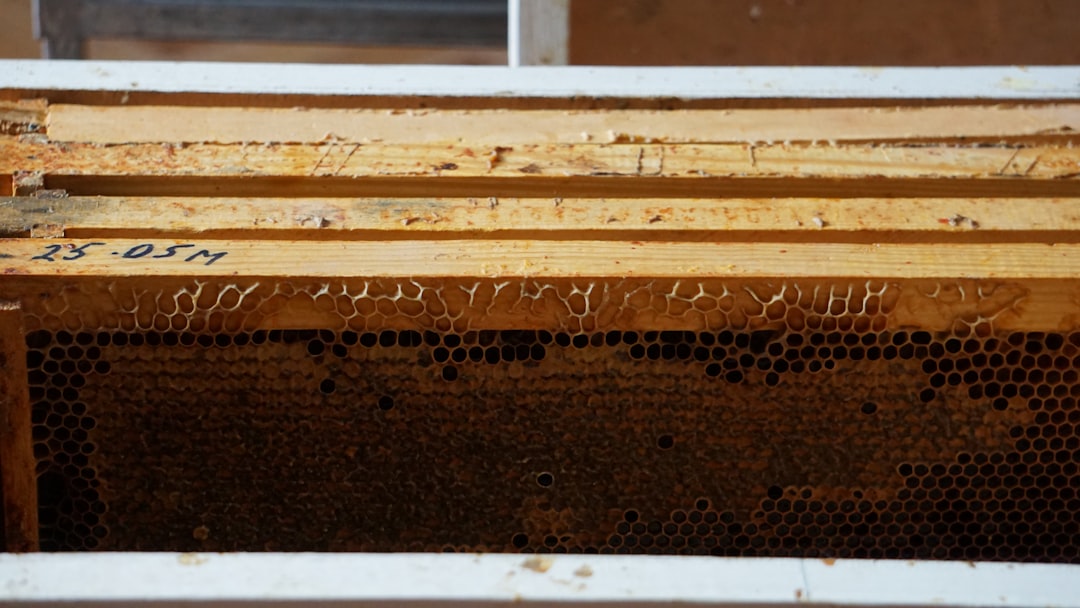
Photo by Dmytro Glazunov on Unsplash
What Is the Small Hive Beetle and Why Is It Dangerous?
The small hive beetle (Aethina tumida) is a parasitic beetle native to sub-Saharan Africa. It was first detected in the United States in Florida in 1998 and has since spread throughout most of the country, with the heaviest pressure in warm, humid regions like the Southeast, Gulf Coast, and parts of the Southwest. It can also survive in cooler climates when conditions during summer months are favorable.
Adult beetles are roughly 5 to 7 millimeters long, oval-shaped, and dark brown to black. They are noticeably smaller than a honey bee, which is one reason inexperienced beekeepers sometimes spot them and move on without realizing what they are. The real damage is done not by the adults but by the larvae.
Female beetles lay eggs in crevices throughout the hive, often in protected corners away from bees, in propolis traps, or along the bottom board. Each female can lay hundreds of eggs over her lifetime. The larvae hatch and immediately begin feeding on honey, pollen, and brood. As they feed, they defecate throughout the comb, introducing yeast that causes the honey to ferment and produce a characteristic slimy, foul-smelling mess. Bees cannot tolerate this environment and, in severe cases, will abscond entirely, abandoning all drawn comb, stored honey, and brood.
When beetle numbers are low and the colony is strong, the bees manage the infestation themselves by chasing beetles into corners and encasing them in propolis. This is the key insight behind most natural control strategies: you are not trying to eliminate SHB entirely, which is nearly impossible once they are established in your area. You are trying to keep populations below the threshold where the bees cannot police them. The University of Florida IFAS Extension describes this policing behavior in detail and notes that strong colonies with adequate bee coverage on all frames rarely suffer significant beetle damage.
How to Identify a Small Hive Beetle Infestation Early
Catching an SHB problem early is far easier than managing one after the population has exploded. During regular hive inspections, there are several signs to watch for.
The first thing to check is the bottom board. When you open the hive and look down through the frames, beetles will often scatter and run toward dark corners and crevices. They move quickly and deliberately, which distinguishes them from small cockroaches or other debris. On a screened bottom board, some beetles will fall through and land on a sticky board below. Checking this sticky board is one of the fastest ways to get a sense of your beetle load without disturbing the colony.
On frames, look at the corners and along the bottom bars. Beetles prefer tight spaces where bees cannot easily reach them. You may also see propolis jails: small propolis-sealed cells where bees have entombed living beetles that cannot escape. This is a sign your bees are fighting back and it is a healthy behavior to encourage rather than disrupt.
The slimed honey smell is unmistakable once you know it. If you lift a frame and catch a faint fermented or citrus-like odor, particularly concentrated in a corner of the hive or in a super, suspect SHB larvae activity. Inspect those frames closely and you will often find small creamy-white larvae with rows of small spines along their backs burrowing through the comb.
If you are unsure what to look for during inspections, our guide on your first hive inspection: what to look for covers frame-by-frame inspection technique and how to distinguish different types of larvae.
Early warning threshold: if you are seeing more than a dozen beetles scatter on opening the hive, or finding larvae in comb, the population is already elevated. One or two beetles running across the bottom board after every inspection is not a crisis, but it warrants deploying traps and monitoring closely.
Natural Small Hive Beetle Traps That Actually Work
Traps are the most widely used and effective front-line tool for SHB control in hobbyist apiaries. The basic principle is the same across most designs: lure or herd the beetles into a container of food-grade oil, which drowns them. Bees cannot get trapped because they are too large or the trap openings are bee-sized exclusions.
Types of Beetle Traps
Beetle Blasters and slot traps are the most common commercial design. These are narrow plastic trays that fit between frames in the top box. You fill them with vegetable oil or mineral oil, and as beetles flee from bees across the frame surface, they fall into the tray and drown. They are inexpensive, reusable, and unobtrusive. The main limitation is that they only capture beetles actively fleeing on frame surfaces and do not attract beetles from across the hive.
Oil cup traps (AJ-style) sit on the bottom board and use a larger reservoir of oil. They intercept beetles running along the bottom board toward the hive edges. These are particularly effective for catching beetles that have evaded the frame-level traps.
Screened divider boards modify the interior of the hive to reduce the number of unguarded refuges for beetles. They are used alongside traps rather than instead of them.
Entrance reducers combined with tight bottom boards reduce the number of hiding spots and make it harder for adult beetles to enter the hive from outside.
Trap Comparison
| Trap Type | Placement | Mechanism | Best For |
|---|---|---|---|
| Beetle Blaster (slot trap) | Between frames | Oil drowning | Active SHB fleeing bees |
| Oil cup (bottom board) | Bottom board | Oil drowning | High-pressure environments |
| Sticky board | Below screened bottom | Physical trapping | Monitoring and light pressure |
| AJ-style entrance trap | Entrance | Oil drowning | Supplemental outside entry interception |
The Foxhound Bee Company Beetle Traps (12 Pack) are a reliable slot-style trap we have used for several seasons. They fit standard Langstroth frames without modification and the wide reservoir holds enough oil to last two to three weeks between refills. For heavier beetle pressure, the Foxhound Extra Long Beetle Traps (12 Pack) cover more of the frame width, which is useful in hives where beetles are dispersed across the box rather than concentrated at the edges.
For those who prefer the beetle blaster style, the witbee 20Pcs Hive Beetle Blaster Trap is a budget-friendly option that works identically to name-brand versions. We have used both and found no meaningful performance difference for most hobbyist hives.
Mann Lake carries the Beetle Blaster if you prefer to order from a dedicated beekeeping supplier, and Dadant stocks the Small Hive Beetle Trap for 10-frame hives as well.
Oil choice: Use vegetable oil, olive oil, or food-grade mineral oil. Avoid motor oil or any non-food-safe oil. Vegetable oil will cloud and thicken in cold weather; mineral oil stays consistent year-round and is often preferred in variable climates.
Refill schedule: Check traps every 7 to 14 days. Dump dead beetles into soapy water, rinse, and refill. A trap full of dead beetles loses its effectiveness and can become a breeding site for other organisms.
Hive Management Strategies That Naturally Suppress Small Hive Beetles
Traps alone are not enough if the underlying conditions in your apiary favor beetle proliferation. Long-term SHB management is as much about hive configuration and colony strength as it is about the hardware you put inside the hive.
Keep colonies strong. This is the single most important factor. A colony with enough adult bees to cover every frame of comb will police beetles effectively. A weak colony with large empty spaces in the hive body will not. If a hive is declining due to queenlessness, disease, or varroa, it is also vulnerable to beetle damage. Address the root cause of weakness first, then worry about beetles.
Right-size the hive space. More hive boxes means more unguarded territory. A two-frame colony crammed into a double deep with a super is fighting a losing battle against SHB. Consolidate weak colonies into smaller equipment and remove empty boxes. The goal is to keep every frame of drawn comb covered by bees.
Use a screened bottom board. A screened bottom board allows beetles knocked off frames by bees to fall out of the hive rather than land on the bottom board and run back up. Many beekeepers pair this with a sticky board below the screen to trap fallen beetles. Screened bottom boards are standard on most modern hive setups and are worth having regardless of beetle pressure in your area.
Manage shade and moisture. Beetles thrive in dark, humid conditions. Hives in heavy shade with poor air circulation tend to have higher beetle loads than hives in partial sun with good ventilation. If your site allows it, orienting hives to get morning sun and afternoon shade reduces humidity inside the box and makes the environment less hospitable to beetles.
Reduce hive debris. Clean up wax burr comb, old propolis, and comb fragments on the bottom board regularly. These provide additional hiding places for beetles and can make trapping less effective.
Inspect regularly. Consistent 7 to 10 day inspections in spring and summer allow you to catch a beetle population increase before it becomes critical. Beetles reproduce quickly in warm weather, so a manageable problem in June can become a crisis by August if left unchecked. See our guide on identifying common bee diseases and hive pests for a broader inspection framework that covers multiple hive health issues at once.
Using Beneficial Nematodes to Break the Small Hive Beetle Life Cycle
One of the most overlooked but genuinely effective natural control methods targets the beetle not inside the hive, but outside it. SHB larvae that have finished feeding inside the hive drop to the ground below the hive entrance, burrow 2 to 8 inches into the soil, and pupate. After several weeks, adult beetles emerge and re-enter hives. This soil stage is a critical vulnerability in the SHB life cycle.
Beneficial nematodes, specifically Heterorhabditis bacteriophora and Steinernema carpocapsae, are microscopic roundworms that parasitize insect larvae in the soil. Applied around the base of your hives, they seek out beetle pupae and kill them before the next generation of adults can emerge. They are harmless to bees, earthworms, mammals, and most beneficial insects.
How to Apply Nematodes
- Purchase live nematodes from a garden supply or beekeeping supplier and confirm they are still viable before applying. Nematodes die rapidly if stored incorrectly or applied when soil temperatures are outside their effective range (they work best between 55 and 90 degrees Fahrenheit).
- Mix nematodes with cool, unchlorinated water according to the package directions. Chlorinated tap water will kill them; use rainwater or water that has been left out overnight to off-gas chlorine.
- Apply in the early morning or late evening to avoid UV exposure, which degrades nematodes quickly.
- Target a 3 to 6 foot radius around each hive base, applying enough water to get the nematodes 2 to 4 inches into the soil. Damp soil is required; if the area is dry, pre-water it the day before.
- Keep the soil moist for at least a week after application to ensure nematodes establish and move through the soil.
Repeat application every 4 to 6 weeks through the active beetle season (typically April through October in warm climates). When we first applied nematodes to a pair of hives in our apiary that had chronic beetle pressure, we noticed a measurable reduction in adult beetles inside the hive within three to four weeks of the first application. It is not a silver bullet, but as part of a layered approach alongside traps and strong colonies, it makes a real difference.
One practical limitation: if your hives are on concrete pads, pavers, or hardpack, nematodes are not useful. They require penetrable soil. If your apiary setup does not allow for soil treatment, focus your energy on in-hive traps and colony strength.
Common Mistakes That Make Small Hive Beetle Problems Worse
Safety note: Never apply insecticides or pesticides inside or directly around an active beehive in an attempt to kill beetles. Any chemical treatment strong enough to kill small hive beetles inside a hive will also harm or kill your bees. If a colony collapses due to SHB damage, contact your state apiarist before removing equipment – American foulbrood and other regulated diseases can present alongside beetle damage in collapsed hives and may require official documentation or disposal protocols.
Leaving drawn comb empty and unguarded. Stored supers or brood boxes left in a garage, shed, or bee yard without bee coverage are extremely attractive to SHB. Beetles will infest and destroy stored equipment rapidly. Freeze drawn comb before storage (24 to 48 hours at 0 degrees Fahrenheit kills all beetles and larvae) or store it in a tightly sealed bag with paradichlorobenzene moth crystals, not naphthalene. Never freeze and store in a bag with warmth inside – moisture destroys comb.
Using oil traps with the wrong fill level. A trap filled too high will trap bees. Fill beetle blaster traps only to the fill line or to about halfway. Check the first batch of traps 48 hours after deployment to confirm no bees are drowning.
Treating for beetles while ignoring varroa. Colonies weakened by varroa are far more vulnerable to SHB damage because bee population declines leave comb unguarded. If you have both varroa and SHB pressure at the same time, varroa treatment comes first. A recovered colony can police beetles; a collapsed colony cannot.
Splitting or removing frames without checking for beetle eggs. When you move frames between hives, you can transport beetle eggs and early-stage larvae that are not yet visible. If you are splitting a hive or doing a walk-away split, inspect any frames you are moving carefully, particularly in corners and along the bottom bar. A beetle infestation in a weak split can eliminate the split before the new queen even lays.
Ignoring the apiary ground. In warm climates, beetles can cycle from larva to pupae to adult in as little as three weeks in warm soil. If you have heavy SHB pressure and you are only treating inside the hive, you are perpetually fighting the same beetles returning from the soil around your hives. Ground-level control via nematodes or even a layer of crushed stone or diatomaceous earth under the hive can disrupt this cycle.
Relying on a single control method. No single trap, management change, or treatment fully solves an SHB problem. The beekeepers with the most consistent results use a layered approach: strong colonies, right-sized equipment, beetle traps in every box, and soil treatment in warm months.
FAQ
How many small hive beetle traps do I need per hive?
For a two-box hive (a brood box plus a super), two traps is a reasonable minimum – one per box. Place them along opposite sides of the box so beetles fleeing from either end have a short path to the trap. In a two deep brood box setup, use two to three traps in the bottom box where most beetle activity occurs and one in the honey super. During peak summer months in warm climates, we run three traps in the brood area and two in each active super.
Will my bees clean out dead beetles from traps?
Sometimes, partially. Bees will remove beetle bodies from within the hive, but they do not typically clean oil traps. You need to empty and refill traps yourself. Dead beetles that pile up in oil traps without being cleared can act as a lure for more beetles in some cases, and a full trap no longer has room for newly drowned beetles.
Do small hive beetles carry diseases that can spread to my bees?
Not directly in the way that Varroa mites vector viruses. However, the fermentation that SHB larvae cause in honey frames does introduce yeast and bacteria that create an inhospitable environment for bees. The greater health threat is the indirect one: colony stress from a heavy SHB infestation weakens the colony’s overall immune response and makes it more vulnerable to other pathogens. This is one more reason to manage beetles proactively rather than waiting for a crisis.
Are small hive beetles a problem in cold climates?
SHB survives best in warm climates (USDA hardiness zones 7 and above) and is rarely a serious problem in regions with cold winters. Beetle populations crash when soil temperatures drop below about 50 degrees Fahrenheit, which prevents successful pupation. If you are in the northern US, Canada, or a high-elevation location with hard winters, you are unlikely to deal with significant beetle damage. If you are in the Southeast, Gulf States, California, or similar warm climates, SHB management should be a routine part of your seasonal beekeeping plan.
Can I use diatomaceous earth (DE) around the hive to kill beetles?
DE can be effective at killing beetle larvae in the soil around the hive but should never be used inside the hive or near the entrance. Bees breathing DE dust can develop respiratory problems. If you use DE as a soil treatment, apply it 6 to 12 inches away from the hive entrance and avoid any application that could drift toward the flight path.
At what time of year are small hive beetles the biggest problem?
SHB pressure peaks during warm, humid months – generally May through September in most US climates. Populations drop sharply in fall as temperatures cool and larvae cannot successfully pupate. Winter inspections in warm climates still reveal some adult beetles sheltering in the hive, but they are largely inactive below 50 degrees Fahrenheit and pose little threat to a colony with adequate winter population.
Conclusion
Small hive beetles are a manageable pest for any beekeeper willing to be consistent. The approach that works is not one dramatic intervention but a combination of strong colonies, right-sized equipment, reliable traps, and soil-level control during warm months. Deploy at least two traps per box, keep colonies robust enough to police themselves, and if you are in a warm climate, treat the soil around your hives with nematodes from late spring through early fall.
If you are new to SHB and just getting your first traps set up, start with slot-style oil traps in the brood box, confirm they are filled to the right level, and check them at your next inspection. Build from there.
Bookmark this guide for reference at the start of each beetle season.
Related reading: How to Identify Common Bee Diseases and Hive Pests