How to Make and Use a Screened Bottom Board
This post contains affiliate links. As an Amazon Associate, I earn from qualifying purchases at no extra cost to you.
A solid bottom board might seem fine when you first set up a hive, but once varroa mites become a serious concern (and they always do), you’ll want the ability to monitor your mite load without pulling every frame. That’s where a screened bottom board earns its place in every serious beekeeper’s setup.
We’ve used screened bottom boards on all of our hives for several years now, and the difference in how well we can track mite levels is significant. This guide covers what a screened bottom board actually does, when to use it with the insert closed versus open, and how to build your own if you want to go the DIY route.
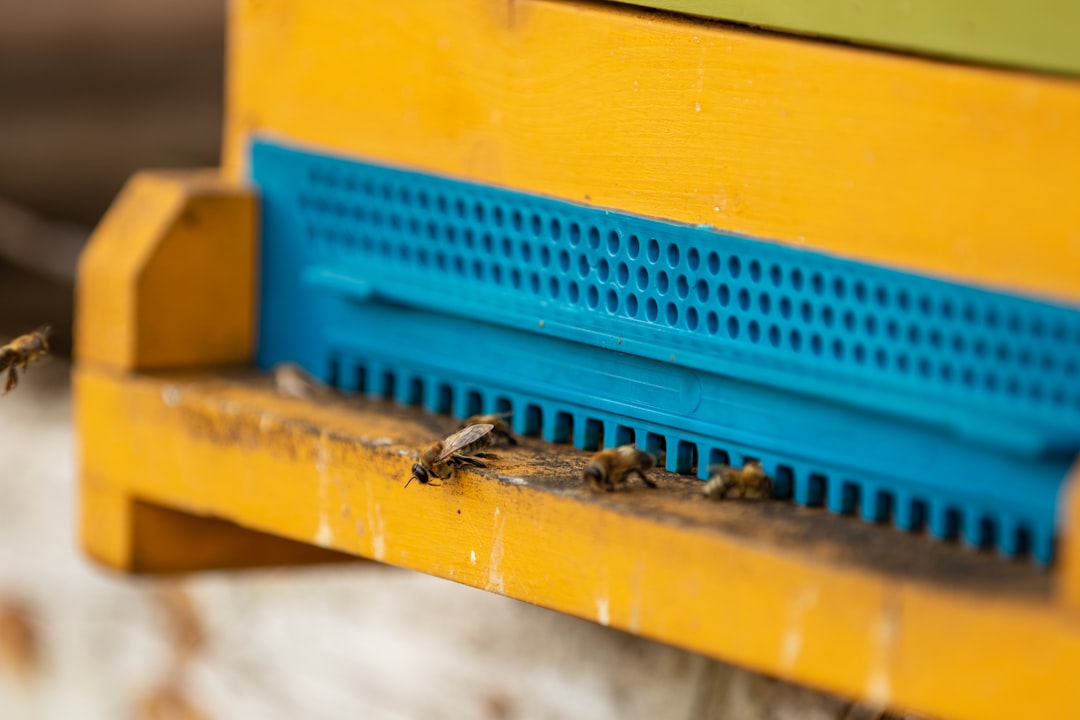
Photo by Andreas Schantl on Unsplash
What Is a Screened Bottom Board?
A screened bottom board replaces the solid wooden floor of a Langstroth hive with a frame covered in 8-mesh hardware cloth (1/8-inch openings). Below the mesh sits a removable tray, often called a sticky board or monitoring insert, that slides in and out without disturbing the bees.
The concept is straightforward: mites, debris, and hive litter fall through the mesh and land on the tray below. Bees can’t reach the tray to clean it up, so any mites that fall stay put for counting. When you pull the tray after 24 to 48 hours, you get a snapshot of your infestation level based on how many mites dropped during that period.
Screened bottom boards also improve airflow through the hive, which helps manage heat in summer and can reduce moisture buildup in winter when managed correctly.
Most standard screened bottom boards are built for 10-frame Langstroth equipment. We’ve had consistent results with the 10-Frame Screened Bottom Board with Entrance Reducer, which includes an adjustable entrance reducer so you don’t need to source the pieces separately.
Screened vs. Solid Bottom Board: Which Should You Use?
This question comes up constantly in beginner beekeeping groups, and the answer depends on your goals and your climate.
| Feature | Screened Bottom Board | Solid Bottom Board |
|---|---|---|
| Varroa monitoring (sticky board) | Yes | No |
| Summer ventilation | Better | Worse |
| Winter heat retention | Worse (if open) | Better |
| Moisture management | Better (if managed) | Can trap moisture |
| Cost | Slightly higher | Lower |
| DIY difficulty | Moderate | Easy |
In warm climates, screened bottom boards are generally the right choice year-round. The extra ventilation reduces heat stress on the colony and the monitoring capability is always available when you need it.
In cold climates, screened bottom boards with the insert removed can let drafts in and make it harder for the cluster to maintain temperature. The standard practice is to slide the monitoring tray back in over winter to close the screen, then remove it again in spring.
In our experience managing hives through mixed-climate winters, we leave the insert out from April through October and slide it back in for the cold months. This approach gives us the benefits of both setups without buying separate equipment.
Bottom line: if you are managing varroa (which you must be doing), a screened bottom board is the right choice. Pair it with the insert to close the screen over winter if you’re in a cold region.
How a Screened Bottom Board Helps with Varroa Mite Control
Screened bottom boards don’t kill varroa mites directly. What they do is let you monitor your mite load without an alcohol wash or sugar roll, both of which require sacrificing bees.
The process is called a natural mite drop count. Here’s how to run one:
- Remove the monitoring tray and coat it lightly with petroleum jelly or vegetable shortening. This traps mites so they can’t walk off the board after landing.
- Slide the tray back under the screen.
- Leave it in place for exactly 24 hours (or 48 to 72 hours if you want a larger sample).
- Pull the tray and count the mites with a hand lens or 10x loupe.
- Divide the total by the number of days to calculate your daily mite drop.
Interpreting the numbers: a natural mite drop is less precise than an alcohol wash, but it’s a useful early-warning tool that requires no bee sacrifice.
- 1 to 10 mites per day: typical for a healthy hive in spring
- Above 10 per day: worth confirming with an alcohol wash
- Above 20 per day: treatment is usually warranted without waiting
We’ve found that using the Mann Lake Sticky Board gives us cleaner, faster counts than coating our own trays each time. The printed grid lines make counting manageable even when mite numbers are high.
A note on mite treatments: varroa treatments (including oxalic acid, formic acid, and synthetic miticides) require following label directions carefully. Applying the wrong product at the wrong time, or at incorrect temperatures, can harm your colony. If you’re treating for the first time, consult your local extension service or an experienced beekeeper before proceeding. Our oxalic acid treatment guide covers the most common beekeeper-safe method in full detail.
Screened bottom boards also improve the effectiveness of oxalic acid vaporization: the vapors rise through the screen mesh and contact mites on bees throughout the entire hive body.
How to Make a Screened Bottom Board: Step-by-Step
Building your own screened bottom board is straightforward if you have basic woodworking tools. Here’s what you need for a standard 10-frame Langstroth board:
Materials:
- 1x6 or 1x8 pine or cedar boards
- 8-mesh hardware cloth cut to fit your hive footprint (approximately 14-3/4 x 18-3/4 inches for a 10-frame hive)
- Staple gun and 3/8-inch staples
- Wood screws (1-1/4 inch)
- Wood glue
- 1/4-inch plywood for the monitoring tray
- Exterior paint or wood stain
Step 1: Cut the frame sides. Cut your boards to form a rectangular frame matching your hive’s base footprint. Side rails should be about 3/4 inch deep to give clearance between the screen and the monitoring tray below.
Step 2: Assemble the frame. Join corners with wood glue and screws. Check that the frame is square by measuring both diagonals before the glue sets.
Step 3: Attach the hardware cloth. Lay the frame flat and staple the 8-mesh hardware cloth to the inside of the frame, pulling it taut as you go. Fold the cut wire edges under and add a second row of staples around the perimeter to prevent lifting.
Step 4: Add a landing board. Attach a short landing board (about 2 to 3 inches deep, full width of the hive) to the front edge of the frame.
Step 5: Build the monitoring tray. Cut a piece of 1/4-inch plywood to slide freely under the frame. Add thin wood strips along the sides as runners so the tray doesn’t contact the underside of the screen.
Step 6: Finish and paint. Sand all surfaces. Apply exterior paint or stain to all external surfaces. Do not paint the inside of the frame or the mesh itself.
Total material cost runs approximately $10 to $15. A commercial board like the 10-Frame Screened Bottom Board costs around $25 to $35 and saves several hours of build time. For hobbyists who enjoy the build, doing it yourself is fully viable and the result is equivalent quality.
Reading the Sticky Board: What the Numbers Actually Mean
Getting the most out of a screened bottom board means understanding what you’re looking at when you pull the tray.
What you’ll see:
- Varroa mites: reddish-brown, oval, flat, approximately 1-2mm long
- Wax flakes and capping fragments
- Pollen grains
- Bee body parts (normal and common)
- Small hive beetle frass if beetles are present
A 10x loupe or jeweler’s loupe makes mite identification much easier. Mites are clearly visible against a petroleum jelly-coated board.
Seasonal monitoring baselines:
- Spring: 0 to 5 mites per day is normal as colonies build up
- Summer: mite populations rise sharply alongside bee populations; monitor every 2 to 4 weeks
- Late summer / early fall: the most critical period; heading into winter with elevated mite loads is the leading cause of winter colony collapse
The debris pattern on the tray tells you more than just mite counts. Heavy pollen accumulation on one side shows where the cluster sits. Concentrated dead bees in one corner is a sign worth investigating. We make a habit of reading the whole tray, not just counting mites.
The University of Kentucky Cooperative Extension maintains a comprehensive Varroa Management Guide that covers alcohol wash protocols, treatment thresholds, and product comparisons. It’s the reference we go back to when numbers start climbing.
Common Screened Bottom Board Mistakes
Leaving the tray in all summer. The monitoring tray blocks airflow. If it stays in permanently, you lose most of the ventilation benefit. Remove it during warm months and only insert it during specific monitoring periods.
Not coating the tray. Dry trays allow mites to walk off and potentially re-enter the hive through other openings. Always coat with petroleum jelly before a count.
Counting once and assuming the picture holds. Mite populations change fast, especially during peak brood production in summer. We monitor every two to four weeks during the active season rather than relying on a single spring count.
Expecting the screen to control mites. Research indicates that natural mite drop through screened bottom boards removes somewhere between 1 and 8 percent of the total mite load. This is not a treatment. Do not skip proper miticide applications because you have a screened board.
Using the wrong mesh size. Standard hardware cloth at home improvement stores is usually 1/4-inch or 1/2-inch mesh. Varroa mites fall through these larger openings, but so do small bees. You specifically need 8-mesh (1/8-inch) hardware cloth for correct function.
Skipping the count and pulling the tray to clean it. We’ve seen beekeepers pull the tray periodically to clean off wax buildup without ever actually counting. The whole value of the board is the data it gives you. Count every time before cleaning.
Improving Hive Ventilation Beyond the Screened Bottom Board
In very hot summers, the screened bottom alone may not be enough to keep temperatures manageable inside the hive. Adding top ventilation can help create an airflow path through the entire hive body.
In our experience, pairing a screened bottom board with a ventilated inner cover during heat waves creates a chimney effect that moves air efficiently without requiring major equipment modifications. A ventilated inner cover like the BeeQuestify Beehive Inner Covers provides this top ventilation for standard 10-frame equipment. You’ll notice less bearding on the front of the hive when both ends are ventilated properly.
For commercial screened bottom board sourcing, both Mann Lake and Dadant carry options that meet standard Langstroth dimensions.
Frequently Asked Questions
Do screened bottom boards actually reduce varroa mite populations?
Only marginally. Studies estimate that natural mite fall through screened boards removes 1 to 8 percent of the total mite load at most. The primary value is monitoring, not mite control. Treat when counts indicate it, and don’t rely on the screen to manage your mite levels.
Should I leave the monitoring tray in or out?
Out during warm months so ventilation is maximized. In during winter to reduce drafts and heat loss. During monitoring periods, insert it for 24 to 48 hours, count, then remove it.
What mesh size do I need for a DIY build?
8-mesh hardware cloth with 1/8-inch openings. This is fine enough that mites fall through but workers cannot pass through the openings. Larger mesh sizes (1/4-inch or 1/2-inch) will not work correctly.
Is petroleum jelly safe to use in a hive?
Yes, in this context. The monitoring tray sits below the mesh screen and bees cannot access it. Petroleum jelly is widely used in beekeeping for varroa monitoring purposes without harm to the colony.
Can a screened bottom board help with small hive beetles?
Somewhat. Beetles that fall through the mesh land on the sticky board and can’t return directly through the bottom. However, beetles can re-enter through the front entrance, so the screen isn’t a reliable control on its own. Our guide to natural small hive beetle control covers a complete management approach for beetle pressure.
How do I know if my mite count is accurate?
Natural mite drop counts have more variables than alcohol washes (cluster size, time of year, hive population) but are reliable for trending. If you see a jump in daily mite drop between counts, confirm with an alcohol wash before treating. Over time, tracking drop counts across seasons gives you a meaningful baseline for your specific hives.
Related reading: Natural Small Hive Beetle Control Methods – screened bottom boards and physical traps work well together for integrated pest management.
If this guide helped you get your mite monitoring set up, bookmark it for reference before your next hive inspection. Have a count result you’re not sure how to interpret? Leave a comment below and we’ll help you work through it.