How many frames should a bee nuc have? A brood, food, and queen inspection checklist
This post contains affiliate links. As an Amazon Associate, I earn from qualifying purchases at no extra cost to you.
A five-frame nuc is the standard starting unit for hobbyist beekeepers. It gives you a laying queen, an established brood nest, and a population large enough to build quickly into a full-size colony. But not every nuc sold or traded lives up to that standard, and accepting a weak one can set you back an entire season.
The honest answer to “how many frames should a bee nuc have?” is five frames with bees covering every frame, three to four frames of brood in mixed stages, and one to two frames of capped honey and pollen. That is the baseline. Anything short of that deserves negotiation, a reduced price, or a polite refusal.
This guide walks you through exactly what to look for when evaluating a nuc before you transfer it - whether you are buying from a local beekeeper, a commercial supplier, or making your own split. You will learn how to read each frame, assess the queen’s performance, check food stores, and catch the warning signs that a nuc is likely to underperform. A frame-by-frame inspection checklist is included so you have a consistent procedure every time.
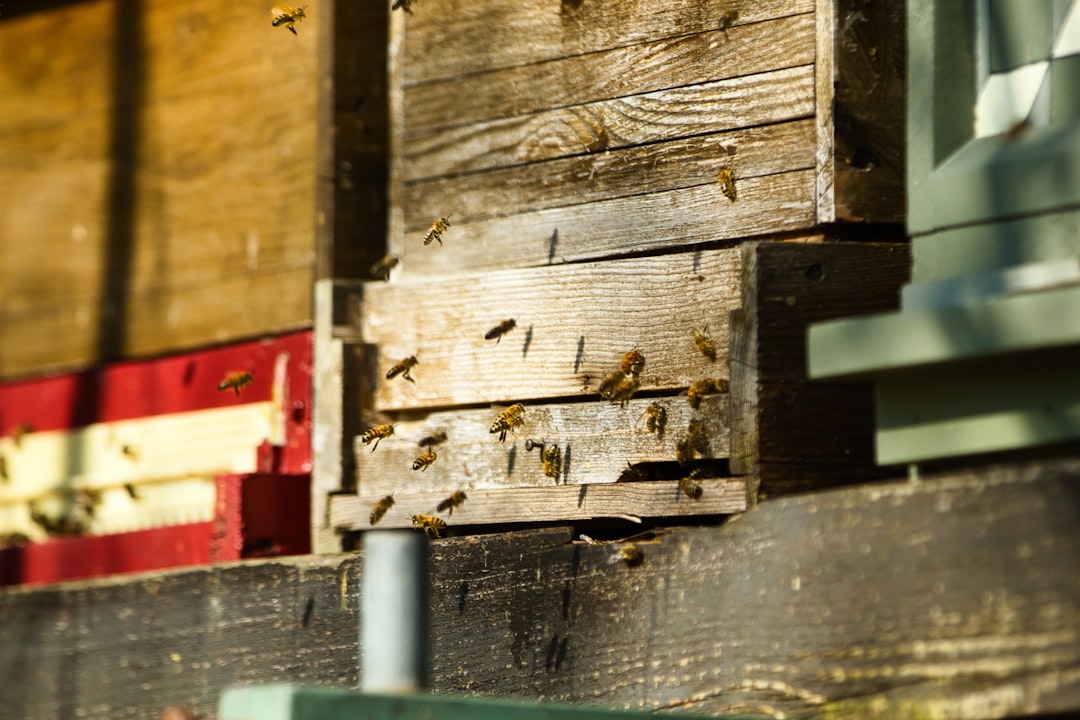
Photo by 𝕡𝕒𝕨𝕤 𝕒𝕟𝕕 𝕡𝕣𝕚𝕟𝕥𝕤 on Unsplash
The Standard Frame Count for a Bee Nuc
“Nuc” is short for nucleus colony, and the most common format is five deep Langstroth frames housed in a dedicated nuc box. That five-frame count is not arbitrary. It gives the queen enough space to lay a continuous brood pattern while leaving room for the bees to store the food reserves they need to sustain brood rearing even without incoming nectar from a flow.
A properly built five-frame nuc should contain:
- 3 to 4 frames of brood in mixed stages (eggs, open larvae, and capped brood)
- 1 to 2 frames of food (capped honey and diverse pollen)
- Bees covering all five frames, ideally spilling into the gaps between them
- A confirmed laying queen, either spotted directly or confirmed by the presence of fresh eggs
Some suppliers offer three-frame nucs, which are smaller and cheaper but require more intervention and supplemental feeding to establish successfully. For a first-year beekeeper, a three-frame nuc is a weaker starting position. A four-frame nuc is acceptable if three of the four frames carry solid brood and the fourth is heavy with honey; two brood frames and two food frames in a four-frame configuration is borderline and should prompt a pricing conversation with the seller.
The weight of the box is a useful rough indicator even before you open it. A five-frame nuc with full food stores should feel noticeably heavy when you lift it. A box that feels light for its size signals marginal food stores before you have even cracked the lid.
The Pro Nuc 5 Frame Plastic Nuc Box with Locking Lid is a solid example of a standard five-frame enclosure built for transport. A locking lid matters more than it sounds: during transit, vibration can shift frames against each other, and a secure lid keeps the colony stable and reduces the risk of frames injuring the queen on the drive home.
What Healthy Brood Looks Like on Nuc Frames
Brood quality is the single most reliable indicator of a nuc’s long-term viability. Strong brood with a modest population is recoverable. A large population with poor brood means the colony is running on borrowed time. Understanding what you are looking at on each frame separates a confident purchase from a gamble.
The three brood stages and what each tells you
Eggs are the freshest evidence of a functional queen. They look like tiny white grains of rice standing upright in the base of a clean cell. If you can see eggs, the queen was laying within the past three days. Many beekeepers hold a small flashlight at a low angle across the comb surface to catch the glint of eggs that would otherwise be invisible in bright outdoor light.
Open larvae are curled white grubs resting in a pool of brood food. Young larvae glow with a pearly, glistening white. Brown, dry, or twisted larvae are warning signs worth investigating before you close the box. The presence of multiple larval ages confirms the queen has been laying continuously over at least five to six days, not just in a single burst before the nuc was assembled.
Capped brood should occupy a compact, mostly uninterrupted area across the face of the frame. The cappings should be uniformly tan and slightly convex, like a taut drum surface. Sunken cappings, punctured cells, or discolored patches can indicate European or American foulbrood. For a detailed breakdown of what diseased brood looks like versus normal developmental variation, see How To Identify Common Bee Diseases.
The target is three to four frames that together show all three brood stages in a coherent, organized pattern. Capped brood typically occupies the center of the frame face, with open larvae surrounding it in an arc, eggs at the outer edge of the brood area, then a band of pollen cells, and capped honey on the outermost portion of the frame. This concentric organization is the natural architecture of a healthy brood nest.
Bee coverage on brood frames
Bees should cover every cell in the brood area. The bees you cannot see through the cluster are incubating brood at around 95 degrees Fahrenheit. If large areas of capped brood are uncovered, the colony may be too small to maintain incubation temperature across all five frames. Chilled brood results in patchy emergence and reduced population growth, compounding the problem over subsequent weeks. Full coverage on every frame is not a nice-to-have; it is the minimum for a viable nuc. For more detail on interpreting what you see across brood frames, How To Read Brood Patterns covers the full spectrum from ideal to problematic.
Food Stores on Nuc Frames: What You Need
A nuc needs enough stored food to sustain itself through the transition between pickup and establishment in its new hive body. Foragers need time to reorient to the new location. Bad weather can ground the colony for days. A summer dearth provides no incoming nectar to supplement what the bees already carry. Without adequate stores, the colony will consume brood food reserves and may begin chilling or abandoning brood within a week.
A sound five-frame nuc should carry at least one full frame of capped honey, plus a visible band of pollen arcing around the brood on the inner frames. The ideal arrangement mirrors a healthy full-size colony: honey on the outer frames, pollen stored nearest the brood edge, and the brood nest in the center frames. Nurse bees then have access to protein without traveling far from the larvae they are feeding.
Capped honey cells are white to light tan, slightly raised above the frame surface, and firm to the touch. Uncapped nectar that has not yet been reduced to the target moisture range of 17 to 20 percent will look similar but may drip if the frame is tilted. You do not want a nuc whose primary food reserve is uncured nectar; it can ferment before the colony has a chance to process it properly.
Pollen is stored in open cells adjacent to the brood and comes in a range of colors depending on local forage: yellow, orange, white, brick red, and purple are all normal. Multi-color diversity signals varied plant sources, which correlates with better larval nutrition and colony health outcomes. A pollen-poor nuc will struggle to raise healthy brood because larvae require amino acids that only pollen and pollen substitutes provide.
If the nuc has less than a full frame of capped honey, plan to supplement immediately after transfer. A 1:1 sugar syrup (one part white granulated sugar to one part water by weight) provides carbohydrate energy and stimulates comb drawing on the empty frames in the new hive body. Add a pollen substitute patty if natural pollen appears scarce. The University of Florida IFAS Honey Bee Research and Extension Laboratory recommends providing supplemental feed to new nucleus colonies until they are fully established and drawing comb on foundation frames.
Queen Assessment in a Bee Nuc
The queen is the reason you pay a premium for a nuc over a package. In a package, the queen is caged, unproven in this colony, and potentially not yet accepted by the workers surrounding her. In a nuc, the queen should already be accepted, laying, and established as the colony’s sole reproductive center. That difference in status is the core value you are purchasing.
Confirming the queen’s performance requires three checks before you close the nuc.
Spot her if possible. A marked queen is dramatically easier to find in a cluster of several thousand bees. Look for a bee with a visibly longer and more tapered abdomen who moves with deliberate purpose across the comb surface while worker bees form a retinue around her, facing inward. The benefitbee Queen Bee Marking Kit includes five standard color-coded marker pens plus four clear plastic queen catcher clips that let you temporarily restrain a queen on the comb surface for marking. Because 2026 is a “6” year on the international rotation, white is the correct marking color for any queen reared this season.
Confirm fresh eggs. If you cannot spot the queen visually, fresh eggs provide the next-best confirmation. Eggs are present in cells for three days before hatching, so finding them means the queen was laying within the past 72 hours. Tilt the frame toward a strong light source and look at the bottom of clean, uncapped cells for the tiny upright pins that eggs resemble.
Evaluate the laying pattern. Penn State Extension’s beekeeping guidance describes a quality laying pattern as one where 80 percent or more of cells in the brood area contain eggs, larvae, or capped brood, with minimal skipped cells. A scattered pattern with many gaps does not automatically disqualify a nuc, but it is a reason to ask questions. A recently superseded queen or one stressed by repeated manipulation can produce spotty patterns that improve once conditions stabilize.
Frame-by-Frame Nuc Inspection: A Step-by-Step Checklist
Before you open the box, light your smoker and confirm it is producing cool, white smoke with a steady volume. A smoker that produces hot, dark smoke will irritate bees rather than calm them. The Bee Hive Smoker Kit includes a heat shield, which matters when you are holding a lit smoker in one hand and managing frames with the other. Work through these steps in order:
- Apply smoke at the entrance. Give two to three gentle puffs into the nuc entrance and wait 30 seconds before lifting the lid. Then apply one or two puffs under the lid as you crack it open. This directs bees downward and gives you a calm working window of five to ten minutes.
- Remove the outer frame first. Start on the side least likely to hold the queen - typically the capped-honey frame on one end. Lift it carefully and set it aside in your nuc box or lean it against the stand. Never set frames on the ground.
- Check the first brood frame. Note the brood stages present, the pattern density, and bee coverage. Tilt the frame toward your light source to look for eggs.
- Work methodically toward the center. Remove each frame in sequence. Queens are most often found on center brood frames. Keep each frame vertical as you inspect to avoid rolling bees against the frame surface and risking injury to the queen.
- Locate or confirm the queen. Use a scanning motion across each brood frame face, working across in rows. Look for retinue behavior - worker bees facing and circling one individual - as a locating shortcut. If you find her, confirm she is moving freely with no wing damage or leg abnormalities.
- Assess food stores. On the outer frames, confirm the weight and extent of capped honey. Check for pollen diversity in the cells arcing around the brood.
- Scan for disease signs. Before returning each frame, check capped brood for sunken, greasy-looking, or discolored cappings. Note any unusual odors. American foulbrood produces a distinctive rotting smell that is unmistakable once encountered.
- Return frames in original order. Maintaining the sequence preserves the cluster’s organization. Close the nuc, reduce the entrance to one to two inches for transport, and secure the lid before moving the box.
Common Mistakes When Evaluating a Bee Nuc
The most expensive nuc mistake is rushing the inspection or skipping it entirely. Beekeepers who accept a nuc without opening it - or who glance at a single frame and call it good - often discover problems two weeks after transfer when the damage is harder to reverse. Here are the most common evaluation errors and how to avoid them.
Accepting the seller’s word without opening the box. A reputable seller will welcome an inspection and walk through it with you. If a seller discourages you from opening the nuc before purchase or seems impatient when you ask to verify the frame count, treat that as a red flag. Brood quality, queen status, and food stores are verifiable facts that take five minutes to confirm.
Counting frames of bees rather than frames covered by bees. A frame with a thin scatter of bees on one side is not a fully occupied frame. Bee coverage means both faces of the frame are blanketed with workers. Five frames with thin, patchy coverage is a weaker colony than four frames fully covered, and that distinction matters enormously for brood incubation capacity after transfer.
Ignoring food stores because the seller says they fed it recently. Feeding with sugar syrup temporarily inflates the appearance of food stores. Uncured syrup in cells resembles honey but can ferment if capped before bees have reduced its moisture content. Press on capped cells and lift the frame to gauge its weight. Light frames are a feeding obligation that falls on you immediately after transfer.
Misreading a spotty brood pattern without a reference point. A new beekeeper who has not seen a range of brood patterns may accept a genuinely poor pattern because they have no comparison. A healthy pattern is compact and continuous. Reviewing brood pattern documentation before your first nuc purchase gives you a calibration point that field observation alone cannot easily provide.
Transferring without reducing the entrance. A fresh nuc population is smaller than an established colony and is vulnerable to robbing by neighboring hives immediately after transfer. Reduce the entrance to one to two inches until the colony has drawn comb on new frames and grown its population enough to defend a full entrance.
Skipping the follow-up inspection at seven to ten days. The transfer is not the end of evaluation. A follow-up inspection confirms the queen is still laying into the new frames, comb drawing is underway, and no emerging disease signs have appeared. Catching a queen failure at day seven gives you options; catching it at day thirty typically means the window for easy intervention has closed.
Frequently Asked Questions About Bee Nuc Frames
Can a bee nuc have more than five frames?
Yes. Some beekeepers build six- or eight-frame nucs using standard Langstroth equipment, particularly when preparing overwintered nucs for spring sales. However, the term “nuc” in common commercial usage means a five-frame deep colony, and most nuc boxes are built to that spec. If a seller offers more than five frames, confirm the actual bee population and brood coverage before assuming you are getting more value. A five-frame nuc with every frame fully covered by bees and strong brood is a better starting position than an eight-frame box with thin coverage and patchy brood. Frame count is a starting point for evaluation, not the conclusion.
How long does a five-frame nuc take to fill a ten-frame hive body?
Under favorable conditions and an active nectar flow, a strong five-frame nuc typically draws comb and expands to fill a ten-frame deep within three to six weeks. The rate depends heavily on nectar flow intensity, ambient temperature, and starting population. A nuc installed in spring during a dandelion or fruit-tree bloom builds dramatically faster than one installed in a summer dearth. If you are installing during a slow period, feed 1:1 sugar syrup to stimulate wax production and comb drawing so the colony does not stall on foundation frames while waiting for natural nectar to arrive.
Is it normal for the nuc population to seem smaller after transfer?
A modest apparent population drop in the first few days after transfer is normal and does not indicate a problem. Field bees that had been flying from the nuc’s original location will return to that spot and need time to reorient to the new hive position. If the new hive is placed in the same yard where the nuc was stored, you may lose a portion of older foragers to drift back to the original site. Moving the nuc at least two miles before the transfer, or setting the new hive body exactly where the nuc box sat, reduces this drift. A sustained population decline over two or more weeks points to a queen failure or disease issue that requires investigation.
What if I cannot find the queen during the inspection?
Not spotting the queen visually during a nuc inspection is common, especially with unmarked queens in a populous box. Confirm her presence indirectly by finding fresh eggs, which require her to have been laying within the past three days. If you see eggs and young open larvae across multiple frames in a coherent pattern, the queen is present and functional. Close the nuc without additional disruptive searching. Reserve invasive techniques - such as shaking all bees off frames onto a white sheet - for situations where you have seen no eggs and have a specific reason to suspect queenlessness, such as emergency queen cells or worker-laid drone brood.
A five-frame nuc with three to four frames of solid brood, one to two frames of capped honey and pollen, full bee coverage on every frame, and a confirmed laying queen is what you are buying. Anything short of that benchmark is either a negotiation or a pass. The inspection takes ten minutes and requires only a lit smoker and the willingness to pull frames before you hand over payment.
Work through the frame-by-frame checklist above before accepting any nuc, whether you purchased it or made it from a split. Then follow up at seven to ten days to confirm the queen is laying on new frames and the colony is drawing comb on schedule. That two-inspection habit catches problems when they are still solvable.
If this checklist helped you evaluate your first nuc more confidently, bookmark it for reference before your next pickup and pass it along to a beekeeping friend who is about to make their first nuc purchase.
Related Reading