What to Do When a New Bee Nuc Is Weak: The First 30 Days
This post contains affiliate links. As an Amazon Associate, I earn from qualifying purchases at no extra cost to you.
You picked up your nuc, transferred the frames into the hive, and felt that first-day excitement. Then you looked closer: thin bee coverage, a queen you cannot locate, spotty brood where you expected solid coverage, maybe three frames of bees where the seller promised five. A weak nuc at installation is alarming, but it is rarely a death sentence.
The problem is that “weak” can mean several different things, and each requires a different response. A nuc that is simply small but structurally healthy follows a completely different recovery path than one carrying a failing queen, disease pressure, or a Varroa load already compressing brood production. Treating all weak nucs the same is the most reliable way to lose a colony that had a real chance.
The next 30 days will determine whether this nuc builds into a productive hive or declines toward a merger or replacement. This guide walks through a systematic approach to diagnosis, corrective feeding, queen evaluation, and population management during that critical window. Every step is tied to something you can observe, measure, and act on.
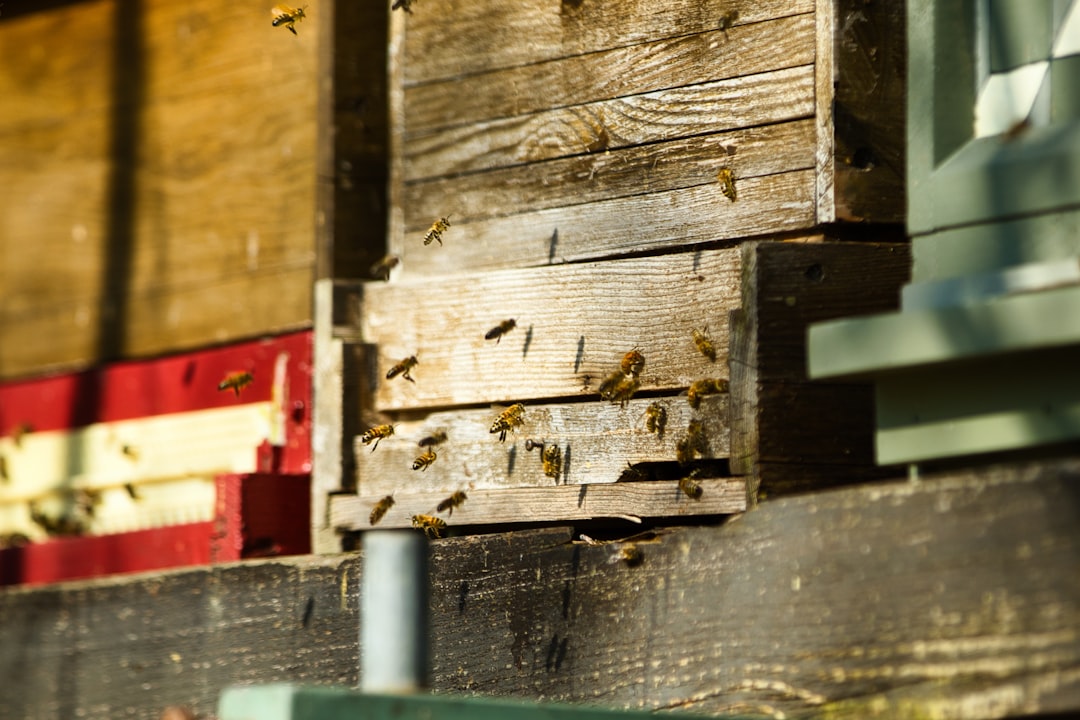
Photo by 𝕡𝕒𝕨𝕤 𝕒𝕟𝕕 𝕡𝕣𝕚𝕟𝕥𝕤 on Unsplash
Diagnosis and Inspection: What a Weak Nuc Looks Like
Before doing anything, define the problem precisely. A weak nuc is not simply a nuc that looks small. Four distinct presentations appear at installation or during the first inspection, and they demand different interventions.
Low population, healthy indicators. The nuc has two or three frames of bees instead of the expected four or five, but the bees present are active, the queen is laying, brood is solid and correctly capped, and there are no disease signs. This is the least alarming scenario. The colony is structurally sound and needs time and supplemental food to build population.
Low population plus spotty or absent brood. Scattered capped cells, open cells with struggling larvae, or large empty patches across combs that should be full. This pattern nearly always points to a queen problem: she may be failing, was recently superseded in transit, or the colony arrived queenless. Population will continue declining until the queen issue is resolved.
Adequate population, poor vigor. Reasonable bee coverage but sluggish workers, minimal foraging, bees clustering near the entrance, and stores depleting faster than expected. This pattern suggests nutritional stress during a forage gap, Nosema infection, or a Varroa load suppressing colony function without yet producing obvious population collapse.
Visible disease signs. Sunken or punctured cappings, discolored or twisted larvae, a sour or foul odor from the hive body, or deformed wings on newly emerged bees all require immediate response before any other management decision is made. Some conditions are reportable. Contact your state apiarist if you suspect American Foulbrood or European Foulbrood; the protocol is specific and disposal of equipment may be required.
Identifying which category applies is the foundational step. Every management decision for the next 30 days flows from this initial diagnosis.
Your First Inspection of a Weak Nuc
Do not skip a thorough installation inspection because you are nervous about the bees or want to give them time to settle. Calm handling with a well-managed smoker (a quality tool like the Bee Hive Smoker Kit – Stainless Steel Smoker with Heat Shield) gives you the diagnostic data you need to act. Plan 15 to 20 minutes rather than a quick visual sweep.
Work through the frames systematically from the outside inward. Six things need your attention:
-
Queen presence. Can you spot her? Is she moving deliberately through comb with an attendant retinue? A queen not yet laying 48 hours after installation may simply be settling in. A queen you cannot locate after five full days is a problem requiring follow-up action.
-
Brood pattern. Solid, compact capped brood arranged in a consistent oval indicates a healthy queen working at capacity. For a detailed reference on interpreting brood patterns, see How To Read Brood Patterns. More than 20 to 25 percent empty holes across capped brood, or larvae with abnormal color or position, indicate a queen or disease problem.
-
Egg presence. Eggs confirm the queen laid within the past three days and are the most reliable real-time indicator you have. Hold the frame with sunlight over your shoulder and tilt it to make upright eggs visible at the cell base.
-
Food stores. A nuc carrying less than one full frame of stored honey and pollen is nutritionally stressed and will struggle to raise quality brood regardless of queen function.
-
Population age structure. Nurse-age bees are downy and clustered over brood; forager-age bees are shiny and concentrate near the entrance. A forager-heavy population loses workers faster than it replaces them, producing rapid visible decline in the first two weeks even with a viable queen in place.
-
Varroa indicators. Scan adult bees for mites visible on their backs during the inspection. Visible mites on adults suggest a dangerously high count and warrant an immediate alcohol wash for a precise number. A Foxhound Bee Company Varroa Easy Check Mite Tester takes the guesswork out of accurate mite counting.
Record your observations after each inspection. A few notes in a phone app or notebook are enough to track trends across multiple visits.
Feeding a Weak Nuc: When, What, and How
Supplemental feeding is almost always the correct starting move for a weak nuc, regardless of the specific underlying problem. The relevant questions are what to feed, at what concentration, and how to deliver it without triggering robbing from neighboring colonies.
Syrup concentration. A 1:1 ratio of sugar to water by weight stimulates brood rearing. It signals resource abundance, encourages the queen to increase her laying rate, and prompts workers to draw fresh comb. A 2:1 ratio is better suited to building winter stores when you need the colony capping and saving food rather than converting it all into new brood. For a weak nuc that needs to grow population quickly in spring or early summer, start with 1:1.
Frame feeders are the right tool for weak nucs. Entrance feeders place an open food source that strong neighboring colonies can locate and exploit. During any nectar dearth - common in late summer - an entrance feeder on a weak nuc can attract robbers faster than the colony can mount a defense, and a hive can be stripped in a single afternoon. A frame feeder sits inside the hive body in place of one outer frame, keeping syrup warm, close to the cluster, and inaccessible to bees from outside.
The Acouto Beehive Frame Feeder 4L is designed for Langstroth and Dadant equipment and includes an integrated drowning mesh. That mesh matters: a weak nuc cannot afford to lose foragers to a feeder, and open-trough feeders without mesh result in consistent bee mortality during the weeks when population is most vulnerable.
Refill schedule and what it tells you. Check the feeder every three to four days in warm weather. Watch whether incoming syrup is being converted to capped stores or consumed immediately. Capped stores mean the colony is getting ahead. Immediate consumption with no capping means the colony is still running a caloric deficit and may need pollen supplement as well.
Pollen substitute. If local forage is limited - common during late summer dearth or early spring gaps before dandelion bloom - add pollen substitute patties (such as Mann Lake Ultra Bee Pollen Substitute Patties) directly on the top bars above the brood nest. Protein is the nutrient bottleneck for brood quality. Sugar syrup alone cannot support larval development the way a pollen supply does, and a colony running low on protein raises underdeveloped, shorter-lived workers that compound the population problem.
The Queen and Your 30-Day Recovery Plan
Colony growth in a weak nuc depends on one bee. A healthy, productive queen allows the colony to recover from almost any other deficit given enough food and time. A failing or absent queen means the colony will continue contracting regardless of how well everything else is managed.
Allow a newly installed queen five to seven days before concluding she is absent or non-functional. Queens frequently reduce or pause laying during transport and installation stress. What to watch for in the first week is not a perfect laying pattern on day one; it is a clear trend toward increasing eggs, progressing larval stages, and capped brood by day seven.
Signs the queen is working. Eggs present on inspection that expand to a larger, denser patch by the next visit. Larvae progressing through developmental stages in the correct sequence: eggs to young larvae to capped brood over approximately 12 days. A queen visible on frames, moving with purpose and surrounded by an attendant retinue. Workers appearing calm and systematic on comb.
Signs of a queen problem. No eggs or larvae seven days after installation. Multiple eggs per cell, or eggs attached to cell walls rather than standing upright at the base - a laying worker pattern indicating queenlessness of several weeks’ duration. Emergency queen cells visible on the face of frames or along bottom bars. Workers balling an introduced queen during a check.
If the queen is failing or absent, three paths are available: purchase and introduce a mated replacement queen, donate a frame of fresh eggs and young larvae from a healthy colony so the nuc can raise its own queen, or merge the weak nuc with a strong queenright colony. Penn State Extension covers queen introduction protocols and timing in detail: https://extension.psu.edu/honey-bees.
For a nuc already struggling with low population, purchasing a mated queen and introducing her promptly is the highest-probability path to recovery when the original queen is confirmed absent or failing.
Your 30-Day Recovery Timeline
This sequence applies to the most common scenario: a structurally sound weak nuc with a viable or replacement queen that needs attentive feeding and observation. Adjust based on your first-inspection diagnosis.
-
Days 1 to 3: Install and leave it alone. Transfer nuc frames into your hive box, install a frame feeder with 1:1 syrup, reduce the entrance to its smallest available opening, and close the hive. The colony needs to orient without repeated disturbance.
-
Day 5: First full inspection. Confirm queen presence by locating eggs. Count frames containing brood and assess pattern quality. Note how much syrup has been consumed and whether any has been capped. This inspection establishes your measurable baseline for every subsequent visit.
-
Day 10: Brood and queen trend check. A healthy queen should show a visible patch of capped brood and a fresh ring of eggs around the perimeter. If no evidence of laying exists after 10 days, begin queen replacement planning without waiting another week.
-
Day 14: Population trend assessment. Many weak nucs appear to lose bees in the first two weeks as older foragers die before newly emerging bees replace them. This is expected if capped brood is present. No capped brood alongside shrinking population is a serious warning that requires action rather than patience.
-
Day 21: Watch for the first new bees. Fluffy, pale bees making short orientation flights near the entrance in the afternoon should begin appearing around day 21. A nuc reaching this point with visible new bee emergence is almost certainly going to build into a functional colony.
-
Days 28 to 30: Evaluate space needs. Once bees are covering most frames and stores are accumulating, add a second brood box or medium super. Adding space before the colony can fill and defend it causes brood nest temperature problems; adding it too late pushes a recovering colony toward swarming pressure.
University of Florida IFAS beekeeping resources provide detailed brood development timelines that help set realistic expectations at each stage: https://edis.ifas.ufl.edu/publication/AA259.
When Combining or Replacing Is the Right Call
Not every weak nuc is worth 30 days of intensive management. Recognizing when to pivot is a practical skill, not a concession of defeat.
Combine when the nuc has a viable queen but lacks population to defend itself and regulate brood nest temperature, you have a strong queenright colony available, and the merger is feasible before disease risk escalates. The newspaper method is standard for safe combining. For a complete walkthrough, How to Combine Weak Hives Safely covers the steps and timing considerations in detail.
Contact your supplier when the nuc arrived with visible disease signs, the queen was dead or absent within 48 hours of delivery, or the population was meaningfully below what was contracted. Document the situation with photographs before anything changes. Most reputable suppliers require a report within five to seven days of delivery. Well-sourced nucs from established producers generally come with some form of guarantee precisely because the first days are high-risk.
Dispose of the colony and disinfect equipment when signs are consistent with American Foulbrood, European Foulbrood, or another serious disease posing a contamination risk to healthy colonies. Contact your state apiarist for guidance; some conditions require a formal inspection and specific disposal procedures before you can reuse equipment.
A merged weak nuc that contributes its bees and queen to a productive colony is a better outcome than one that declines over two months and drains your management attention.
Common Mistakes That Make a Weak Nuc Worse
Most weak nucs that fail in the first 30 days do not fail because the situation was irretrievable at the outset. They fail because of a predictable set of management errors during the weeks that matter most.
Inspecting too frequently. Inspections more often than every five days cause thermal disruption to the brood nest, stress the queen into reduced or paused laying, and increase the risk of accidentally injuring or rolling her. After the first inspection at day five, a seven-day interval between visits is appropriate for a recovering nuc.
Adding too much space too soon. A small cluster cannot maintain the 93 to 95 degree Fahrenheit brood temperature required for healthy larval development across a large empty cavity. Brood chilling kills larvae silently and produces scattered, sunken cappings that look identical to a queen problem on the next inspection. Match hive volume to actual population at every stage.
Using an entrance feeder during nectar dearth. An entrance feeder on a weak nuc during late summer or any period of low forage is a robbing beacon. Strong colonies locate food sources quickly, and once robbing escalates, a weak nuc has very limited ability to defend itself. A hive can be stripped in hours. Use an internal frame feeder exclusively for any colony that cannot mount a robust defensive force.
Skipping the mite count. A weak nuc has less buffer against Varroa pressure than an established colony. A mite load that a strong colony tolerates for several weeks can collapse a weak nuc in the same period, because there are fewer healthy young bees to absorb the per-bee mite burden. Conduct an alcohol wash within the first 10 days. Above two mites per 100 bees, treat promptly. For treatment options in a near-broodless colony, How To Do An Oxalic Acid Treatment is a practical reference.
Misidentifying the cause of weakness. Feeding syrup to a queenless nuc while waiting for improvement is the most costly mistake on this list. Syrup cannot fix a queen problem. Confirming queen presence with eggs is the prerequisite for every other management decision. Diagnosis comes before intervention, every time.
Failing to document inspections. Without notes, you cannot tell whether the brood patch has grown or shrunk relative to the previous visit. A brief record of frame-by-frame observations after each inspection transforms subjective impressions into a trackable trend.
Frequently Asked Questions
How long should I wait before deciding my weak nuc is unrecoverable?
By day 21, the trajectory should be unambiguous. If you have confirmed a laying queen, seen consistent new brood on each inspection, and first new bees are emerging around the three-week mark, the colony is recovering on schedule. If you reach day 21 without confirmed egg-laying, visible brood progression, or any queen evidence, the colony is almost certainly queenless or has a non-functional queen. Make a replacement or merger decision within a few days of that conclusion. Waiting past day 30 with no positive indicators means population has dropped to a point where your options narrow considerably.
Should I treat for Varroa in the first week after getting a weak nuc?
Test first, then decide. An alcohol wash within the first seven to ten days gives you an accurate infestation count. The widely used threshold is two mites per 100 bees, though many beekeepers apply a lower threshold for weak nucs that carry less resilience against mite pressure. If your count exceeds threshold, treat according to current temperature, season, and brood state. Oxalic acid vaporization is effective when the colony is broodless or nearly so, a condition some very weak nucs already meet. Do not wait to see whether population improves before testing; mites reproduce through every untreated brood cycle, compounding the problem with each passing week.
My weak nuc has bees but I cannot find a queen or any eggs. What do I do?
Recheck after three to five days before taking action. Eggs are frequently missed on a first inspection, particularly in low light or by beekeepers with less frame inspection experience. If the nuc is confirmed queenless across two inspections, you have three options: purchase and introduce a mated queen (the fastest recovery path), donate a frame of fresh eggs from a healthy colony so the nuc can raise its own queen (adding 21 to 28 days to recovery), or merge with a strong queenright colony using the newspaper method. For a nuc already struggling with low population, a purchased mated queen introduced promptly typically offers the highest probability of full recovery.
Is it normal for a new nuc to appear to lose bees in the first two weeks?
Yes, within limits. A nuc sold with primarily forager-age bees will show net population decline as those older workers die before younger bees are ready to replace them. The inflection point comes around day 18 to 21, when the first post-installation brood cohort begins emerging. If you have capped brood on inspection frames, apparent shrinkage in weeks one and two is not alarming. If you have no capped brood at all, population loss signals a queen problem requiring action rather than a normal population cycle.
Conclusion
A weak nuc at installation is a defined problem with a structured solution set. Diagnose before you treat, and confirm the queen with eggs rather than assumption. Feed with a protected internal frame feeder, watch whether stores are building or being consumed on each refill, and avoid expanding hive volume before the population can fill it. Count mites within the first 10 days and act on the result. Document every inspection so you are tracking a measurable trend rather than relying on impression.
The 30-day window is genuinely predictive. Colonies on a recovery trajectory show clear positive indicators by day 21. Colonies that are not recovering give identifiable warning signals well before day 30. Acting on those signals while your options are still open is what separates a nuc that builds into a productive hive from one that quietly fails by September.
If this guide helped you work through a difficult nuc season, bookmark it for reference at your next pickup and share it with a beekeeper facing the same situation.
Related Reading
- What Is A Bee Nuc Nucleus Colony Guide - Understanding what a healthy nuc looks like before installation, so you have a baseline for comparison
- How To Combine Weak Hives Safely - When merging is the right decision and how to carry it out without losing both colonies