Best Nuc Boxes and Feeders for Starting or Splitting Colonies
This post contains affiliate links. As an Amazon Associate, I earn from qualifying purchases at no extra cost to you.
Starting a nucleus colony or splitting an overwintered hive sits at the most hands-on end of backyard beekeeping. You are asking a small cluster of bees to build from nearly nothing - draw comb, raise brood, and establish a queen - often during a nectar dearth or in the weeks before a major flow ends. The gear you provide at this stage has an outsized effect on whether the split survives.
A nuc box that does not hold temperature, lets in rain, or fails to deter robbing bees can kill a split before the new queen finishes her mating flights. An ill-chosen feeder can trigger a robbing frenzy, drown foragers, or fail to deliver enough syrup when the colony needs it most. Get both right, and a healthy five-frame nuc can grow into a full production hive in as few as six weeks.
This guide covers what separates a durable nuc box from a throwaway one, how to match your feeder type to your situation, and three specific products suited to backyard hobbyists managing one to ten hives. If nucleus colonies are new territory for you, start with our beginner’s guide to what a bee nuc is and how it works before getting into equipment specifics.
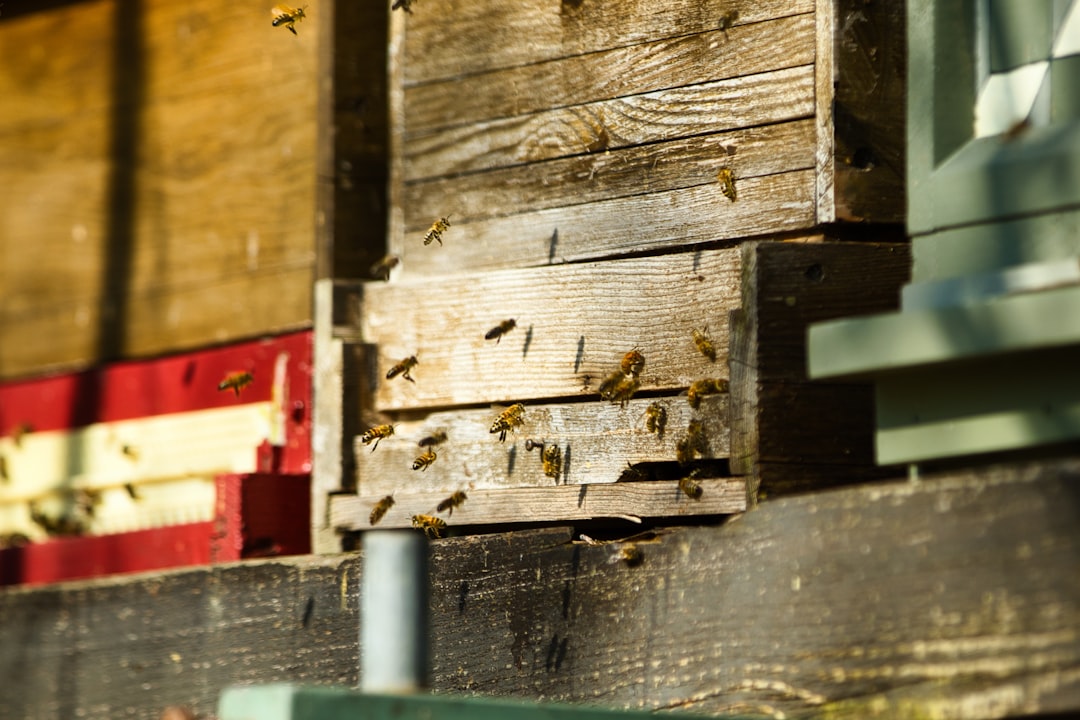
Photo by 𝕡𝕒𝕨𝕤 𝕒𝕟𝕕 𝕡𝕣𝕚𝕟𝕥𝕤 on Unsplash
Why Nuc Box Quality Directly Affects Split Success
When you pull five frames from a production hive and transfer them into a nucleus box, the bees immediately face compounding challenges: thermoregulating a brood nest with a fraction of the normal workforce, caring for open larvae, and establishing or accepting a queen. The nuc box is not just a temporary container - it is an active variable in whether the split succeeds.
Thermal retention matters at five frames. Honeybees maintain brood nest temperatures at approximately 34–35°C (93–95°F) regardless of ambient conditions. A five-frame nuc has roughly 40% of the bee population of a full double-deep production hive, meaning that workforce works proportionally harder to hold temperature. Thin-walled or poorly fitted boxes require the colony to divert energy from brood care toward thermoregulation. Penn State’s Center for Pollinator Research notes that thermal stability in small colonies correlates directly with faster buildup rates.
Robbing pressure is disproportionately dangerous for small colonies. A nuc’s guard bee population is small relative to its honey and syrup reserves. Robbing bees from established colonies can strip a nucleus of its food stores within hours. A box with a tight-fitting lid, sealed seams, and a defensible entrance reduces the attack surface the small workforce must protect. Gaps in construction or oversized entrance holes create vulnerabilities that a full colony might manage but a five-frame nuc cannot.
Transport security affects colony survival. For beekeepers who source nucs from a supplier or move splits to a different apiary location, a locking lid is a safety requirement, not a convenience feature. A jarred-open lid during a 30-minute drive releases thousands of bees into a confined vehicle - dangerous for the driver and highly stressful for the colony.
Durability across multiple seasons changes the economics. Cardboard nuc boxes work for a single transport but cannot be safely reused. Plastic boxes tolerate weather, resist wax moth damage, and clean easily with dilute bleach or a propane torch between uses. Over three to four seasons of regular splits, a quality plastic nuc box pays for itself many times over compared to buying single-use cardboard.
What to Look for in a Nuc Box
Frame size compatibility. Most hobbyist nuc boxes hold five standard Langstroth deep frames (9-5/8” depth); some are built for medium frames. Whatever box you choose must match the frame size in your production hives, because direct frame transfer from nuc to hive body is one of the primary advantages of the nuc system. A mismatch forces an extra transfer step that risks rolling the queen or damaging capped queen cells.
Entrance design. A closeable, reducible entrance is essential. You need to seal the box for transport and reduce it to one or two bee-widths during the vulnerable early period when the colony cannot defend a standard-sized opening. Sliding plugs, foam inserts, or a built-in reducer are all workable solutions. Avoid boxes whose only entrance option is a fixed opening sized for a full colony.
Ventilation without vulnerability. Adequate airflow prevents moisture buildup inside a sealed nuc during transport. A screened bottom board, ventilated floor plug, or screened lid panel solves this without creating entry points that robbers or small hive beetles can exploit.
Construction integrity and weight handling. A loaded five-frame nuc - frames, bees, and syrup - can weigh 15 to 20 pounds. Recessed handles or integrated carry slots make a real difference when you are working in full protective gear. Boxes that rely on external handle attachments or require two-handed gripping are poor designs for solo beekeepers.
Reusability and sanitation. A nuc box that cannot be properly cleaned between uses is a disease vector. Smooth interior surfaces without crevices are far easier to sanitize. Plastic surfaces tolerate the bleach solutions and heat treatment that eliminate American Foulbrood spores and wax moth eggs much better than raw or painted wood.
Choosing the Best Feeder for Your Nuc Colony
Supplemental feeding for nucleus colonies is not optional in most split scenarios. Unless you are placing a split directly into a strong, sustained nectar flow, a new nuc needs feeding to build stores and raise brood to term. The decision is which feeder type matches your specific situation.
Frame Feeders
A frame feeder replaces one of the five slots in the nuc box, with bees accessing syrup through floats or ridged interior surfaces designed to prevent drowning. The BeeCastle Bee Pro Feeder Beehive Frame Feeder 6.5L is a deep-frame-compatible model with a 6.5-liter capacity.
Frame feeders carry two significant advantages for nucs specifically. First, syrup sits entirely inside the hive, so there is no external odor broadcasting a foraging signal to robbing bees from neighboring colonies - a critical benefit during late summer dearths when established hives are actively searching for any available sugar source. Second, a large-capacity frame feeder reduces how often you need to open the hive during the critical queen-mating period, when every unnecessary inspection carries real risk.
The main tradeoff is slot loss. A frame feeder in a five-frame nuc box gives you an effective four-frame nucleus until you pull the feeder and replace it with a comb frame. Plan for this when selecting frames for the split.
Entrance Feeders
A Boardman entrance feeder mounts at the hive entrance and holds an inverted jar or bottle that bees drain from inside the entrance tunnel. The VIVO Light Wood Boardman Entrance Feeder, BEE-V110 is a light wood-bodied version of this design, straightforward to fill and monitor.
The primary advantage is refilling without opening the hive, which makes entrance feeders genuinely useful for beginners building their inspection confidence. The significant disadvantage is robbing risk. Exposed syrup at the entrance draws bees from every established colony in range - a serious vulnerability for nucs with small guard populations from midsummer onward when natural forage declines. Reserve entrance feeders for nucs during active spring flows or in isolated apiary locations without multiple established colonies within foraging range.
Syrup Concentration
Syrup ratio is not a minor detail. For splits and new nucs established in spring and early summer, use 1:1 syrup (equal parts sugar and water by weight). This thin, nectar-like consistency stimulates wax production and comb drawing - the primary bottleneck for a colony working on undrawn foundation. Switch to 2:1 syrup in late summer and fall when the goal shifts to building dense, concentrated winter stores. The Honey Bee Health Coalition offers useful guidance on how colony nutrition timing intersects with overall hive health through the season.
The Best Nuc Boxes and Feeders: Product Picks for Hobbyists
These three products cover the core equipment needs for setting up and feeding nucleus colonies. The table below summarizes key differences; the descriptions that follow explain where each earns its place and where it falls short.
| Product | Type | Capacity | Best Scenario | Robbing Risk |
|---|---|---|---|---|
| Pro Nuc 5 Frame Plastic Nuc Box with Locking Lid | Nuc box | 5 frames | Splits, transport, overwintering nucs | Low (lockable lid) |
| BeeCastle Bee Pro Frame Feeder 6.5L | Frame feeder | 6.5 liters | Dearth feeding, high-robbing-pressure situations | Very low (internal feeder) |
| VIVO Light Wood Boardman Entrance Feeder, BEE-V110 | Entrance feeder | Jar or bottle | Spring flow feeding, low-risk apiary locations | Moderate to high |
The Pro Nuc 5 Frame Plastic Nuc Box with Locking Lid is the foundational piece of equipment in this group. The locking lid eliminates accidental opening during transport - a problem with real consequences for driver safety and colony wellbeing. Plastic construction simplifies cleaning between uses. For beekeepers making multiple splits per season or overwintering nucleus colonies as queen insurance, this box justifies its cost quickly.
The BeeCastle Bee Pro Frame Feeder is the right tool when establishing a nuc during a dearth or in a multi-colony apiary where robbing pressure is consistently high. Its 6.5-liter capacity and internal placement help reduce the frequency of hive openings needed. Bees access syrup from inside the hive, which can help the small colony focus its defensive energy at the entrance.
The VIVO Boardman Entrance Feeder fills a narrower, specific role. Its strength is ease of use - it can be refilled without tools or hive disturbance. It suits hobbyists making their first nucs during a spring flow in locations without heavy multi-colony competition for food. Do not use it for late-summer or fall nuc establishment, or in a yard where production hives are already competing for forage.
How to Set Up a Nuc Box for a Colony Split
This sequence applies whether you are making a walkaway split, introducing a purchased queen, or setting up a frame with queen cells. Adjust steps 2 and 5 depending on your queen strategy.
-
Position the nuc box at its intended apiary location 24 hours before the split. If you are using a frame feeder, install and fill it now. Orient the entrance facing a different direction than the donor hive to reduce forager drift back to the original colony. If the nuc will remain within 10–15 feet of the donor, rotate the entrance at least 90 degrees and place a visual barrier between them.
-
Locate the queen before moving any frames. Find her and confirm she is on a frame you are leaving in the donor hive. For a walkaway split, select the following frames for the nuc: one frame of capped brood with attendant bees, one frame of open brood with visible eggs, and one frame of mixed honey and pollen. The open brood with eggs is essential - it gives the colony the raw material to raise their own queen. Do not use frames where the eggs are more than three days old if you want maximum queen cell options.
-
Shake an additional frame of nurse bees directly into the nuc box. Nurse bees are young, non-foraging bees concentrated on the brood frames near the center of the cluster. Hold a well-covered frame over the open nuc box and give it one firm, sharp downward shake. The nurses drop in; return the emptied frame to the donor hive. This step meaningfully increases the starting population without stripping foragers from the donor colony.
-
Reduce the entrance to one bee-width and install your chosen feeder. A reduced entrance lets the small colony defend against robbers and yellow jackets while population builds. If transporting the nuc, seal the entrance completely with a foam plug, ensure the lid is locked, and transport in a shaded vehicle during cooler parts of the day. Release bees at dusk so they orient overnight rather than returning to the original colony location.
-
Leave the colony undisturbed for 7–10 days before the first inspection. Resist the urge to check for queen cells or queen acceptance earlier than this. Cold exposure and cluster disruption carry real risk of chilling brood or damaging open queen cells. At day 7–10, do a brief, targeted check focused only on queen status. When laying resumes, review how to read brood patterns to evaluate whether the queen is mated and producing normally.
-
Transfer to a full hive body when bees cover all five frames with brood present on at least three. This typically takes four to eight weeks depending on season and queen quality. Do not rush - a small colony in an oversized hive body loses thermal efficiency and defensive capacity. Do not delay past visible overcrowding either, since a packed nuc will initiate swarm preparations just like any other congested colony.
Common Mistakes to Avoid When Using Nuc Boxes and Feeders
These errors account for the majority of preventable split failures among hobbyist beekeepers.
Using an entrance feeder during a nectar dearth. This is the single most common cause of nuc losses. Exposed syrup at the entrance broadcasts a foraging signal to robbing bees from every established colony within flying distance. A small nuc workforce cannot defend against a coordinated robbing attack, and the colony can be stripped of stores or forced to abscond within 24–48 hours. From July through September in most of North America, use only internal feeders and reduce the entrance to the smallest opening bees will actively use.
Moving the queen into the nuc by accident. A split only creates two viable colonies if the queen stays in the donor hive. If she ends up in the nuc, the original colony is queenless - a management problem that costs you weeks and risks significant population loss. Always find and positively confirm the queen on a frame you are leaving before completing the transfer. If you cannot locate her, move through every frame methodically and be willing to pause rather than rush the process.
Placing the nuc too close to the donor hive. Forager bees navigate by landmark and sun angle. A nuc placed within 10–15 feet of the original colony with its entrance facing the same direction will lose most of its forager population to drift within a day, leaving a severely under-populated nuc that struggles to cover brood and sustain a new queen. Move the nuc at least three miles away for two weeks, or place a visual barrier between hives and rotate the entrance direction by at least 90 degrees.
Skipping supplemental feeding when working on undrawn foundation. Bees consume approximately six to eight pounds of honey or equivalent syrup to produce one pound of wax. A nuc on bare foundation without supplemental syrup builds comb slowly, delaying the point at which the queen can begin laying at full capacity. Feed 1:1 syrup continuously for the first three weeks of a split regardless of forage conditions if foundation comb drawing is required.
Inspecting too frequently during queen development. After setting up a walkaway split, the colony needs 14–18 days from egg to emerge as a virgin queen, plus an additional 7–10 days for mating flights and the start of laying. Opening the hive before day 7 risks damaging open queen cells. Repeated openings between days 7 and 21 risk chilling brood and disrupting queen acceptance. Set a calendar reminder for day 10, do one focused check, then wait another week before evaluating the brood pattern.
Reusing an uncleaned nuc box. A box that carried a diseased colony is a transmission vector for the next occupants. American Foulbrood spores remain viable in wax and wood for decades under normal conditions. Before placing a new split into any used box, inspect the interior carefully, clean with dilute bleach solution, and flame-treat interior surfaces. If the previous colony showed symptoms consistent with foulbrood, retire that box entirely rather than risk transmission.
Frequently Asked Questions
How long should I keep bees in a nuc box before moving them to a full hive?
The practical trigger is population density, not a fixed calendar date. When bees cover all five frames and active brood is present on at least three, the colony is ready for more space. In a strong spring nectar flow with a prolific queen, this can happen in four to five weeks. In summer heat or with a newly mated queen building from a small starting population, six to eight weeks is more realistic. Do not move a colony prematurely - a small population in a full-sized hive body loses thermal efficiency and defensive capacity. Do not delay past obvious overcrowding either, because a packed nuc will swarm just like any other congested colony.
Can I use the same nuc box year after year?
Yes, with proper cleaning between uses. Plastic nuc boxes are the most straightforward to sanitize: scrape out wax and propolis residue, wash with a 1:10 bleach-to-water solution, rinse thoroughly, and allow to dry completely before storage. For additional pathogen control, lightly scorch the interior surfaces with a propane torch. Wooden boxes require the same steps but are more prone to harboring pathogens in porous surfaces. Any box that previously housed a colony with confirmed American Foulbrood should be destroyed rather than reused - AFB spores are highly resistant to standard cleaning methods, and state apiary regulations in most jurisdictions support or require destruction of infected equipment.
What sugar-to-water ratio should I use when feeding a new split?
Use 1:1 syrup (one pound of granulated sugar dissolved in one pound of warm water) for nucs established in spring and early summer. This thin, nectar-like syrup stimulates wax production and comb drawing - the primary bottleneck for a colony working on undrawn foundation. Switch to 2:1 syrup in late summer and fall when the goal shifts to building dense, concentrated winter stores. Avoid making syrup from raw or unfiltered honey, which can transmit American Foulbrood and Nosema spores between colonies. To prevent fermentation during warm weather, make small fresh batches every two to three days.
What is the difference between a walkaway split and an introduced queen split?
A walkaway split transfers frames with eggs and lets the colony raise its own queen. The advantages are simplicity and no queen purchase cost. The drawbacks are time and uncertainty: the process from egg to mated, laying queen takes 20–28 days, and there is no guarantee the colony will raise a high-quality queen, particularly if local drone quality or genetic diversity is limited. An introduced queen split uses a commercially mated queen, reducing the queenless period to 7–14 days and providing a more predictable buildup timeline. The tradeoffs are cost ($30–$60 or more per queen) and a variable acceptance rate that requires careful introduction technique. Walkaway splits are the lower-stakes starting point for hobbyists new to the process.
Conclusion
Nucleus colony success comes down to two decisions made before you pull the first frame: the box that will house the split and the feeder that will sustain it through establishment. A well-constructed plastic nuc box with a lockable lid handles transport safety and long-term durability. A properly matched feeder keeps the colony nourished without triggering the robbing events that kill more nucs than any other single cause.
For most hobbyists running one to ten hives, pairing the Pro Nuc 5 Frame Plastic Nuc Box with Locking Lid with the BeeCastle Bee Pro Frame Feeder 6.5L covers the hardest scenarios - late-summer splits, dearth conditions, and multi-colony apiaries. Add the VIVO Light Wood Boardman Entrance Feeder, BEE-V110 as a spring-specific supplement when conditions allow it. Before your next split, review the complete guide to splitting a hive to prevent swarming to make sure your frame selection and donor hive management align with the equipment approach laid out here.
If this guide helped clarify your equipment choices, bookmark it for reference before your next splitting season or pass it along to a local club member planning their first colony division.
Related reading: