Where to buy bee nucs in the US: state-by-state sourcing guide for new beekeepers
This post contains affiliate links. As an Amazon Associate, I earn from qualifying purchases at no extra cost to you.
The single biggest frustration for first-year beekeepers is not finding equipment or building confidence with hive inspections. It is finding bees. Nucleus colonies sell out fast. In most of the country, quality nuc suppliers open their order books in January or February for spring delivery, and by April those same suppliers have a waiting list or a sold-out notice. New beekeepers who start researching in May are almost always too late for that season.
Knowing where to buy bee nucs before you need them is one of the most practical things you can do in your first beekeeping year. Nuc sourcing is intensely regional: a supplier that works for a beekeeper in Georgia is irrelevant to someone in Minnesota, and not just because of the shipping distance. Stock adaptation to local winters, state regulations on bee transport, and the logistics of transferring a live five-frame colony all make geographic proximity genuinely important.
Before you place a deposit anywhere, understand what you are paying for. A nucleus colony includes a laying queen, brood in multiple stages, stored food, and enough workers to cover the frames, and quality varies enormously by seller. This guide walks through the regional sourcing landscape and the criteria that separate a reliable supplier from one that will cost you your first season.
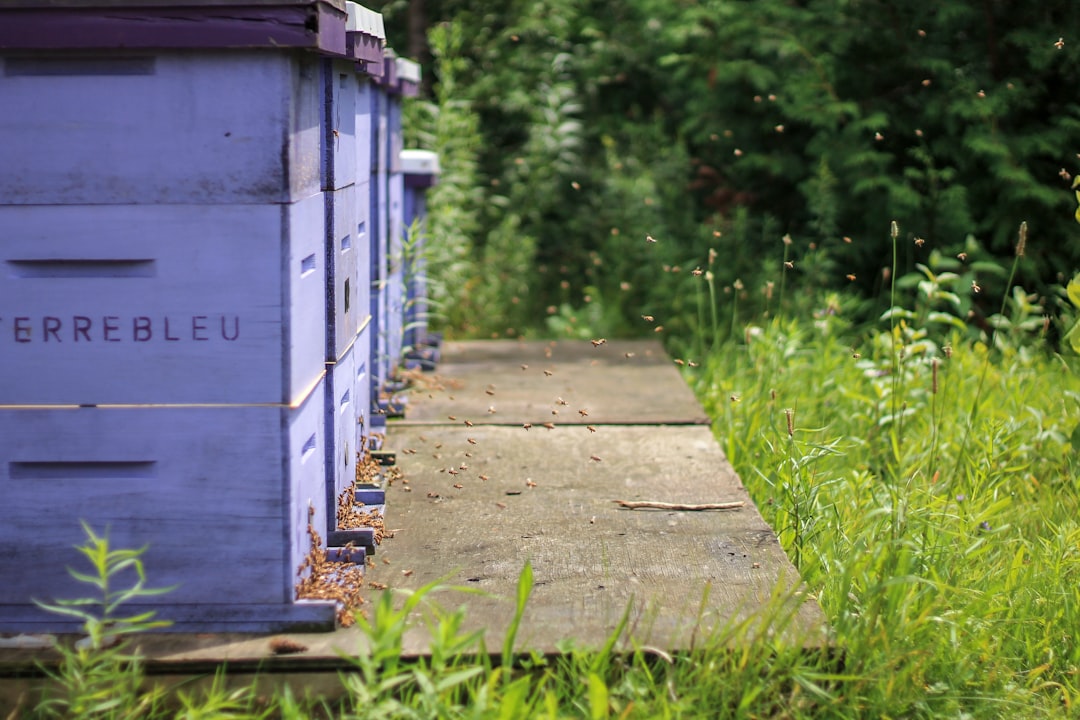
Photo by Addy Badal on Unsplash
Why Sourcing Bee Nucs Locally Beats Shipping Almost Every Time
Nucs can be shipped, and some reputable commercial operations do ship them successfully in ventilated travel boxes with screened panels. But the practical case for buying locally is strong enough that it should be your default strategy unless you genuinely cannot find a source within driving distance.
A nuc shipped across state lines spends hours in a truck in a confined, temperature-variable space. Ventilation is limited, and bees arrive stressed regardless of how well-designed the shipping container is. More importantly, locally raised bees are already adapted to your climate’s forage patterns, overwintering demands, and seasonal rhythms. A nuc from a Georgia breeder installed in a Wisconsin apiary in May may struggle with conditions it was never shaped for, and that difference tends to show up as a first-winter loss rather than a thriving second-year colony.
Most states require a health certificate issued by a licensed apiary inspector whenever bees cross state lines, confirming the colony is free of American foulbrood and other regulated diseases. Some states impose additional restrictions or quarantine requirements on incoming shipments. Buying locally simplifies the compliance chain considerably and keeps accountability closer to home.
A local seller also has a reputation to protect in a way that a distant one does not. If your queen fails two weeks after installation, a supplier two counties away is far more likely to make it right than one two thousand miles away. Local beekeeping clubs and state associations are excellent at identifying which suppliers can be trusted. The American Beekeeping Federation maintains member directories and state association listings that are a productive first stop before you call individual operations.
Where to Buy Bee Nucs: A Regional Breakdown by State
The suppliers and resources below are documented and well-established, but not exhaustive. Your state beekeeping association will maintain a more complete local directory, and local bee clubs often know small-scale breeders who are excellent but not widely advertised online.
Northeast (ME, NH, VT, MA, RI, CT, NY, NJ, PA, MD, DE)
New England and the Mid-Atlantic have strong beekeeping cultures and enough supplier density that local sourcing is realistic in most areas. Betterbee, based in Greenwich, New York, is one of the most established nuc and supply operations in the region. The Pennsylvania State Beekeepers Association maintains an annually updated online member directory, and the New York State Beekeepers Association and Connecticut Beekeepers Association both run forums where local nuc availability is posted each year.
The ordering window typically runs January through March for April or May delivery. Nucs from northern New England suppliers tend to be Italian or Carniolan stock selected for overwintering hardiness, which matters significantly in zones with extended cold winters or unpredictable spring conditions.
Southeast (VA, WV, NC, SC, GA, FL, AL, MS, TN, KY, AR, LA)
Georgia is one of the most productive states for commercial nuc and package production. Rossman Apiaries and Wilbanks Apiaries, both based in Georgia, are long-established operations that have supplied nucs and packages to beekeepers across the country for decades. Florida nucs are available earlier than most of the country, with some operations offering pickups from late February onward, giving southern beekeepers a head start before the primary nectar flow. The Tennessee Beekeepers Association and the Kentucky State Beekeepers Association both maintain member breeder lists worth checking before you search online.
Midwest (OH, IN, IL, MI, WI, MN, IA, MO, ND, SD, NE, KS)
The Midwest has the strongest tradition of locally adapted stock in the US, and local adaptation matters more here than in any other region. Northern Minnesota and the Dakotas impose serious selection pressure on colonies, and nucs bred for southern climates may not carry the genetics to survive those conditions over a full winter. The Ohio State Beekeepers Association, the Illinois State Beekeepers Association, and the Minnesota Hobby Beekeepers Association all publish annual supplier listings. Local clubs in Columbus, Chicago, and Minneapolis often coordinate group nuc orders from established regional breeders - worth joining even if you end up ordering independently.
Carniolan stock is frequently recommended by extension services for overwintering efficiency and lower spring brood buildup, which reduces the risk of outrunning early-season forage. That guidance is consistent across multiple land-grant university extension programs in the region.
Mountain West and Great Plains (MT, WY, CO, UT, ID, NM, AZ, NV)
Altitude and climate variability make stock selection particularly important in this region. The Colorado State Beekeepers Association runs an annual conference with strong vendor participation. Mountain climates have shorter active seasons, so nucs installed before mid-May are strongly preferred to give colonies adequate time to build winter stores before temperatures drop.
Arizona and Nevada present the opposite challenge: extreme summer heat. Beekeepers in the low desert frequently need stock with heat-tolerant genetics, and the Arizona Beekeepers Association is the most reliable starting point for regional sourcing guidance tailored to that climate.
Pacific Northwest (WA, OR)
Washington State University Extension has well-documented bee health resources, and the Oregon Department of Agriculture publishes specific regulations on the movement of bees into the state worth reviewing before ordering from out of state. Local suppliers in the Willamette Valley and Puget Sound areas are well-connected through state associations, and nucs are typically available from late April through May in most years. The mild Pacific climate means overwintered nucs are more commonly available here than in most other US regions.
California
California produces more commercially bred bees than any other state. Olivarez Honey Bees, based in Orland in the Sacramento Valley, is one of the largest documented nuc and package producers in the country and ships nationally. For California residents, local pickup from Central Valley operations is practical and eliminates shipping stress entirely. Nucs are typically available from March onward, giving in-state beekeepers one of the earliest reliable starting windows in the US. The California State Beekeepers Association can direct you to smaller regional breeders closer to your apiary location.
How to Vet a Nuc Seller Before Sending a Deposit
Finding a seller’s name is the easy part. Confirming the seller is worth your money requires a more deliberate approach. Follow these steps before committing any deposit:
-
Ask for proof of state apiary registration. Every legitimate commercial nuc seller should be registered with their state department of agriculture’s apiary inspection program. Registration numbers are public and verifiable. If a seller cannot or will not provide one, move on to the next name on your list.
-
Request a current health certificate. A health certificate issued within the past 30 days by a licensed state apiary inspector confirms the colony is free of regulated diseases including American foulbrood. This document is legally required for any bees crossing state lines and is sound practice even for in-state sales. Sellers who resist this request are sending a clear signal.
-
Ask what race or stock the queens are. Italian, Carniolan, Russian, and Buckfast bees have meaningfully different temperaments, overwintering characteristics, and spring brood buildup rates. A seller who cannot answer this question with specifics may not understand their own breeding program well enough to be trusted with your first season.
-
Confirm the queen’s origin and mating status. Find out whether the queen is a locally mated queen from the seller’s own apiary or a purchased commercial queen. Locally mated queens are generally preferable because they have been exposed to regional forage and climate conditions. What matters most is that the seller can answer clearly and without hesitation.
-
Check for references through your local bee club. An established seller whose name comes up consistently in local club forums is meaningfully more trustworthy than one with no local track record. Ask your club’s forum or email list who members have used and would use again before you pay anyone a deposit.
-
Get pickup and guarantee terms in writing before paying. Confirm the expected delivery window, what happens if the queen is dead on arrival, and the seller’s policy on failed queens within the first 30 days. Legitimate sellers anticipate these questions and answer them directly and in writing. Vague responses are a reason to hesitate.
State-level resources such as Penn State Extension’s beekeeping program publish guidance on what a legal nuc sale looks like in their state and what questions buyers are entitled to ask.
Nuc vs. Package Bees: Which Starting Option Makes More Sense
If you are weighing nucs against package bees, both are workable entry points, but they are not equivalent. The choice has a meaningful effect on your first season.
| Factor | Nucleus Colony (Nuc) | Package Bees |
|---|---|---|
| Brood frames included | Yes, 3-5 frames | No |
| Queen status at arrival | Laying and accepted | Caged, acceptance required |
| Time to productive colony | Faster, queen already working | Slower by 4-6 weeks |
| Seasonal availability | Limited, sells out very early | More available, but also sells out |
| Typical price range | $175-$250+ | $130-$180 |
| Establishment risk | Lower | Higher (queen rejection possible) |
| Best transport method | Local pickup strongly preferred | Commonly shipped |
| Interstate transport rules | More complex documentation | Simpler |
A nuc gives you a running start. The colony arrives with an established, accepted queen already laying a full brood pattern, foragers adapted to the regional climate, and capped brood that will emerge within days to replenish the adult workforce. The main tradeoffs are cost and availability: nucs are more expensive than packages and sell out earlier every season.
A package is cheaper and more widely available but carries higher establishment risk. The queen arrives caged and must be accepted by workers who have never encountered her. When acceptance fails, first-year beekeepers often do not recognize the signs quickly enough to intervene effectively. For most beginners, a nuc from a reputable local breeder is the stronger choice when one is available. If nucs in your area are sold out, ordering package bees is a legitimate fallback - but go in with realistic expectations about the extra management attention the establishment period requires.
What to Have Ready Before Your Bee Nuc Arrives
A nuc arrives on a pickup date. You need equipment fully assembled and in place before you collect it, not after. Beekeepers who arrive at pickup without a functional hive set up typically either leave the nuc box on the hive stand for several stress-inducing days while rushing through assembly, or push through installation without proper protective gear. Neither outcome serves the colony well.
A hive body, assembled and sited. A nuc is typically five frames transferred into a standard 10-frame deep hive body. The Mann Lake 10-Frame Deep Hive Kit is a practical starting option that ships painted and includes the components needed to get your first box operational. Fill the remaining five frame slots with assembled frames so the bees can expand naturally from day one rather than consolidating around an open void.
Protective gear you have tried on before pickup day. A bee suit worn for the very first time during installation is a problem waiting to happen. Try it on, confirm the veil seals properly at the collar and zipper, and verify that the gloves fit and close securely before you are standing over an open hive. The LONGADS Bee Suit for Men combines a full-body suit, integrated veil, and gloves in one package, removing a sourcing complication for new beekeepers who do not yet have separate components.
A functioning, lit smoker ready before you open the nuc. Smoke is your primary calming tool during installation, and a smoker you are struggling to ignite one-handed while holding a frame full of bees is a liability. The Bee Hive Smoker Kit includes a stainless steel smoker with heat shield, suitable for beginners and professionals alike. Light it a full 10 minutes before you open the nuc box, and keep it actively smoldering throughout the installation.
A smooth, unhurried installation on day one sets the colony up for a much better first two weeks than a rushed one does. The preparation time you invest before pickup pays dividends the moment you open that box.
Common Mistakes When Buying Bee Nucs
Waiting until spring to start looking. This is the most consequential mistake, and the most common. Treating nuc sourcing like equipment shopping - where supply is reliable and you can engage when ready - means missing the ordering window entirely in most regions. Quality producers fill their seasonal orders in January and February, often requiring deposits before order books even open publicly. Beekeepers who begin researching in April for that same spring routinely find themselves on waiting lists or choosing from sellers with no local reputation because the well-regarded operations sold out months earlier.
Choosing price over supplier reputation. A nuc priced $50 below the regional market is not a deal. It is a signal that something is likely off: the queen’s age or laying quality, the frame count, the adult bee population, or the seller’s compliance with state apiary regulations. Extension guidance from multiple land-grant university programs consistently points new beekeepers toward supplier track record and state registration status as the primary selection criteria, not the lowest price.
Skipping the on-site inspection at pickup. When you collect your nuc, open the box and inspect the frames before you load them into your vehicle. Confirm that you can see eggs and young larvae, which tell you the queen was laying within the past three days. Look for a compact, dense capped brood pattern and a solid population of adult bees covering both sides of the brood frames. A seller who discourages this inspection before you accept the colony is displaying a serious red flag. Every legitimate operation expects and allows buyers to verify what they are purchasing.
Accepting a colony without a health certificate. Every nuc sold commercially should come with a certificate of health from a state apiary inspector. Without it, you have no documented assurance that the colony is free of American foulbrood or other regulated diseases. Accepting a colony without documentation exposes your apiary to potential disease spread and, in some states, creates a compliance problem if the colony later shows regulated illness symptoms.
Delaying installation after pickup. Most apiary extension resources recommend installing a nuc within 24 hours of pickup, preferably on the same day. A travel box is not a home. The colony is stressed, ventilation is limited, and the queen cannot resume her normal laying rhythm until she is in a proper hive body with access to full frames. Have the site leveled, the hive assembled, and your gear on before you make the pickup drive.
Not checking the brood pattern before accepting the nuc. At pickup, ask the seller to pull one or two brood frames. A tight, compact pattern with few empty cells indicates a well-mated queen. Widely scattered cappings, multiple eggs per cell, or large irregular gaps suggest a queen with poor mating or advancing age. This five-minute check can prevent weeks of dealing with a failing queen in a new hive.
Frequently Asked Questions
How far in advance should I order a bee nuc?
In most US regions, order your nuc in January or February for spring delivery. Southern states including Georgia, Florida, and the Gulf Coast often see suppliers open their order books in December for February or March pickup dates. In northern states like Minnesota, Wisconsin, and the Dakotas, delivery dates run later - typically May through June - but deposits are still commonly taken months in advance. Quality local suppliers limit their seasonal orders to the number of queens they can raise or source, and that inventory fills early every year. Put a calendar reminder in November to begin your search in January rather than letting the window close while you are still gathering information.
What should I look for when inspecting a nuc at pickup?
Start with the brood frames. Eggs confirm the queen was laying within the past three days, since eggs are visible only during that window. Young, curled larvae in open cells and compactly capped worker brood across most of the frame face indicate a consistently productive queen. The capped brood pattern should be dense and uniform; widely scattered cappings or large irregular gaps suggest an underperforming or poorly mated queen. Adult bee coverage should be solid across both sides of the brood frames. Ideally, at least one frame carries visible capped honey and pollen stored adjacent to the brood nest, confirming the colony has reserves to carry it through the transition period after installation.
Are bee nucs for sale year-round, or only in spring?
In most of the US, nucs are a spring commodity. The main ordering and delivery window runs from March through June, with exact dates depending on your region’s climate. Some southern suppliers and California operations offer late-summer or early-fall nucs, but these are far less common and carry higher establishment risk: a colony installed late has less time to build adequate winter stores before cold weather arrives. Overwintered nucs - five-frame colonies that have survived one full winter and demonstrated that capability - are considered premium stock and sold by a smaller subset of experienced local breeders. When one is available from a reputable supplier in your area, it is generally worth the higher price because winter survival is proven rather than assumed.
Start Sourcing Now, Not in April
The logistics of finding where to buy bee nucs reward early action and punish procrastination reliably every spring. Identify your state beekeeping association’s supplier directory and your local club’s online presence before the ordering season opens. Build a shortlist of two or three reputable local sellers. Find out when their order books open, what deposit they require, and whether they offer overwintered stock. Put a calendar reminder in November so you are ready to act in January.
When your deposit is confirmed, redirect your energy to hive setup, protective gear, and smoker practice. The colony arriving on pickup day is depending on that preparation. Get the fundamentals in place before spring, and your first season has every reason to succeed.
If you found this guide useful, bookmark it now so you have the regional breakdown ready when January ordering season opens, and drop a comment below with your state and any reputable local suppliers worth recommending to fellow first-year beekeepers.