Protecting Hives from Wasps, Hornets, and Backyard Predators
This post contains affiliate links. As an Amazon Associate, I earn from qualifying purchases at no extra cost to you.
Late summer through early fall is the most dangerous stretch of the year for your colonies, and the primary threat is not disease or weather. Yellow jacket colonies reach peak population in August and September, sometimes topping 5,000 workers, and with natural food sources drying up, those workers turn toward honey stores with relentless persistence. Bald-faced hornets behave similarly. The timing is terrible for your bees: nectar flows are winding down, the colony population is already declining from summer highs, and every guard bee spent repelling wasps is one fewer bee defending against the next wave.
Add mammals to that equation and the picture gets worse. Skunks scratch at hive entrances after dark to provoke guard bees, then eat them as they emerge. Raccoons pry apart unweighted hive boxes overnight. Across wide swaths of the Southeast, Mid-Atlantic, Midwest, and West, black bears will demolish entire hives for the brood and honey inside, often in a single visit.
A layered defense works, and you do not need to pick just one approach. The combination of physical barriers, targeted trapping, and a properly energized electric fence covers the full threat spectrum for most backyard apiaries. Here is how to build that system before predator pressure peaks.
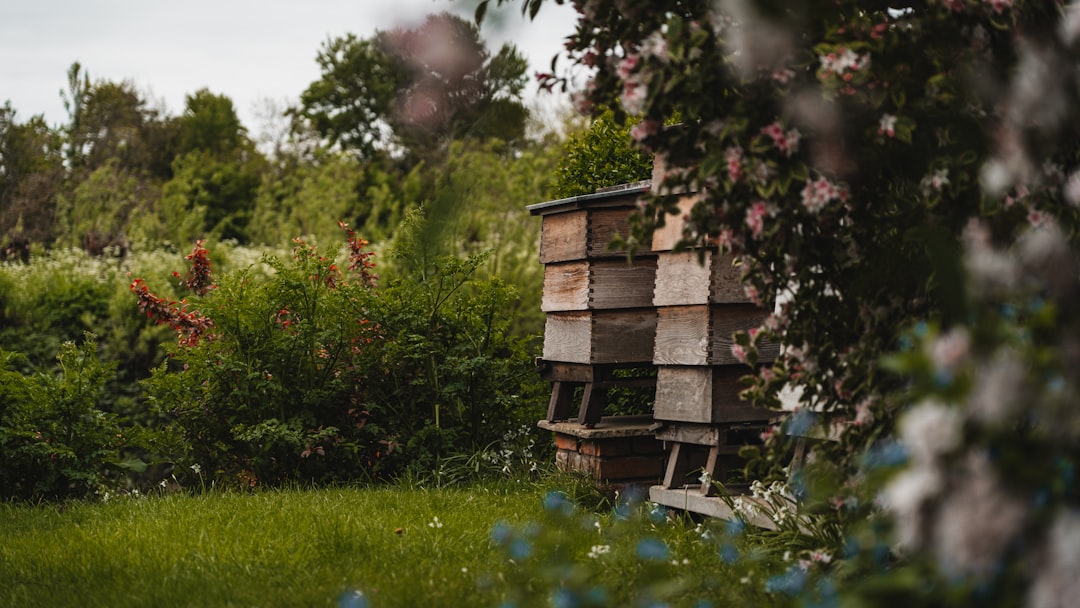
Photo by Eric Dekker on Unsplash
Why Late Summer Triggers Peak Predator Pressure
Understanding the timing tells you when to act. The right moment is weeks before the first wasp appears at your entrance, not after robbing pressure is already underway.
Yellow jacket queens lay eggs throughout spring and summer, building a colony that reaches its largest size just as natural prey insects become scarcer. According to the University of Kentucky Entomology extension fact sheet on yellowjackets, colony populations peak in late summer and remain high until the first hard frost. During this window, yellow jackets shift from protein foraging to carbohydrate seeking, which makes your honey stores a primary target. A hive that sees two or three yellow jackets investigating the entrance in early August will typically face dozens to hundreds by mid-September.
Bald-faced hornets operate on the same calendar. Their nests can house several hundred workers by late summer, and individual hornets are capable of intercepting and dismembering honey bees in flight. Unlike yellow jackets, which mostly attempt to enter hives opportunistically, bald-faced hornets often station themselves near entrances and ambush returning foragers. Heavy hornet pressure forces bees to reduce foraging activity at precisely the time colonies need to be storing winter provisions.
Mammalian predators run on a parallel schedule. Skunks become most active in late summer and fall as they build fat reserves for winter. Black bears intensify foraging in a period called hyperphagia, during which they consume up to 20,000 calories per day to prepare for winter dormancy. A bear that locates your apiary once will return on a predictable schedule until a serious deterrent is in place.
The practical conclusion is this: mid-August is your planning deadline, not your response window. Defenses installed in reaction to an active attack are always behind the curve.
Protecting Hives from Wasps and Hornets
The highest-leverage defense against wasps and hornets begins at the entrance. Honey bees defend a small opening far more efficiently than a wide one, and a reduced entrance is the first action to take when late-summer pressure builds.
A standard 10-frame Langstroth entrance runs approximately 14 to 16 inches wide. During a strong spring nectar flow, that width is appropriate for incoming forager traffic. In late summer, it becomes a liability. Guard bees spread thin across a full-width entrance cannot maintain a coherent defensive line, and wasps probe constantly for gaps. Narrowing the opening to 3 to 4 inches gives guards a tight, manageable perimeter.
The 5 Pack Beehive Entrance Reducer, 10 Frame Wooden Hive Door Reducer is designed for 10-frame equipment and helps restrict hive access. For most colonies facing moderate wasp pressure, a moderate opening is the right call. For a weak colony or one that has recently lost its queen, drop to the smallest opening available so a single guard can physically block the door.
Three entrance management details that often get overlooked:
- Secondary gaps matter. Warped hive bodies, a loose inner cover edge, or an ill-fitting super are all entry points wasps will find. During your late-summer inspection, run your hand around the hive body joints and seal any gap larger than a quarter inch with scrap wood or a dab of propolis if the bees haven’t already done it.
- Keep the landing board clear. Dead bees, pollen loads, and debris accumulating on the landing board slow your bees’ entry and give investigating wasps visual cover. A clean entrance is a faster, safer entrance.
- Move open feeders away from entrances. Syrup feeders placed directly adjacent to hive entrances during wasp season attract scouts, which then investigate the nearest hive. Switch to frame feeders or baggie feeders inside the hive body, or relocate any top feeders well away from the entrance during August and September.
For bald-faced hornet pressure specifically: if you observe hornets patrolling near a hive entrance, that behavioral pattern will persist. Hornets establish productive hunting routes and return to them reliably. Entrance reduction is more consistent as a defense than attempting to locate and destroy nest sites, which carries its own risks and in some regions involves protected species with legal complications.
Using Wasp Traps to Reduce Local Population Pressure
Entrance management stops wasps from getting in; trapping reduces the local population before numbers become unmanageable. These two strategies reinforce each other and should run simultaneously.
Sticky traps designed for wasps use visual lures to intercept workers before they reach your hives. The RESCUE! VisiLure® TrapStik for Wasps, Mud Daubers, Carpenter Bees – 2 Pack is a visual-lure sticky trap designed to target wasps, mud daubers, and carpenter bees. For beekeepers, this distinction from liquid-bait traps is critical: liquid-bait wasp traps routinely catch honey bees as bycatch and are a net harm near an apiary. A visual-lure sticky trap is the appropriate choice when you need population reduction near a hive.
Deploy traps according to this sequence for best results:
- Start trapping in mid-July, not late August. Yellow jacket colonies grow exponentially through summer. A trap that catches 50 workers in July removes 50 colony-building members before their population peaks. Placing traps after robbing pressure is already visible is treating a symptom rather than the underlying numbers driving it.
- Position traps 10 to 20 feet from the hive, not at the entrance. Placing a lure directly at the hive draws more wasp scouts to the immediate area. Offset placement intercepts foraging wasps on their approach path before they lock onto your hive as a resource.
- Hang traps at yellow jacket flight height. Yellow jackets typically fly low, at 2 to 5 feet off the ground. Traps mounted at roughly hive-body height, 4 to 6 feet up, intercept more foragers than traps placed higher in trees or on fence posts.
- Replace traps every two to three weeks. A fully saturated TrapStik loses adhesive effectiveness and lure potency. During peak pressure in August and early September, 14-day replacement cycles keep performance consistent.
- Deploy multiple traps around the apiary perimeter. Wasps approach an apiary from multiple directions, especially when multiple hives are present. Two or three traps placed at different compass points around the yard intercept far more foragers than a single trap at one location.
Protecting Hives from Larger Backyard Predators
Wasps represent a daily attrition threat; mammals represent a potentially existential one. A skunk visiting nightly for two weeks steadily depletes a colony’s guard population in ways you may not notice until the colony is already weakened. A bear can dismantle every hive in an apiary in under an hour.
Skunks are the most underestimated mammalian predator in the backyard beekeeper’s threat profile. Their damage is cumulative rather than sudden, which means it often goes unnoticed until a colony is already compromised. The attack pattern is consistent: a skunk approaches after dark, scratches at the entrance to provoke guards, and eats the bees as they emerge to sting. Over weeks, this erodes the colony’s defensive workforce and disrupts late-season cluster formation. Telltale signs include scratch marks on the lower hive body or landing board, clumps of dead bees on the ground in front of the entrance in the morning, and muddy paw prints on the bottom board.
The most effective skunk deterrent requires almost no equipment beyond what you may already have: raise your hives to 18 inches or higher off the ground. At that height, a skunk must expose its vulnerable belly to reach the entrance, which most individuals are unwilling to do. Two stacked standard cinder blocks reach approximately 16 inches; adding a wooden hive stand board brings you to the 18-inch target. Placing a strip of rough hardware cloth or chicken wire flat on the ground in front of the entrance creates uncomfortable footing that further discourages skunks from approaching close enough to scratch.
Raccoons are more destructive per visit. They will push over unsecured hive bodies and pry at lid edges. Secure your hive with ratchet straps from the bottom board to the roof, or use dedicated hive clips, and add a brick or cinder block on the lid. Do not rely on the weight of stacked supers alone; a hungry raccoon generates more leverage than the setup will withstand.
Opossums behave similarly to skunks and are active through fall. The same elevation and footing deterrents apply.
Bears require a fundamentally different response. Hive elevation, secure strapping, and ground deterrents provide no meaningful resistance against a black bear. Electric fencing is the only reliably effective solution in areas with known bear populations. The Penn State Extension beekeeping program consistently recommends electric fencing as the standard response to bear pressure, not as a supplemental option but as the necessary baseline.
Electric Fencing for Bear and Persistent Mammal Defense
A properly installed and energized electric fence stops bears. An underpowered or poorly maintained one does not, and a bear that breaks through a fence once loses its conditioned hesitation. Getting this right the first time is not optional.
Two specifications drive effectiveness: joule output and fence geometry. For bear deterrence, output should be at least 0.10 joules, with 0.15 joules or higher preferred for reliable shock delivery. The Patriot - SolarGuard 150 Energizer 0.15 Joules is a solar-powered energizer. Solar energizers are the practical choice for most backyard beekeepers because they eliminate the need to trench power to the apiary location, and they maintain charge with adequate daily sun exposure.
Configure the fence correctly from the start:
- Wire height: Use a minimum of three strands at 10 inches, 20 inches, and 30 inches from the ground. Bears approach low before rising on their hind legs, so low wire placement is critical.
- Vegetation management: Clear grass and weeds from beneath the fence line. Vegetation contact with the bottom wire grounds the circuit and reduces shock output to ineffective levels.
- Bait the fence. Apply a small piece of aluminum foil smeared with peanut butter or bacon grease to the wire at bear nose height. A bear that contacts the wire with its nose or tongue at a bait point receives a full facial shock, which is far more effective as a conditioned deterrent than a paw contact.
- Test output monthly. Use an inexpensive fence tester to verify joule output. Ground resistance, wire condition, and vegetation contact all degrade performance over time.
- Enclose the full apiary footprint. A fence that rings individual hives allows a bear to step around or over sections. The entire area needs to be enclosed.
Safety notice: Install electric fence energizers strictly per manufacturer instructions. Post visible warning signs wherever the fence is accessible to neighbors, visitors, or public foot traffic. Keep children and pets away from energized fencing at all times.
Common Mistakes When Protecting Hives from Predators
Even experienced beekeepers fall into predictable patterns that leave colonies exposed at the worst possible time. These are the ones worth understanding before they cost you a colony.
Acting too late. The most common mistake is waiting for visible evidence before deploying defenses. By the time you see wasps massing at the entrance, yellow jacket colonies in the area have been building for weeks. Entrance reducers should go on in early August as part of your seasonal routine, not as a crisis response. Electric fencing should be energized before bears are active in your region. Traps should be out in mid-July. Predator defense is a planning exercise, and the planning window closes faster than it feels like it should.
Placing wasp traps at the hive entrance. Any wasp lure or trap positioned directly at the entrance concentrates wasp scouts at exactly the wrong spot. Offset placement, 10 to 20 feet from the hive, intercepts foragers on approach before they fixate on your hive as a carbohydrate source. Ignoring this placement rule turns a trap into a liability.
Treating the layered system as optional. Beekeepers sometimes remove one layer of defense because they haven’t had problems recently. An entrance reducer alone will not stop a skunk. Traps alone will not stop a determined yellow jacket colony when the entrance is still wide open. The layers address different threats on different timelines, and removing any one of them creates a gap.
Leaving weak hives unaddressed. A queenless or small colony entering late summer has almost no defensive capacity. Wasps, robber bees, and mammalian predators all identify vulnerable hives quickly. If you have a colony that cannot survive winter independently, combine it with a stronger one before predator pressure peaks. Pest pressure compounds in weakened colonies, as explored in detail in the post on Natural Small Hive Beetle Control.
Underweighting hive boxes. Raccoons tip over hive bodies that are not secured. A single brick on the lid is not sufficient for an active raccoon. Ratchet straps from the bottom board through the lid take five minutes to install and cost almost nothing.
Skipping entrance checks after an event. Following a skunk or raccoon disturbance, bees sometimes cluster at the entrance or use propolis in a way that partially blocks it. Always confirm the entrance is fully open and functional after any predator event overnight.
Frequently Asked Questions About Protecting Hives from Wasps and Predators
Do wasp traps harm honey bees?
Liquid-bait wasp traps that use sweet attractants will catch honey bees as bycatch, which is why they are the wrong choice near an apiary. Visual-lure sticky traps, such as the RESCUE! VisiLure TrapStik, rely on visual lures rather than sweet liquid bait. Placement further reduces bycatch: traps set 10 to 20 feet from the hive entrance, on the approach path wasps use, catch far fewer honey bees than traps positioned at the hive itself. For beekeepers, the combination of the right trap type and the correct placement position is what makes population reduction a net benefit rather than a net harm to the colony you are trying to protect.
What is the most effective immediate response to a strong yellow jacket attack?
Narrow the entrance and deploy traps at the same time. Reduce the opening to 3 to 4 inches right away so guard bees can hold a defensible perimeter without being spread too thin. Then deploy offset sticky traps to reduce the local yellow jacket population over the following two to three weeks. For colonies too weak to defend even a reduced entrance, drop to the smallest opening available. Do not attempt to locate and destroy ground-nesting yellow jacket colonies without proper protective gear and adequate safety knowledge. Underground nests are particularly hazardous to approach, and professional pest management is the more prudent option in most residential situations.
When should I install electric fencing for bear protection?
Install fencing before bears are active in your area, not in response to a visit. In most of the continental United States, bear activity increases from late July onward as hyperphagia begins. Extension guidance generally recommends having electric fencing operational by early August in regions with known bear populations. A bear that has already visited a hive site is a harder deterrent challenge, because it has already associated the location with a high-calorie reward and will return with greater motivation. In regions with consistent bear activity, treat electric fencing as permanent infrastructure rather than a seasonal setup. Removing the fence over winter eliminates the conditioned aversion and requires effectively re-training the animal each spring.
How high should I raise my hives to deter skunks?
Raising hive entrances to 18 inches or higher off the ground is the threshold that most extension guidance cites for making entrances inaccessible to skunks without requiring the skunk to fully expose its belly. Two stacked standard cinder blocks reach approximately 16 inches; adding a wooden hive stand board brings you to the 18-inch target. The goal is to force the skunk into an upright posture to reach the entrance, which eliminates the incentive to persist. Beekeepers in high-skunk-activity areas consistently report that hives at ground level or on short risers are targeted repeatedly, while hives elevated to 18 inches or more are largely left alone after initial investigation.
Conclusion
Predator pressure in late summer and fall is predictable, and it is almost entirely preventable with preparation that costs more in planning time than in money. Entrance reducers, offset wasp traps deployed before population peaks, skunk-deterring hive elevation, and a properly energized electric fence together cover the realistic threat spectrum for nearly every backyard beekeeper.
All of these measures share one feature: they work best when deployed before pressure arrives. Get entrance reducers on in early August. Set wasp traps in mid-July. Have the fence energized before bears begin hyperphagia in your region. Raise hives if skunks are documented in your area. These four steps protect the colonies you have spent all season building and give them the best possible chance of coming through winter strong. Your next step is to pull up the seasonal calendar and mark the dates.
If this guide was useful, bookmark it for next July when your prep window opens, or leave a comment below with questions about your specific predator situation.
Related Reading
- How To Prepare Your Apiary For Winter - the natural next step once predator defenses are in place
- Wax Moth Prevention And Treatment - another pest threat that compounds in weakened late-season colonies