Varroa Mite Management Strategies Without Chemical Treatments
This post contains affiliate links. As an Amazon Associate, I earn from qualifying purchases at no extra cost to you.
Varroa destructor is the single largest reason hobbyist colonies collapse. If you are not actively managing mite loads, you are not really keeping bees so much as running a slow-motion feeding station for a parasite that has wiped out feral honeybee populations across most of North America. The Honey Bee Health Coalition’s Varroa Management Guide documents that untreated colonies in temperate climates typically reach population-collapse mite levels within two to three seasons. That is not a worst-case projection. It is the documented baseline.
The real question is not whether to manage varroa but how. A growing number of hobbyists and certified-organic producers run chemical-free apiaries by combining physical interventions, brood interruption, and consistent monitoring into a layered system that holds mite loads at genuinely acceptable levels. The word “layered” matters here. No single non-chemical technique is sufficient on its own. Drone comb trapping will not save a heavily infested colony. Powdered sugar dusting will not either. But stack brood interruption, a screened bottom board, drone trapping, and rigorous monitoring together, and you have a defensible management program that many hobbyists sustain for years without synthetic miticide strips.
Every decision in that program starts with a number: your actual mite count. If you do not know what you are working with, everything that follows is guesswork.
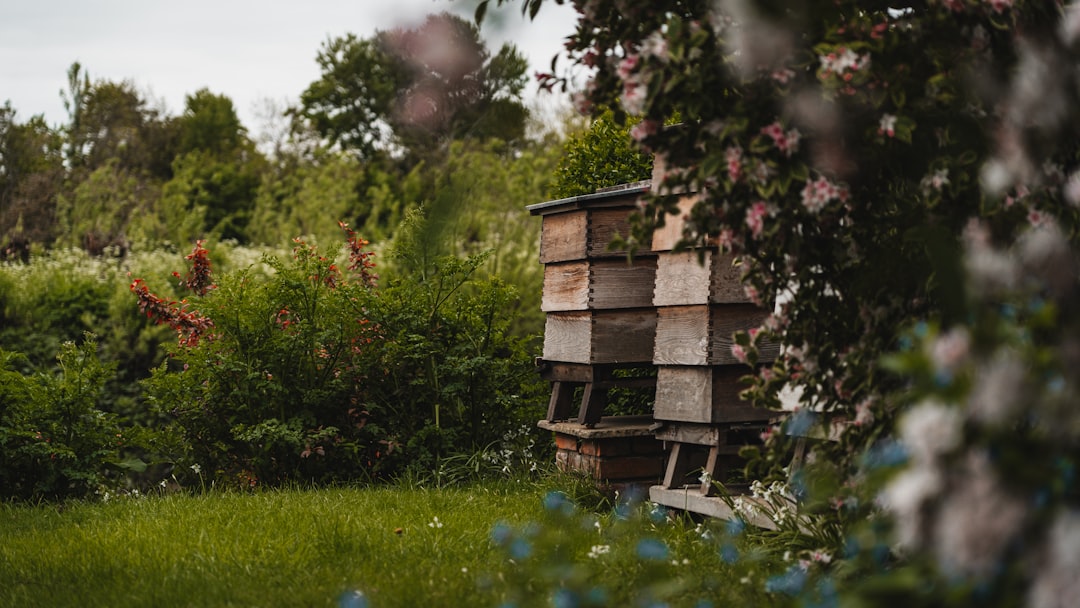
Photo by Eric Dekker on Unsplash
Monitor First: Building a Reliable Varroa Mite Management Baseline
No intervention makes sense until you know your starting mite load. The action threshold most extension services and the Honey Bee Health Coalition endorse is 2 mites per 100 bees during the brood-rearing season. In late summer and fall, when colony populations are declining and the mite-to-bee ratio spikes faster than most beekeepers expect, the threshold drops to 1 mite per 100 bees. At or above those numbers, action is warranted immediately. Below them, monitoring every 30 days remains the correct move.
Two counting methods give you reliable data. The alcohol wash kills every mite on the sampled bees, producing a true count and making it the gold standard for diagnosis. The sugar roll releases most mites but misses some, which makes it a reasonable non-lethal spot check between more rigorous assessments. For complete step-by-step instructions on both methods and a direct comparison of their accuracy, see our guide on how to do a mite wash: alcohol roll vs. sugar shake.
Sticky boards give you a third data point: natural mite drop rate over 24 or 72 hours. They do not replace a wash count, but they let you track trends between inspections without disturbing the colony repeatedly. The Mann Lake Mite Sticky Board is purpose-built for this kind of precision mite monitoring. Slide it under a screened bottom board, pull it after 24 hours, and count the mites. A daily drop above 8 to 10 mites during peak brood season typically confirms that a wash count will reveal a problem worth addressing.
Build a four-count monitoring calendar: spring before the first nectar flow, midsummer, late summer before the colony begins reducing population for winter, and early fall before cluster formation. That schedule catches problems early enough for non-chemical interventions to have meaningful impact. Beekeepers who monitor only once or twice per season consistently find themselves behind the curve by late August.
Screened Bottom Boards: Passive Varroa Mite Management Support
A screened bottom board does not treat varroa in any meaningful clinical sense. Mites that fall through the screen have already completed reproductive cycles, and the contribution to colony-level mite reduction is modest. Research consistently places the standalone reduction from screened boards in the 10 to 15 percent range compared to solid boards, which is not dramatic. But that reduction is passive, continuous, and completely maintenance-free once the board is installed, which makes it a reliable background element in a layered program.
The more important function in a chemical-free setup is monitoring. With a sticky board insert in place, every natural mite drop is captured and counted. That daily drop rate gives you early warning of rising mite pressure between your scheduled wash counts, and it gives you a post-intervention benchmark after a brood interruption to confirm the mite load is actually declining.
Construction quality matters more than most hobbyists realize. A screen that sags or warps under hive weight creates gaps at the frame edges where mites can re-enter. Wooden frames that absorb moisture and swell can buckle the screen. The Honey Lake Langstroth 10 Frame Beehive Metal Screened Bottom Board features a metal screen construction dipped in beeswax and includes an entrance reducer. The entrance reducer becomes useful in late summer when you want to limit robbing during a colony-weakening brood break.
Position the board with a slight forward tilt for drainage. Pull your sticky board insert every 24 to 72 hours for counts during active monitoring periods, and leave it out entirely in peak summer heat if ventilation is a concern. Just understand that removing the insert eliminates your passive monitoring capability until you slide it back in.
Brood Interruption: The Most Effective Non-Chemical Varroa Mite Management Tool
If you are going to build your program around one non-chemical strategy, this is the one. The biological logic is straightforward and well-supported: at any given moment, approximately 80 to 85 percent of varroa mites in a colony are inside capped brood, not on adult bees. Mites reproduce exclusively in capped cells, and each foundress mite can produce one reproductive daughter per worker brood cycle and up to two from drone brood. Remove the capped brood from the equation for a full brood cycle and you strand that 80 to 85 percent in cells they cannot exit. The mites sealed in brood die without completing reproduction.
Three approaches achieve this interruption, and the right one depends on your skills and the specific circumstances of each hive.
Queen caging involves trapping the laying queen inside a wire-mesh cage within the hive for 21 to 25 days. Workers can access and feed her through the mesh, but she cannot lay. Existing capped brood hatches out over three weeks, workers clean and re-polish the cells, and the mites that were sealed in brood die with no new brood to enter. Release the queen after 25 days and monitor her laying pattern closely in the first week. Some queens resume normally; others lay irregularly after extended caging. Limiting the cage period to 21 to 25 days minimizes that risk.
Hive splitting achieves a natural brood break with lower queen stress. Split the colony and give the queenless half a frame of young larvae for emergency queen rearing. The queenless split experiences a natural brood break during the 16-day queen-rearing period, plus several additional days before the new queen mates and begins laying. Mite reproduction pressure drops in both halves during that window, and the new queen starts her career with a relatively clean brood nest. For mechanics on executing a split properly, our post on how to split a hive to prevent swarming covers the process in full even though the goal here is mite control rather than swarm management.
Comb removal is the most surgical option. Identify and remove frames of fully capped worker brood, shake the adult bees back into the hive, and freeze the frames for 48 hours. Freezing kills both the developing pupae and the mites inside. The comb can then be thawed and returned as drawn comb (cleaned by the bees) or discarded. This method works best as a complement to one of the above rather than a standalone approach.
Drone Comb Trapping: A Targeted Mechanical Strategy
Varroa strongly prefer drone brood for reproduction, at roughly 7 to 1 over worker brood under natural conditions. Drone trapping exploits that preference by offering the mites exactly what they want, then removing the comb before drones emerge and the mites escape.
The execution is straightforward. Insert a foundationless frame or a commercially made drone-foundation frame into the brood nest in early spring when the colony is building up and producing drone comb naturally. The bees draw cells to drone dimensions, the queen lays unfertilized eggs, and mites pack into those cells at high rates as brood is capped. Check the frame once it is fully capped but before emergence (roughly 24 days after insertion), pull it from the hive, and freeze it for 48 hours. Return the thawed, cleaned comb for the next cycle or discard it and start fresh. Repeat two to three more full cycles through late spring and early summer.
When done consistently across three full cycles, drone trapping can reduce mite populations by 30 to 40 percent, based on research reviewed in extension literature from multiple apiculture programs. The limitation is strictly seasonal. Once the colony reduces drone production in midsummer, the method loses its effectiveness. Treat drone trapping as a spring and early summer tool, not as a year-round solution, and schedule your midsummer wash count to assess how much mite pressure remains after your trapping cycles complete.
Powdered Sugar: Monitoring Tool, Not a Varroa Mite Management Treatment
Powdered sugar as a varroa treatment is one of the most persistent myths in hobbyist beekeeping, and it deserves a direct answer. Multiple controlled studies, including work reviewed by University Extension apiculture programs and professional beekeeping associations, have found that powdered sugar dusting does not reduce varroa populations at a statistically significant level. Mites cling to bees using specialized sticky pads, and finely milled sugar is not abrasive enough to dislodge them reliably. Workers groom the sugar off in minutes, and the mites remain.
This raises an obvious question about why a sugar shaker appears on this product list. The answer is that the stainless steel powder sugar shaker is genuinely useful for sugar roll mite counts, which are a legitimate monitoring method even if they cannot serve as a treatment. To execute a sugar roll, collect roughly 300 adult bees (approximately a half-cup measure) from a frame of capped brood, add powdered sugar through the fine mesh lid of the shaker, and roll the container gently for 60 seconds. Invert and shake the sugar through the mesh onto a white plate or bowl. The powdered coating temporarily disrupts the mites’ adhesive pads long enough for many of them to fall free. Count the mites, divide by your bee count, and multiply by 100 for your percentage.
This shaker works well for that task because the fine mesh produces an even, consistent coating without clogging. Use it for monitoring and count accuracy, then direct your management energy toward the interventions that actually move the needle.
FAQ
How do I know if my non-chemical varroa mite management program is actually working?
Your mite counts are the only honest answer. Monitor with an alcohol wash or sugar roll every 30 days during the active season and compare results to the accepted thresholds: 2 mites per 100 bees during brood season, and 1 mite per 100 bees in late summer and fall. If counts stay consistently below those thresholds through a full season, your program is working. If counts creep above threshold despite layered interventions, the next honest step is evaluating a softer approved treatment such as oxalic acid or formic acid, both of which are permitted in certified-organic operations and far less disruptive to wax and honey quality than synthetic miticides. Non-chemical management is a legitimate goal, but not at the cost of losing colonies.
Can I run drone comb trapping and brood interruption in the same season?
Yes, and running both in the same season is the recommended approach for most hobbyists committed to a chemical-free program. Drone trapping during spring and early summer addresses mite reproduction during peak drone-production periods when the method is most effective. A timed brood interruption in August addresses the mite surge that builds after drone trapping becomes impractical and the colony’s declining population creates a rising mite-to-bee ratio. The two methods target different phases of the mite’s reproductive cycle and work better together than either does alone. Layer both on top of a screened bottom board for passive mite removal, use your monitoring data to time each intervention, and you have a complete non-chemical management architecture.
Does bee genetics make a meaningful difference in chemical-free varroa management?
Significantly. VSH (Varroa-Sensitive Hygiene) and Minnesota Hygienic bee stocks are selectively bred to detect and remove mite-infested brood before the mites complete reproduction. A colony with strong VSH expression can suppress mite reproduction rates substantially without any beekeeper intervention, because the bees themselves are interrupting the mites’ brood cycle. For hobbyists committed to a chemical-free approach, sourcing VSH or Hygienic queens from reputable breeders is one of the highest-leverage decisions available. It does not replace monitoring or active intervention when counts climb, but it shifts your baseline mite growth rate meaningfully in your favor and often reduces how frequently brood interruptions need to be executed to maintain acceptable levels.
Is a screened bottom board enough to manage varroa without any other intervention?
No, and expecting it to be is a common early-beekeeper mistake. The evidence consistently shows screened bottom boards reduce mite populations by roughly 10 to 15 percent compared to solid boards, which is not sufficient to keep a colony below action thresholds if the starting mite load is moderate or climbing. Their real value in a non-chemical program is as a passive monitoring platform: pair one with the Mann Lake Mite Sticky Board to track natural mite drop trends between formal counts, and use that data to inform your brood interruption timing. The screened board is a foundational element, not a management strategy on its own. Build your active interventions on top of it.
How to Build a Chemical-Free Varroa Mite Management Routine
The strategies above work best as a coordinated annual system rather than ad hoc responses to problems that have already become serious. The following routine is practical for hobbyists managing one to five hives:
-
Establish your spring baseline (March to April): Run an alcohol wash or sugar roll on each hive when daytime temperatures are consistently above 55 degrees Fahrenheit and the colony has at least four frames of bees. Record every result. If counts are already above 2 percent before drone production begins, execute a brood interruption before you insert drone frames.
-
Insert drone comb frames (April to May): Add one foundationless or drone-foundation frame per hive into the brood nest. Mark your calendar 24 days out for each insertion so you do not miss the removal window before drones emerge.
-
Pull and freeze the first capped drone comb cycle (late April to May): Remove capped frames, freeze for 48 hours, and reinsert the thawed comb or discard it. Reinsert a fresh foundationless frame and start the next trapping cycle immediately. Aim for two to three completed cycles through late June.
-
Conduct a midsummer count (late June to July): Run another wash count on every hive. If any hive is above 2 percent, implement a queen cage brood interruption or a split without delay. If counts are below 2 percent, continue monitoring monthly and continue drone trapping where the colony still produces drone comb.
-
Execute a late-summer brood interruption if counts warrant it (August): This is the single most important intervention window of the year. Mite populations peak as colony populations shrink, which means the mite-to-bee ratio accelerates sharply. A brood interruption completed by mid-August gives the colony time to rebuild bee numbers before winter, with a substantially reduced mite load.
-
Conduct your pre-winter count (September): This is your final decision point before the colony stops raising brood and mite populations become locked in for winter. If counts exceed 1 percent in September, a brood interruption is almost certainly necessary. Skipping this count in favor of hoping the colony winters through is one of the most reliable ways to lose hives.
Common Varroa Mite Management Mistakes That Cost Colonies
Chemical-free programs have a narrower margin for error than synthetic treatments. That means common mistakes carry bigger consequences. These are the ones that reliably kill colonies.
Skipping the baseline count. Launching an intervention without knowing your starting mite load is one of the most frequent errors hobbyists make. You might disrupt a healthy colony’s brood cycle unnecessarily, or you might apply a light-touch intervention to a hive that needs a full brood interruption immediately. The count takes 15 minutes and removes all the guesswork. There is no rational case for skipping it.
Treating drone trapping as a complete program. Drone trapping reduces mite reproduction pressure effectively during spring, but it does not address the mite load that accumulates through summer and peaks in August. Beekeepers who rely on it as their only strategy often find themselves facing dangerously high counts in late summer because no follow-up intervention was planned after drone production ended. Drone trapping is a season opener, not a season-long solution.
Releasing a caged queen too early. Queen caging for brood interruption requires a minimum of 21 days for worker brood cycles and 24 to 25 days to catch drone brood as well. Releasing the queen at day 14 because the colony appears stressed leaves a substantial cohort of mites alive inside late-capped brood that has not yet hatched. The interruption fails, and the queen has been caged for nothing. If you are going to cage her, see the interruption through to the appropriate day.
Ignoring mite counts in August and September. Late-season monitoring is the most critical window of the entire calendar year, and it is also the most consistently skipped. Beekeepers busy with honey extraction often defer the late-summer count until October, by which point mite levels have frequently passed the threshold where non-chemical interventions can reverse the trajectory before winter cluster formation. Set a hard calendar date for your August count and treat it as non-negotiable.
Interpreting a low sticky board drop as a clean hive. Sticky boards and phoretic counts capture mites riding on adult bees, which represent roughly 15 to 20 percent of the colony’s total mite population during peak brood season. A low drop count during a period of heavy brood production can mask a serious mite load sitting inside capped cells. Always pair sticky board data with periodic wash counts, especially during midsummer when the gap between phoretic and total mite loads is largest.
Using powdered sugar as a primary treatment. The research is settled enough on this point that directing your management energy toward sugar dusting instead of brood interruption is a meaningful strategic error. Use the sugar roll for monitoring counts, and reserve your intervention time for the approaches with actual evidence behind them.
Conclusion
Chemical-free varroa mite management asks more of you than dropping a miticide strip into the hive and checking back in eight weeks. It requires consistent monitoring, disciplined timing, and the willingness to execute interventions like brood interruption on a schedule rather than when it feels convenient. The payoff is a cleaner honey product, lower chemical residues in your beeswax, and a sustainable management approach that does not depend on maintaining access to synthetic treatments.
The program that works is not complicated: monitor on a four-count-per-year schedule, run drone trapping through late spring, use screened bottom boards for continuous passive mite removal, and execute brood interruptions in midsummer and late summer when mite pressure peaks. If counts climb above threshold despite those interventions, escalate to a softer approved treatment rather than absorbing colony losses in the name of staying chemical-free. The goal is healthy bees, not an ideology.
Bookmark this guide and pull it up when you run your next count. The decision framework is the same regardless of what number you find.
Related Reading: