Varroa Mite Management Natural and Chemical Treatment Options
This post contains affiliate links. As an Amazon Associate, I earn from qualifying purchases at no extra cost to you.
Varroa destructor is the most destructive parasite in modern beekeeping, driving colony losses that routinely exceed 30 percent annually across the United States. The mite reproduces inside capped brood cells, feeds on honeybee fat bodies, and serves as the primary amplification vector for Deformed Wing Virus - a pathogen producing crumpled-winged adults incapable of foraging or surviving a winter cluster. A colony that enters October with a mite load above 3 per 100 adult bees will almost certainly be dead by February, regardless of how well-fed or well-populated it looks in September.
What makes varroa genuinely difficult to control is the reproductive math. Mite populations can double every four to five weeks during active brood-rearing. A hive that tests clean at 1 percent in June can cross the critical threshold by August if mid-season monitoring is skipped. Timing matters as much as product selection - a thymol treatment applied during August heat performs poorly, and amitraz strips left beyond their labeled duration accelerate resistance selection rather than resolve the infestation.
This guide provides a practical varroa mite management framework: how to verify your mite load before acting, when organic treatments are the right first-line choice, when synthetic acaricides are necessary, and what mistakes undermine even correct product applications.
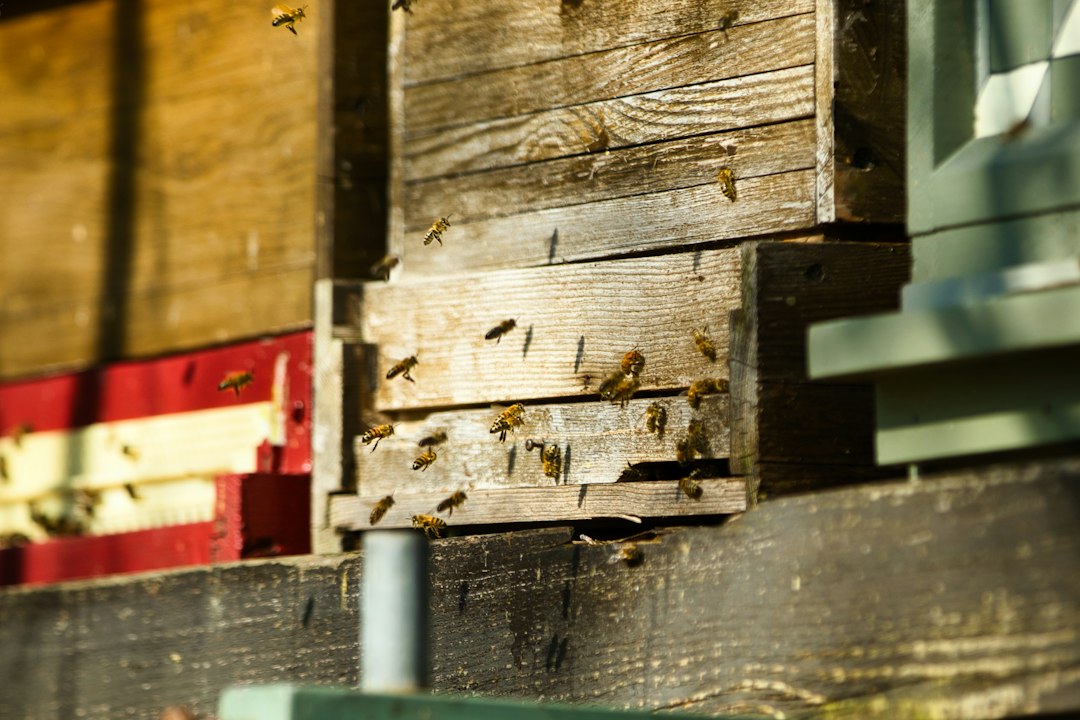
Photo by 𝕡𝕒𝕨𝕤 𝕒𝕟𝕕 𝕡𝕣𝕚𝕟𝕥𝕤 on Unsplash
Why Varroa Mite Management Is the Defining Skill in Modern Beekeeping
Female varroa mites enter brood cells just before capping and lay eggs on the developing larva. Reproduction completes inside the sealed cell, and the newly emerged adult bee carries daughter mites out with her. Each successful reproductive cycle produces an average of 1.5 to 2.5 surviving daughter mites per worker cell and up to 3 per drone cell - which mites prefer at a ratio of roughly 8 to 1. During peak summer brood rearing, mite populations can climb from 1 percent to 5 percent within five to six weeks.
The secondary damage through viral transmission is what actually kills colonies. Varroa is the primary amplification route for Deformed Wing Virus (DWV), Acute Bee Paralysis Virus, and Sacbrood. DWV causes the most visible damage: adult bees emerge with vestigial wings, shortened abdomens, and lifespans measured in days rather than weeks. When this cohort represents a significant share of the winter cluster, the colony cannot thermoregulate, cannot move through honey stores effectively, and collapses - typically in late January or February when the beekeeper is not watching.
The Honey Bee Health Coalition’s Varroa Management Guide—a collaborative resource produced by researchers, beekeeping associations, and industry partners - recommends treating before counts reach 2 percent during active nectar flows and 3 percent at any other time. Those thresholds exist because varroa loads above those levels correlate strongly with viral activation and accelerating decline that compounds faster than most beekeepers expect. The goal is not eradication - it is population suppression below the threshold at which viral loads spike and overwhelm bee immunity.
Monitoring First: Know Your Mite Counts Before You Choose a Treatment
Choosing a varroa treatment without a current mite count is treating a symptom you have not confirmed. Two standard field methods exist: the alcohol wash and the sugar shake. The alcohol wash is more accurate - sugar shakes can undercount by 30 to 40 percent under field conditions, which is a problematic margin when you are trying to determine whether you are at 1.8 percent or 2.5 percent.
For an alcohol wash, collect approximately 300 adult bees (roughly half a cup by volume) from a frame of open brood, where phoretic mites concentrate. Agitate the sample in 70 percent isopropyl alcohol for 60 seconds, then pour through a mesh lid into a white container. Count the mites and divide by 300 for your percentage. A result at or above 2 percent during a honey flow, or at or above 3 percent at any other point in the season, triggers immediate treatment.
The step-by-step process for both methods is covered in How To Do A Mite Wash: Alcohol Roll Vs Sugar Shake, including how to interpret borderline results and what equipment to have on hand.
Run a count at minimum three times per year: early spring before colony buildup begins, midsummer around June or July, and late summer in August or September when fall treatment decisions must be made. The late-summer count is the most consequential. The mites present in August and September will infest the brood cells that raise the winter bee cohort - the long-lived, fat-bodied bees the colony depends on for cluster survival. A high mite load in this window cannot be fixed in November; the damage is already done.
Natural Varroa Mite Management Treatments: Thymol and Organic Acids
Natural or “soft” treatments - thymol-based products, oxalic acid, and formic acid - leave no synthetic residues in wax or honey when applied correctly, varroa has not developed meaningful resistance to any of them, and they are broadly compatible with organic certification programs. Their main constraints are temperature windows and, for oxalic acid, limited efficacy against mites sealed inside capped cells.
Thymol: Apiguard
Thymol is a monoterpenoid derived from thyme oil that disrupts varroa reproduction and kills phoretic mites through contact and vapor action. Apiguard Varroa Mite Treatment, 10 x 50g is the most widely used thymol gel format among US hobbyist beekeepers. A complete treatment consists of two 50g doses applied two weeks apart, each gel tray placed on the top bars to vapourize slowly over two to three weeks and permeate the hive atmosphere.
The critical constraint is temperature. Thymol volatilizes at the rate the label assumes only between approximately 59°F and 104°F, with optimal efficacy in the 60°F to 80°F range. Treatments applied during sustained heat above 90°F can stress the colony and cause brood mortality; treatments applied when daytime temperatures have consistently dropped below 55°F produce inadequate mite kill. In most temperate US regions, the effective Apiguard window runs from late August through mid-October. Do not apply honey supers during treatment, and observe the required pre-super interval after completing the two-dose cycle.
Oxalic Acid
Oxalic acid is highly effective against phoretic mites but has minimal effect on mites inside capped cells, making it most powerful during broodless or low-brood periods. A late-fall or midwinter vaporization treatment in a broodless colony can achieve 90 to 95 percent mite kill. During heavy brood rearing, efficacy drops significantly because the bulk of the mite population is shielded inside cells throughout the treatment period.
Vaporized oxalic acid reaches into cracks and interframe spaces that dribble solution cannot penetrate, making it the preferred delivery method for beekeepers with vaporizing equipment. Both delivery methods require respiratory protection - oxalic acid vapor is a respiratory irritant, and proper use requires an approved respirator per label requirements. Always follow the product label completely, including dosing, temperature limits, and personal protective equipment.
Chemical Varroa Mite Treatment: When Amitraz Strips Are the Right Call
Synthetic acaricides act faster and more broadly than organic options. They are the appropriate choice when mite loads are high, when the temperature window for effective organic treatment has closed, or when a colony needs rapid mite reduction before winter cluster formation.
Apivar Amitraz Strips
Amitraz works by binding to octopamine receptors in the varroa nervous system, causing paralysis and death. Unlike oxalic acid, amitraz has activity against mites inside capped brood cells because nurse and house bees traveling through the treated zone carry trace quantities into the brood environment. This brood-penetrating activity makes Apivar effective during active brood rearing when oxalic acid is not.
For beekeepers treating one to three hives per cycle, Apivar® 2.0 Amitraz Strips for Varroa Mite Control - 4 Strips is the practical package size. For four or more hives, Apivar® 2.0 Amitraz Strips for Varroa Mite Control - 12 Strips is the better choice for larger operations. A standard Langstroth hive with two brood boxes requires two strips per box, positioned between frames in the active brood cluster area.
How to Apply Apivar Strips Correctly
Follow these steps in order. Deviations from the label are the most common cause of treatment failure and the primary driver of amitraz resistance development:
-
Remove all honey supers before inserting strips. Amitraz is not approved for use with supers present. Residue contamination of harvestable honey is a documented risk, and applying strips with supers on violates the product label.
-
Insert two strips per brood box, positioned between the third and fourth frame from each outer wall of the brood cluster. Strips must hang where bees are actively traveling across them. A strip placed at the outer edge of an empty frame makes poor contact with the foragers and nurse bees carrying phoretic mites.
-
Leave strips in place for the full labeled treatment duration, typically 42 to 56 days depending on the product version. Do not pull them early. The slow-release mechanism requires the full contact period to reach mites completing multiple brood cycles after strip insertion.
-
Remove strips promptly at the end of treatment and dispose of properly. Do not leave expired strips in the hive and do not reuse strips from a prior treatment cycle. Extended sublethal exposure without meaningful additional efficacy is a documented pathway to resistance selection.
-
Re-test mite levels three to five days after strip removal. A successful treatment should bring counts below 2 percent, and ideally below 1 percent in colonies entering winter preparation. If counts remain elevated after a correctly applied treatment, investigate strip placement, cluster behavior, or the possibility of amitraz resistance.
Safety Note: Amitraz is a regulated pesticide. Wear nitrile gloves when handling strips. Wash hands thoroughly after application. Keep strips away from children and pets. Never apply to hives with open honey supers intended for harvest. Read and follow the complete product label before each use.
Treatment Comparison: Matching the Method to Your Hive’s Situation
Choosing between natural and synthetic treatments requires balancing efficacy, temperature window, honey super status, and your treatment rotation history. The table below summarizes the primary options available to US hobbyist beekeepers.
| Treatment | Active Ingredient | Optimal Temp Range | Effective in Capped Brood | Honey Super Safe | Resistance Risk |
|---|---|---|---|---|---|
| Apiguard | Thymol | 59°F - 80°F | Partial | No | Very low |
| Oxalic acid (dribble) | Oxalic acid | Above 40°F | No | No | None documented |
| Oxalic acid (vapor) | Oxalic acid | Above 40°F | No | No | None documented |
| Apivar strips | Amitraz | 50°F - 100°F | Yes | No | Moderate if unrotated |
| Formic acid (MAQS/FormicPro) | Formic acid | 50°F - 85°F | Yes | Yes (per label) | Low |
How to read this table: If supers are still on and counts are at the threshold, formic acid products are the only commonly available option with super-safe labeling - consult a current product label for specific temperature and duration requirements. Once supers come off and daytime temperatures are above 60°F, Apiguard is a strong natural first choice. When temperatures are dropping below the thymol window or mite counts are above 3 percent, Apivar strips deliver the most reliable, brood-penetrating mite reduction. Oxalic acid is most powerful during broodless periods and best used as a late-fall mop-up treatment rather than a primary brood-season option.
For a typical backyard beekeeper treating in September or early October, Apiguard Varroa Mite Treatment, 10 x 50g is a practical option when temperatures are still in the effective range. When counts are above 3 percent or the thymol window is closing, Apivar® 2.0 Amitraz Strips for Varroa Mite Control - 4 Strips delivers reliable mite reduction for a single high-load hive.
Seasonal Timing: When to Treat and When to Hold Off
Treatment timing matters as much as product selection. The fall treatment cycle - typically August through October depending on your climate - is the single most important intervention of the beekeeping year. The reason comes down to winter bee biology: bees raised in September and October accumulate larger fat bodies, carry higher vitellogenin levels critical to overwintering longevity, and live four to six months instead of four to six weeks. If the brood cells raising these winter bees are heavily infested throughout August and September, the resulting adults are immunocompromised before the cluster even forms. A colony with a strong-looking October population can still collapse by February if its winter bees were raised under high mite pressure.
Penn State Extension’s varroa mite management guidance recommends completing fall treatment early enough for at least three to four brood cycles of mite-suppressed bees to be raised before winter cluster formation - which generally means treating no later than mid-September in USDA hardiness zones 5 and 6, and no later than early October in zones 7 and 8.
A practical seasonal structure for most US backyard beekeepers looks like this:
- Early spring (March to April): Run an alcohol wash after the cluster breaks. Treat if counts are at or above 2 percent. The overwintered mite population is smaller but growing rapidly on new spring brood.
- Midsummer (late June to July): Monitor again. A July treatment at 2 percent prevents the exponential summer mite buildup from carrying unchecked into the critical fall window.
- Late summer (August to September): This is the essential window. Treat if counts are at or above 2 percent, regardless of what earlier counts showed. Complete treatment in time for multiple cycles of winter bees to be raised with suppressed mite loads.
- Late fall (November to December): Apply oxalic acid via dribble or vapor during the broodless or low-brood period. This mop-up treatment catches any mites that survived the main fall treatment or reinvaded from neighboring colonies.
Both thymol and amitraz products require super removal before application. If your main flow ends in July, pulling supers and treating immediately gives maximum lead time before temperatures close the thymol window. If your local flow extends into September, plan accordingly - either use a formic acid product during the flow or schedule treatment the day supers come off.
Common Varroa Mite Management Mistakes to Avoid
Most treatment failures are timing errors, application errors, or monitoring gaps - not product failures. These are the patterns that repeatedly undermine otherwise reasonable management plans.
Treating without a current mite count. Applying treatment on a fixed calendar date without confirming counts exceed the action threshold leads to two failure modes: unnecessary chemical exposure in low-mite colonies, and false confidence in high-mite colonies where the wrong product or timing is chosen. Always start with a count. Treatment is a response to a measured problem, not a scheduled event.
Applying thymol outside its effective temperature window. Thymol volatilizes at the rate the label assumes only when ambient temperatures are between 60°F and 80°F. A beekeeper who waits until late October to apply Apiguard in a northern climate is applying an ineffective treatment. When nighttime temperatures consistently drop below 55°F, switch to Apivar strips or plan an oxalic acid treatment in December.
Leaving Apivar strips in beyond the labeled duration. Strips left in the hive for 70 or 80 days extend sublethal chemical exposure without proportional additional mite kill - a documented pathway to resistance selection. Set a calendar reminder when strips go in and remove them on the correct date, even if the hive does not receive a full inspection that day.
Treating once and assuming the problem is solved long-term. A successful fall treatment does not provide year-round protection. Varroa reinvades continuously from neighboring colonies, particularly during robbing season and after swarm events. A hive that tests at 0.5 percent in November can be above 2 percent by April. Without a monitoring-and-treatment calendar anchored to your local season, you are always reacting to crises instead of preventing them.
Failing to rotate mode of action. Using Apivar every single treatment cycle selects for amitraz-resistant mite populations. Rotate: use amitraz-based treatment one fall, a natural treatment the following cycle, then return to amitraz. If post-treatment counts remain above 2 percent after a correctly applied Apivar treatment, consult your state apiarist - resistance may be developing and a diagnostic sample is warranted.
Skipping post-treatment verification. A treatment is not complete until you have re-tested mite levels. Run an alcohol wash three to five days after strips are removed or the final Apiguard dose is finished. Skipping this step is how severe infestations go undetected until the colony shows clinical symptoms in late winter.
Frequently Asked Questions
Can I treat for varroa mites while honey supers are on the hive?
Most varroa treatments are not labeled for use with honey supers present - this includes thymol products like Apiguard and amitraz strips like Apivar. The exception is formic acid products such as MAQS and FormicPro, which carry label language permitting limited use with supers during specific temperature windows. If your mite count reaches the action threshold during an active flow and removing supers is not yet practical, a formic acid product is the appropriate interim choice. For all other treatments, remove supers before applying, observe the required pre-harvest interval on the label, and re-add supers only after that interval expires. Residue contamination of harvestable honey from improper amitraz or thymol use is documented and not theoretical.
How do I know if my varroa treatment actually worked?
Run an alcohol wash three to five days after completing treatment - after removing Apivar strips or finishing the second Apiguard dose. A successful treatment should bring mite loads below 2 percent for a colony heading into peak summer season, and ideally below 1 percent for a colony entering winter preparation. If counts remain above 2 percent after a correctly applied treatment, investigate strip placement, whether ambient temperatures were adequate for thymol volatilization, or whether amitraz resistance is a factor. Do not assume efficacy based on visual colony health - elevated mite loads can coexist with apparently normal colonies for weeks before clinical symptoms appear.
How often should I test for varroa throughout the season?
At minimum, three times per year: early spring before colony buildup begins, midsummer around June to July, and late summer in August or September before fall treatment decisions. After any treatment cycle, a post-treatment count is essential to confirm efficacy. The Honey Bee Health Coalition recommends the alcohol wash as the most accurate field method and publishes threshold guidelines calibrated to different times of the management year that you can use to standardize decisions across your apiary.
Varroa is manageable. The beekeepers who consistently overwinter healthy colonies are the ones who monitor on a schedule, treat at the threshold rather than in a panic, and rotate their methods to stay ahead of resistance. That discipline produces results more reliably than any single product choice.
If you have not checked mite counts yet this fall, run an alcohol wash this week. If your count is at or above 2 percent, your hive needs treatment now. Use the comparison table in this guide to match the right product to your current temperature window, your super status, and your treatment history. Then schedule your post-treatment verification date before you close the hive. That habit - measure, decide, act, verify - is what effective varroa mite management actually looks like in practice, season after season.
If this guide helped you build a clearer treatment framework, bookmark it before your next hive inspection or pass it along to a beekeeper in your local club who is still guessing at mite counts.
Related Reading
- How To Do A Mite Wash: Alcohol Roll Vs Sugar Shake - Master the alcohol roll and sugar shake methods before you select a treatment product.
- How To Prepare Your Apiary For Winter - How fall varroa treatment fits into your complete winter readiness checklist.