Building a Profitable Beekeeping Side Business
This post contains affiliate links. As an Amazon Associate, I earn from qualifying purchases at no extra cost to you.
Most beekeepers start because they love bees. Somewhere along the way, looking at rows of honey jars stacked in the pantry, you start wondering whether this hobby could at least pay for itself, or maybe do considerably more. The honest answer is yes - a beekeeping side business is genuinely viable - but it requires treating the operation like a business from the beginning rather than bolting on revenue expectations given casual keeping.
Retail demand for raw and locally produced honey has strengthened consistently over the past decade. A well-managed Langstroth hive in reasonable forage territory can yield 40 to 60 pounds of surplus honey in a productive season, according to USDA National Agricultural Statistics Service honey production data. Spread that across six to ten hives and you have a volume worth selling seriously. Layer in beeswax processing, nucleus colony sales, and pollination service agreements, and the income picture expands substantially.
What separates beekeepers who turn consistent profit from those who simply cover costs comes down to three factors: diversified revenue streams, disciplined pricing, and intentional rather than impulsive scaling. This guide addresses all three in a practical sequence.
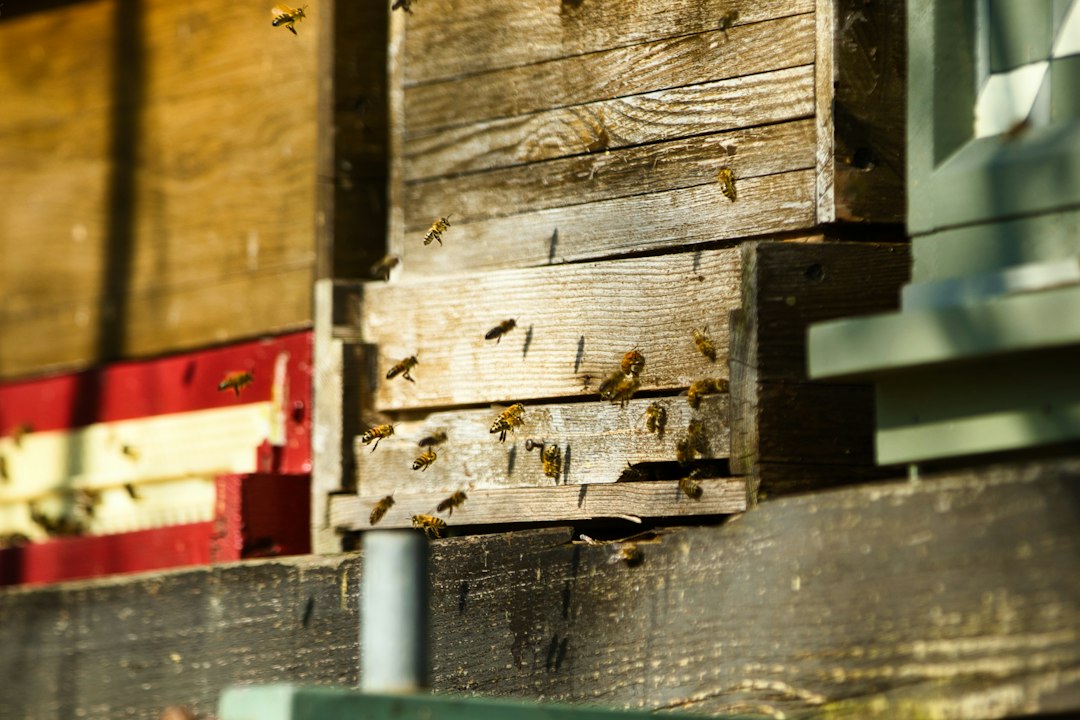
Photo by 𝕡𝕒𝕨𝕤 𝕒𝕟𝕕 𝕡𝕣𝕚𝕟𝕥𝕤 on Unsplash
Revenue Streams in a Profitable Beekeeping Side Business
Honey is the obvious product to start with, but it should not be your only income source. A single-product beekeeping operation leaves your revenue exposed to a single bad season, a late frost that kills the nectar flow, or a summer drought that cuts yields in half. Beekeepers who consistently profit build across at least two or three of the following income categories.
Honey sales are the foundation. Raw, unfiltered, and varietal honeys command premium prices at farmers markets and through direct-to-consumer channels. The National Honey Board documents consistent consumer willingness to pay significantly more for raw and locally sourced honey compared to grocery-store commodity blends. Presentation matters: an 8-ounce bear bottle competes on a grocery shelf against industrial products, but a labeled glass hex jar at a farmers market table occupies a completely different market position.
Beeswax is a high-margin byproduct you are already producing. Every ten pounds of honey extracted yields roughly one pound of wax when cappings are properly rendered. Unprocessed beeswax blocks sell to cosmetics manufacturers, candle crafters, and woodworkers. Finished products like lip balms, hand salves, and pillar candles multiply the per-pound value several times over. The guide to beeswax uses and how to render it at home walks through the processing steps in practical detail.
Nucleus colonies represent one of the highest-margin products in hobbyist beekeeping. A well-raised five-frame nuc sells for $175 to $250 in most U.S. markets, and spring demand reliably outpaces supply in most regions. If you are already splitting hives to manage swarm pressure, you are halfway to a nuc sales operation. The main addition you need is a reliable queen-rearing system and a committed buyer list lined up before the season opens.
Queen rearing requires more technical skill but produces queens that fetch $30 to $60 each depending on genetics, stock quality, and regional market rates. Beekeepers who develop a reputation for locally adapted, well-tested queens can pre-sell entire production cycles weeks before the season begins.
Pollination services work well if you are located near orchards, berry farms, or specialty vegetable operations. Small-scale pollination agreements with local farms can generate $150 to $300 per hive per season, with the farm often handling transport logistics and providing the forage location.
Value-added products - candles, cosmetics, infused honey, and honeycomb gift sets - carry the highest margins because customers pay for processing and presentation rather than raw material. The tradeoff is time. These products make the most economic sense once your raw product supply is stable and predictable enough to plan a production run around.
How to Scale Your Hive Count Without Losing Quality
Scaling from two or three hives to eight or twelve is where most hobbyist-to-business transitions either succeed or fall apart. The temptation is to add boxes as fast as possible. A practical ceiling for a solo beekeeper with a full-time job is 10 to 15 hives - enough to generate meaningful revenue without requiring the operational infrastructure that pushes you into a different regulatory and financial category.
Splitting your existing colonies is the most cost-effective growth strategy. If you master the technique described in the guide on how to split a hive to prevent swarming, you can double your colony count in a single spring season at the cost of additional equipment rather than purchased bees. For each new hive you establish, you need a complete box setup ready before splitting season arrives.
The Mann Lake Unassembled Complete Bee Hive Box with Foundation is a practical choice for this kind of expansion. Unassembled kits require time upfront, but they arrive complete with foundation included, and buying ahead of the season makes financial sense if you have the storage space.
As your hive count grows, inspection efficiency becomes a real constraint. Moving through eight hives takes significantly longer than two, and protective gear that causes you to rush or overheat produces inspection errors. The Humble Bee 430 Ventilated Beekeeping Suit with Round Veil addresses the heat problem with its ventilated design built for extended wear. Its round veil helps maintain clearance from your face during sustained bending and lifting — critical when you are spending extended time in the apiary rather than a quick check.
Track these quality metrics as you scale: winter survival rate above 70 percent, consistent spring population build, and average honey yield per hive. If those numbers drop as you add hives, you have scaled ahead of your management capacity and need to consolidate before adding more.
Equipment Investments That Pay for Themselves
Every piece of beekeeping equipment sits somewhere on a spectrum from essential to optional. For a side business, the calculation shifts: tools that increase processing efficiency or product quality have a direct return on investment that hobby tools do not.
Extraction equipment is the most important investment after hive boxes. Extracting by gravity drain through a strainer works adequately at two hives. It becomes a serious bottleneck at six and an operational problem at ten. A mechanical extractor converts a multi-day job into a few hours and produces cleaner honey with less wax contamination.
For a side business running five to ten hives, the Mann Lake HH130 2-Frame Plastic Extractor is well-matched to the workload. Its plastic construction makes cleanup manageable between extraction sessions, and at this scale a compact 2-frame extractor lets you process honey on your own schedule without a large capital outlay or commercial kitchen requirements. When you consistently outgrow its capacity across your hives, a larger radial electric extractor becomes worth the investment, but most side operations do not reach that threshold for several seasons.
Bottling and labeling equipment is chronically underestimated until you bottle your first large run. A bottling bucket with a honey gate, a scale calibrated to the ounce, and a label printer pay for themselves the first session where you bottle 60 or more jars. Accurate net weight on labels is not optional in most states - it is a legal requirement, and errors create liability.
A dedicated wax melter or solar wax melter removes a processing step that often gets skipped under time pressure. Wax recovered efficiently from cappings becomes either a direct sellable product or raw material for finished goods that multiply its value per pound.
Pricing Your Honey and Hive Products for Real Profit
Underpricing is the most common financial error in small-scale beekeeping businesses. It typically comes from comparing your per-pound cost to grocery store honey prices, which reflect industrial-scale production economics with no relevance to your actual cost structure.
Start with a genuine cost calculation. Add up annual equipment depreciation, replacement parts, treatments and supplemental feed, licensing and registration fees, packaging, and market or platform fees. Divide that total by your sellable yield in pounds. The result is your break-even price before any compensation for your labor. Most small-scale keepers who complete this exercise honestly find their break-even sits between $5 and $7 per pound - which means selling at $8 per pound barely covers costs and pays nothing for time.
A defensible retail price for raw, locally produced honey in most U.S. markets ranges from $10 to $18 per pound depending on varietal, packaging format, and sales channel. Farmers markets support a premium over direct neighborhood pricing. Online sales through your own website or a platform open a broader market but add shipping costs and fulfillment time.
For nucleus colonies and queens, research what established regional producers charge and price at or slightly below their level until your reputation is built. Cutting prices to move inventory trains buyers to expect discounts and gradually undermines the market for every producer in your region.
Beeswax block pricing typically runs $10 to $15 per pound wholesale and $18 to $25 per pound retail. Finished beeswax candles sell for $12 to $30 each depending on size and presentation. The raw wax cost in a typical pillar candle is usually under $2, which illustrates why value-added processing improves margins so dramatically.
How to Get Your First Products to Market
Turning extracted honey into actual cash revenue requires moving through several sequential steps. Skipping the regulatory steps creates legal exposure; skipping the marketing steps creates inventory that sits. Here is the practical sequence:
-
Register your operation and confirm cottage food law requirements. Most states allow direct honey sales under cottage food exemptions without commercial kitchen licensing, but weight labeling, business contact information, and product disclosure requirements vary significantly by state. Check your state department of agriculture website before you sell your first jar. Requirements are usually not burdensome, but they are not optional.
-
Get your labels right before you bottle a single jar. Every container requires accurate net weight in ounces and grams, your name and business address, the product name “Honey,” and country of origin where required. Most states also regulate “raw honey” labeling claims specifically. Design your label after confirming your jurisdiction’s requirements, not before.
-
Choose your first sales channel deliberately. Farmers markets provide direct customer feedback, real-time pricing validation, and the ability to build a local following quickly. Direct neighborhood and workplace sales have no fees but limited reach. Online platforms have the widest reach but add shipping complexity and platform costs. Start with a single channel and establish consistent supply before expanding.
-
Set pricing before you arrive at your first market. Showing up without a fixed price leads to undercharging under social pressure. Base your price on the cost calculation above, research what local producers charge, and consult the detailed breakdown in the guide on selling honey locally, labeling, and regulations before setting your number. Then hold that price.
-
Track every expense and every sale from your first transaction. A basic spreadsheet with monthly income, product inventory, and itemized costs takes twenty minutes per month and gives you the data to make real decisions about which products to prioritize and whether your operation is genuinely growing.
-
Build your repeat customer base actively. Email subscribers, farmers market regulars, and social media followers are long-term business assets. A customer who buys twice a year and refers two friends generates more lifetime value than a dozen random one-time buyers. Collect emails with permission and send a brief seasonal update when new product is available.
Common Mistakes That Stall a Beekeeping Side Business
Operating with hobby records and business ambitions
If you are selling product, you need a separate business bank account, basic bookkeeping, and an honest accounting of what everything actually costs. Many small beekeeping operations discover, only given selling, that they have been breaking even or losing money once labor is factored in. The fix is straightforward: track costs from the first sale and reconcile monthly.
Pricing against grocery store products
Your honey did not come from industrial apiaries. It came from locally managed hives, harvested by hand, processed without heat treatment, and sold by someone who can answer specific questions about it. That product commands a genuine premium. Pricing at $6 per pound because a grocery-brand blend sells for $5 is a decision to work for below minimum wage. Know your cost structure and price above it.
Scaling hive count ahead of management skill
Doubling from 4 to 8 hives before you have a reliable inspection routine, a Varroa management protocol, and real familiarity with your local forage calendar is a formula for colony losses that cost more than the expansion earns. Colony failure rates rise with scale when management practices do not scale proportionally. Add hives incrementally and keep winter survival above 70 percent before expanding aggressively.
Ignoring regulatory requirements
Selling honey with missing weight information or without required apiary registration creates liability and can result in products being pulled from sale at a market. Most requirements are straightforward, but they are mandatory. Confirming requirements before your first sale costs an afternoon; dealing with a compliance problem after you have sold product costs significantly more in time and reputation.
Prioritizing production over colony health
A colony pushed for maximum honey yield while carrying a high Varroa load will not survive to produce the following spring. Sustainable production requires treating mite loads on schedule, monitoring population trajectory through the season, and being willing to pull supers early if a colony needs support. Sacrificing colony health for a few extra jars in late October is a net loss across a multi-year horizon.
Treating winter preparation as optional
Revenue in October looks strong. The real test of a beekeeping side business is whether your colonies survive winter in sufficient numbers to generate revenue the following spring. Budget winter preparation costs - supplemental feeding, insulation, entrance reducers, and treatments - as a fixed annual line item, not a discretionary add-on.
Frequently Asked Questions
How many hives do you need to make money beekeeping?
A minimum of five to six productive hives is generally the threshold where honey sales begin generating meaningful net revenue rather than simply covering equipment costs. At five hives with average yields, you might produce 200 to 300 pounds of honey per season. At $12 per pound retail, that translates to $2,400 to $3,600 in gross sales. After packaging, market fees, and supply costs, a genuine side income becomes realistic. Most beekeeping business analyses cite ten hives as the point where a part-time sole proprietor operation begins showing consistent net positive returns, particularly when the operation includes diverse product lines and direct-to-consumer sales channels in addition to raw honey.
Do you need a license to sell honey from backyard hives?
Requirements vary significantly by state and sometimes by county. Most states require apiary registration with the state department of agriculture, which is typically low-cost or free. Honey sales under a certain annual gross revenue often qualify under cottage food exemptions that allow direct sales without commercial kitchen licensing. However, net weight labeling, product identification, and contact information requirements apply in virtually every state regardless of exemption status. Selling at licensed farmers markets may add market-specific health department requirements on top of state rules. The USDA National Agricultural Library maintains agricultural regulatory resources and links to state extension services where current requirements are documented.
What is the most profitable beekeeping product besides honey?
Nucleus colonies consistently rank as the highest-margin product for small-scale operations. A five-frame nuc that costs roughly $50 to $75 to produce - accounting for the queen, the workers, drawn comb, and the nuc box - retails for $175 to $250 at spring market rates. Beeswax candles and value-added cosmetics offer comparable margins per hour when processing time is factored in, but nucs are scalable through splitting without major capital investment. The key caveat is that nuc production requires solid queen-rearing skills and precise timing, because the market window for spring nuc sales is narrow and buyers typically commit months in advance.
How long does it take for a beekeeping side business to turn a profit?
Realistically, plan for two to three years before the operation generates consistent net profit after all costs including honest labor valuation. Year one is typically investment-heavy: equipment, bees, licensing, packaging, and market setup absorb most of what you earn. Year two often breaks even if colonies winter well and reliable sales channels are established. Year three, with stable colonies producing predictably and a returning customer base in place, is when consistent profit becomes reliable. Beekeepers who try to accelerate profitability by undercutting on price, over-scaling before their skills support it, or cutting corners on treatments typically extend their loss period rather than shortening it.
A profitable beekeeping side business is a realistic goal for a disciplined keeper willing to treat the operation with genuine business rigor from the start. The path is direct: build your management skills to a solid foundation, diversify beyond honey sales once your production is stable, price your products to recover real costs with a reasonable margin above them, and scale your hive count at a pace your inspection and treatment routines can support.
The beekeepers who succeed long-term are not necessarily the ones with the most hives. They are the ones with the lowest colony loss rates, the strongest repeat customer relationships, and the clearest accounting of what it actually costs to produce what they sell. Start with one channel, one strong product, and an honest spreadsheet, then build from there.
If this guide was useful, bookmark it to reference as your operation grows, or share it with a fellow keeper who is thinking about making the transition from hobby to small business.