Starting a Honey Business: What Regulations and Licenses You Need
Most backyard beekeepers reach the same inflection point after a good harvest season. The pantry is full, the neighbors have received their jars, and the quality of what came out of the extractor is genuinely good. Selling starts to feel like the obvious next step.
Then comes the research phase, and the picture gets complicated fast. Selling honey legally involves federal labeling requirements, state cottage food exemptions with revenue caps, apiary registration mandates, local business licensing, and channel-specific restrictions that can contradict each other in the details. These rules are real, and they do get enforced at farmers markets and by state agriculture inspectors.
The practical reality: honey is one of the most seller-friendly foods in the entire regulatory landscape. Most states offer a clear path for small-scale direct sales through cottage food laws, and honey’s natural preservation means food safety requirements are far less demanding than they are for canned goods, baked items, or fermented products. The regulatory burden is manageable once you understand which rules apply at which level of government.
This guide walks through each layer - federal, state, and local - so you know exactly what you need before you move your first jar commercially.
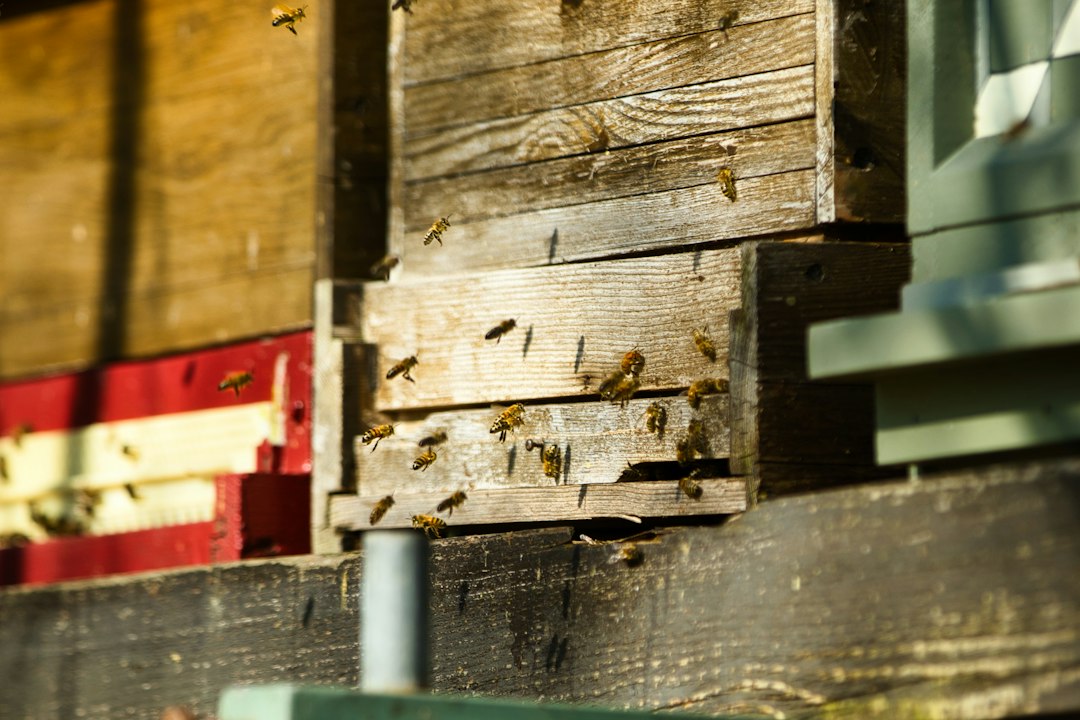
Photo by 𝕡𝕒𝕦𝕤 𝕒𝕟𝕕 𝕡𝕣𝕚𝕟𝕥𝕤 on Unsplash
Why Honey Business Regulations Catch New Sellers Off Guard
The most persistent myth is that selling honey is unregulated because it is a natural product made in your own backyard. That is not accurate. Honey receives favorable treatment in many regulatory frameworks, but favorable is not the same as exempt.
Regulations come from at least three separate layers of government, and you must satisfy all of them simultaneously:
- Federal (FDA and USDA): Sets baseline labeling standards and defines what can legally be called honey. FDA rules apply to your label regardless of sales volume or channel.
- State: Controls cottage food exemptions, apiary registration requirements, and honey-specific sales rules. This is where most of the meaningful variation between states lives, and where most new sellers get tripped up.
- Local (city and county): Requires business licenses and home occupation permits, and may have zoning rules that affect whether and how you can sell from your property.
A label that meets FDA requirements may still violate a state-specific labeling mandate. A cottage food exemption may permit sales at a farmers market but prohibit selling to a restaurant or coffee shop. Understanding which layer controls which decision is how you avoid gaps that result in fines, pulled product, or market vendor suspension.
Step-by-Step: How to Set Up Your Honey Business Legally
Starting a legal honey business follows a specific order because some steps genuinely depend on others being completed first.
- Register your apiary with your state department of agriculture. Required in most states regardless of whether you plan to sell. Some states require proof of apiary registration as part of any food seller application, so complete this before anything else.
- Find and read your state’s cottage food law. Do not rely solely on summaries, including this one. Find the actual statute on your state department of agriculture website and read it.
- Confirm which sales channels your cottage food exemption permits. Most allow farmers markets and direct-from-property sales. Many do not allow wholesale to restaurants or online interstate shipping. Know where your exemption ends before you make any sale.
- Obtain a local business license from your city or county. Most municipalities require this for any commercial activity, even home-based. Fees are typically $25–$100 per year.
- Design labels that meet FDA requirements and any state-specific additions. Using Avery printable labels can help ensure your design is correctly formatted before printing in quantity. Labeling errors are expensive to correct after the fact.
- Apply for any required cottage food registration or honey seller permit. Some states require formal registration or a nominal annual permit even for cottage-exempt sellers. Others have no such requirement.
- Set up a simple sales tracking system. If your state has a revenue cap on cottage food sales, you need to know where you stand at all times. A basic spreadsheet is sufficient, or you might prefer a business ledger for tracking sales and expenses.
This sequence is not universal - your state may require additional steps - but it is the right general order for most new honey sellers in the United States.
Federal Rules: What the FDA Actually Requires for Your Honey Business
The Food and Drug Administration is the primary federal body for food product regulation, including honey. For most small producers selling direct to consumers, the FDA’s main impact is on your label. Under FDA food labeling regulations (21 CFR Part 101), a honey label must include:
- The common or usual name of the food. “Honey” is sufficient. Adding a varietal name like “Wildflower Honey” or “Clover Honey” is acceptable if the honey is genuinely from that primary nectar source.
- The net quantity of contents, expressed by weight in both US customary and metric units (ounces and grams, or pounds and grams for larger sizes).
- The name and street address of the packer or manufacturer. A PO Box does not satisfy this requirement - your full street address must appear on the information panel.
- A Nutrition Facts panel, unless you qualify for the small business exemption. Producers with fewer than 10 full-time employees who sell fewer than 10,000 units per year are generally exempt. Most small honey operations fall well within this threshold.
The FDA also governs what you cannot say. “Organic” requires active USDA National Organic Program certification - a multi-year process with annual costs that is impractical for most small beekeepers. “Pesticide-free” is nearly impossible to substantiate because bees forage over a wide radius that includes neighbors’ properties, roadsides, and agricultural land you have no control over. “Raw honey” has no federal legal definition, so using the term is not automatically prohibited, but applying it to honey that has been significantly heated or ultra-filtered constitutes a misleading label claim and is therefore an FDA violation regardless of the lack of a formal standard.
The FDA’s food labeling guidance covers each required label element in detail and is updated when rules change.
State Cottage Food Laws, Apiary Registration, and Labeling Requirements
For most backyard beekeepers starting to sell, the state cottage food law is the single most consequential regulatory document to read. It determines whether you can legally produce and sell honey from your home without operating as a licensed commercial food facility.
Honey occupies an unusually favorable position in most state cottage food frameworks. Because it is shelf-stable and low-hazard, many states include honey explicitly in their cottage food exemptions or treat it as a non-potentially-hazardous food that qualifies automatically without additional permits.
What cottage food laws typically allow:
- Production in a home kitchen without a commercial kitchen license or facility inspection
- Direct-to-consumer sales at farmers markets, roadside stands, your property, and sometimes online with in-state delivery
- Operation without a state food handler’s permit in most cases
What cottage food laws typically restrict:
- Gross revenue caps, commonly ranging from $25,000 to $75,000 per year depending on the state
- Wholesale or retail sales to stores, restaurants, or any business rather than directly to consumers - this typically puts you outside cottage food protection in every state
- Required label language noting the product was made in an uninspected home kitchen, with specific phrasing that varies by state
A few states handle honey through dedicated frameworks separate from general cottage food law. Texas has a Honey Bee Act that allows direct-to-consumer honey sales with minimal requirements outside the standard cottage food framework. Florida exempts beekeepers selling only honey and beeswax from food permit requirements up to defined volume thresholds. Check for honey-specific statutes in addition to your state’s general cottage food statute.
The National Agricultural Law Center’s cottage food law database provides state-by-state summaries with links to actual statute language and is updated when states amend their laws.
Here is how regulatory tiers typically stack up for honey sellers:
| Seller Tier | Typical Annual Revenue | What Is Usually Required | Permitted Sales Channels |
|---|---|---|---|
| Small cottage seller | Under $25,000 | Apiary registration, local business license | Farmers markets, property sales, farm stands |
| Mid-scale direct seller | $25,000–$75,000 | Varies by state; some require cottage food registration | Farmers markets, in-state online delivery, CSA |
| Commercial producer | Over $75,000 | Licensed food facility, state food business license | Wholesale, retail stores, interstate shipping |
These thresholds are generalizations. Your state determines the actual numbers, and some states have honey-specific rules that differ substantially. Treat this table as a framework for asking the right questions, not as a substitute for your state’s actual statute.
Apiary registration is a separate requirement from food sales licensing that many new sellers overlook because it predates any intention to sell. Most states require beekeepers to register hives with the state department of agriculture for disease surveillance purposes. States track apiary locations to coordinate inspections for American foulbrood, manage pesticide drift complaints, and respond to colony loss events. This requirement typically applies whether or not you plan to sell.
Registration fees are modest - commonly $10–$25 per year or a flat fee per apiary location. Some states require proof of apiary registration before processing a cottage food or honey seller application, which means skipping registration can delay every other step. Beyond registration, some states require hives to be available for annual inspection, approval before moving colonies across county or state lines, and documentation of any regulated treatments you apply.
Honey labeling deserves the same care you give to production, because label errors are the compliance issue most likely to result in product being pulled from a market or shelf. Required elements under federal law:
- Product identity on the principal display panel. “Honey” is sufficient. “Wildflower Honey,” “Clover Honey,” or “Raw Honey” are acceptable if accurate based on your nectar source and processing.
- Net weight by mass, not volume. This is the most common technical mistake new sellers make. Weigh filled and lidded jars, subtract the tare weight of the empty jar and lid, and use that number. A simple digital kitchen scale is a worthwhile investment for consistent, accurate measurements. Express weight in ounces (or pounds) and grams.
- Name and street address of the packer or distributor. Your name or business name and a physical street address on the information panel.
Some states add requirements on top of federal minimums. California requires cottage food producers to include specific disclosure language stating the product was made in a home kitchen not inspected by the state Department of Public Health. New York has honey grading regulations that restrict certain label language. Our earlier guide on selling honey locally: labeling, pricing, and regulations goes deeper on farmers market and direct sales label considerations.
Local Compliance and Avoiding Common Mistakes
State cottage food exemptions address food safety licensing. They do not replace local business requirements, and this layer gets skipped more often than any other.
Business license: Most cities and counties require any business operating within their jurisdiction to hold a basic business license, regardless of product type or scale. Fees are typically $25–$100 per year. This applies to a one-person honey operation moving 50 jars at a single market just as much as it applies to any other commercial activity.
Home occupation permit: Many municipalities have zoning classifications that restrict commercial activity in residential zones. If you are inviting the public to your property to purchase honey, or operating processing equipment in a structure not zoned for commercial use, a home occupation permit may be required. A single phone call to your city or county zoning office clarifies this quickly. Do not wait until you are already selling to check.
Farmers market vendor permits: Markets are operated by their own governing bodies - often a nonprofit, a city parks department, or a private operator - and each market sets its own vendor application requirements. Most require proof of a valid business license, documentation of cottage food compliance, and a certificate of product liability insurance. Some markets conduct their own production facility inspections before approving food vendors. Contact the market manager before assuming you can apply without additional documentation.
Liability insurance: Not always legally required, but many farmers markets require a certificate of general liability insurance naming the market as an additional insured. Coverage for cottage food producers is available through agricultural specialty insurers and typically runs $200–$500 per year for low-hazard products like honey. This cost belongs in your operating budget from the start.
Common mistakes that sink new sellers:
Labeling net weight in fluid ounces instead of weight. Honey is sold by weight, not volume. A 16 fl oz jar does not contain 16 oz of honey by weight - honey is denser than water, and the difference matters. The correct approach: weigh filled and lidded honey jars, subtract the tare weight of the empty jar and lid, and use that number. Express it in ounces (or pounds) and grams. This is a one-time setup step once you know your container weights, and it is not negotiable.
Making claims that require certification or documentation. “Organic” requires active USDA NOP certification. “Pesticide-free” is nearly impossible to verify for honey given the foraging radius of a colony. “Antibiotic-free” is meaningful if accurate and documented but invites scrutiny if challenged. Stick to descriptive terms you can support: “raw,” “unfiltered,” “locally produced,” or varietal designations like “wildflower” or “sourwood” where the forage source is actually known.
Selling wholesale while operating under a cottage food exemption. Selling to a restaurant, a gift shop, a coffee counter, or a boutique grocery puts you outside cottage food protection in virtually every state. A single wholesale transaction can put you in violation for the year. If wholesale is part of your plan, research what commercial licensing your state requires before you accept that first order.
Failing to track revenue against cottage food caps. If your state has an annual gross revenue cap, you are responsible for knowing when you approach it. Exceeding the cap without transitioning to a commercial food facility license is a compliance violation that can result in fines and loss of selling privileges. Track cumulative gross receipts monthly from your first sale, not retroactively at year end. A simple spreadsheet works, or you might prefer a small business ledger for better organization.
Assuming the cottage food exemption covers all sales channels. Online interstate sales, wholesale to retailers, and food service accounts each have distinct requirements that may take you outside cottage food protection entirely. The exemption that covers your local farmers market table may not extend to your Etsy shop or a standing order with a local grocery chain. Verify each channel separately.
Not verifying state-level apiary registration. Enforcement is uneven, but registration is typically a legal requirement, not a recommendation. Some states link registration status to eligibility for other business permits. Register before you sell, not after you are cited.
If you are also producing value-added products from your harvest - beeswax candles, infused honeys, creamed honey blends - those products often fall under different regulatory categories than plain honey. The guide on how to make and sell beeswax candles addresses the separate compliance questions that wax-based products raise.
Frequently Asked Questions
Do I need a food handler’s license or food safety certification to sell honey?
In most states, no. Plain honey sold directly to consumers under a cottage food exemption does not require a food handler’s permit or formal food safety certification. Honey is a low-hazard, shelf-stable product, and most state cottage food frameworks treat it as minimal-risk. Exceptions apply if you are incorporating honey into other products such as baked goods or fermented items, if you are selling above your state’s cottage food revenue threshold, or if you are supplying retailers or food service businesses rather than selling directly to end consumers. Always verify against your specific state’s cottage food statute rather than assuming the general rule applies without conditions.
Can I sell honey online and ship it to customers in other states?
Shipping honey across state lines is legally the most complicated sales channel for a small producer. Most state cottage food laws explicitly limit their protections to in-state, direct-to-consumer transactions. Shipping to customers in another state puts you in interstate commerce, which falls outside most state cottage food exemptions and may trigger FDA food facility registration requirements under the Food Safety Modernization Act. Selling and shipping at meaningful volume across state lines generally requires a commercial food facility license or equivalent. Build your operation on local and in-state direct sales first, then consult your state department of agriculture before opening any interstate online sales channel.
What does “raw honey” mean, and can I legally use the term on my label?
At the federal level, “raw honey” has no official legal definition. The FDA has not established a standard of identity with defined temperature thresholds or processing criteria that legally qualifies or disqualifies a product for the term. Using “raw” on a label is therefore not automatically prohibited, but applying it to honey that has been heated above hive temperatures or subjected to ultra-filtration is a misleading label claim and an FDA violation regardless of the lack of a formal definition. The term is broadly understood in the industry to describe honey not heated above approximately 95–110 degrees Fahrenheit and not micro-filtered to remove pollen. If your process is consistent with that description, using “raw” is accurate and defensible.
Conclusion
The path from backyard beekeeper to legal honey seller is navigable for most hobbyists with a few productive hives. Register your apiary, read your state’s cottage food statute, design a label that meets FDA requirements and any state additions, obtain the basic local business license, and track your gross sales against any revenue cap. That framework covers the vast majority of what a small-scale direct seller needs.
The most productive next step is to spend 30 minutes on your state department of agriculture’s website and locate two things: the apiary registration page and the cottage food law. Read both documents in full. If anything is unclear, call the ag department directly - most states have staff whose role includes answering exactly these questions from new producers, and a single phone call can eliminate weeks of uncertainty.
Working within the regulatory framework from the start is what separates a honey business that grows sustainably from one that runs into problems the first time an inspector shows up at a market.
If this guide helped you get oriented on honey business regulations, bookmark it for reference as you work through your state’s specific requirements, and check back as rules in your state evolve.
Related Reading
- Selling Honey Locally: Labeling, Pricing, and Regulations
- Understanding Honey Extraction: When and How to Harvest