Urban Beekeeping Regulations: Zoning and Legal Requirements
This post contains affiliate links. As an Amazon Associate, I earn from qualifying purchases at no extra cost to you.
Setting up a backyard hive in the city starts with a decision that happens before you order bees: figuring out whether you are actually allowed to do it. Urban beekeeping regulations are a genuine patchwork across the United States. The same practice that is perfectly legal in one neighborhood can be prohibited two zip codes away, not because bees behave differently, but because the zoning code was written in a different decade with a different philosophy about what belongs in a residential yard.
Most new urban beekeepers get this wrong in one of two ways. Either they assume urban beekeeping is banned everywhere and never look further, or they assume that since no one has stopped them yet, everything must be fine. Neither approach protects you. A neighbor complaint, a sale of local honey, or a sting incident that lands in small claims court can all surface a compliance problem you did not know you had.
The regulatory landscape has genuinely improved over the past 20 years. New York City legalized beekeeping in 2010 after decades of prohibition. Chicago followed with a structured permit ordinance. Hundreds of smaller cities have updated their codes. But improved does not mean simple. This guide walks you through how urban beekeeping regulations actually work, where to find the rules for your specific address, what most cities require for permits and hive placement, and how to handle the human side of keeping bees in close quarters with neighbors.
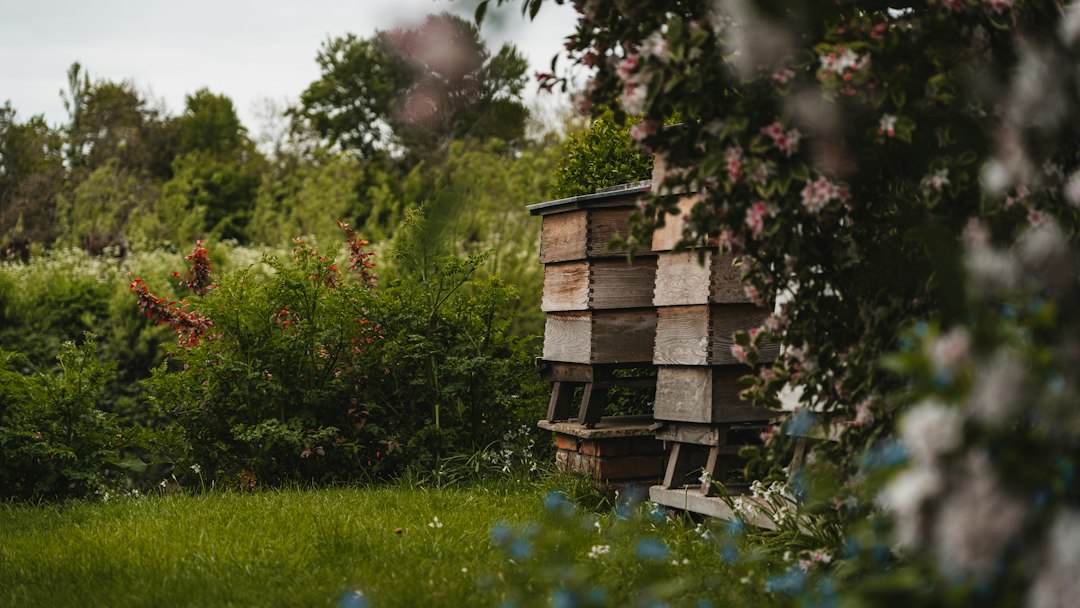
Photo by Eric Dekker on Unsplash
Why Urban Beekeeping Regulations Vary by Jurisdiction
Beekeeping in the United States is regulated at the state, county, and municipal levels with no overarching federal standard governing hive counts, placement, or density limits. The rules that apply to your backyard hive are determined by wherever you fall in that three-tier structure, and the answer is almost never the same between two cities.
Zoning classifications drive most of the variation. Beekeeping has historically been treated as an agricultural activity, placing it in direct conflict with residential zoning codes that did not anticipate urban farming. Cities that wrote their ordinances before the urban agriculture movement took hold in the 2000s often have language that effectively prohibits beekeeping in residential zones simply because they never addressed it. When cities updated their codes, some created explicit beekeeping permissions while others built urban agriculture overlay zones. If your city has made none of those updates, you may be living under a decades-old prohibition that local authorities have stopped actively enforcing - which is not the same thing as legal permission.
State preemption laws change which level of government you consult first. Some states have enacted preemption statutes that standardize certain aspects of beekeeping regulation and limit how far local ordinances can deviate. Florida is among the most frequently cited examples. In states without preemption, municipalities have wide discretion. Knowing whether your state preempts local beekeeping regulation determines whether you start with city code or your state agriculture department.
Lot size and population density shape how restrictive local rules tend to be. A rural beekeeper’s nearest neighbor might be half a mile away; an urban beekeeper’s might be 15 feet from the hive. That difference creates legitimate reasons for cities to require tighter setback distances, lower hive counts, and flyway barriers than state regulations alone would mandate. Cities with smaller average lot sizes have correspondingly stricter rules.
HOA covenants operate completely outside the government permitting system. Your homeowners association is not a government body, but its CC&Rs carry contractual force because you agreed to them when you purchased your property. An HOA can prohibit beekeeping even when the city explicitly permits it, and enforcement moves faster than a municipal code process. Always check your HOA documents before you check city code.
For a thorough grounding in the hive-management principles that make urban beekeeping viable within these constraints, Langstroth’s Hive and the Honey-Bee: The Classic Beekeeper’s Manual remains the foundational reference that most state extension programs direct beginners toward. Understanding how hive design and colony behavior interact informs every siting and management decision you will make.
How to Research Urban Beekeeping Regulations for Your Address
The most common mistake new urban beekeepers make is researching what is allowed in their city in general rather than what is allowed at their specific address. The process below is methodical deliberately - skip any step and you will have an incomplete picture.
-
Identify your exact governing jurisdiction. Enter your address into your county assessor’s GIS viewer or call your county clerk’s office to confirm which government body has primary zoning authority over your parcel. This matters because properties in suburban fringe areas frequently fall under county jurisdiction rather than the nearby city’s code.
-
Search the full municipal code. Most cities publish their code on platforms like Municode or American Legal Publishing. Search for “bees,” “beekeeping,” “apiary,” and “urban agriculture”—all four terms, because different cities use different language. Read the complete section, not just the first result, because important restrictions on hive counts and setback distances often appear in subsections that a headline search misses.
-
Check your state apiary program requirements. Every U.S. state has some form of apiary registration administered through the state department of agriculture. Many states require annual registration regardless of what the local municipality requires. Visit your state agriculture department’s website directly for current requirements; registration fees and inspection triggers change more often than online summaries reflect.
-
Get written confirmation from the city planning department. Once you have read the code and believe beekeeping is permitted at your address, contact the planning or zoning department by email, not phone. Ask them to confirm in writing that keeping a specific number of hives at your specific address is permitted under current zoning. An email confirmation creates documentation that protects you in any future dispute with a neighbor or animal control officer.
-
Review your HOA documents. Search your CC&Rs and bylaws for language about livestock, agricultural activities, or nuisance animals. If the language is ambiguous, send a written inquiry to your HOA board and keep their response. Ambiguity resolved verbally in your favor is far weaker protection than a written reply.
-
Contact your local beekeeping association. State and regional clubs know what enforcement actually looks like in your area. Members who recently completed the permitting process can tell you which specific forms, fees, and inspectors are involved. The American Beekeeping Federation maintains a directory of state and local associations that is a useful starting point.
Permit Requirements and Registration: What Urban Beekeepers Need
Once you know which jurisdiction governs your property, your compliance obligations typically fall into one of three tiers.
Tier 1: State registration only. In many cities and counties, there is no local ordinance specifically governing beekeeping. Your obligation is to register your apiary with the state department of agriculture. Registration usually carries no fee or a nominal annual fee. It gives you access to state apiary inspectors who can help diagnose disease problems and typically enrolls you in American foulbrood monitoring - a genuine benefit. This is the most common scenario for beekeepers in suburban areas and smaller cities that have not updated their codes.
Tier 2: City permit plus state registration. Cities with active urban agriculture ordinances usually require a city-level permit in addition to state registration. A standard permit process involves submitting a site plan showing hive locations and setback distances from property lines and structures, paying an annual fee in the $25–$100 range, and in some jurisdictions obtaining written consent from adjacent property owners. Some cities also require proof of a completed beginner beekeeping course before the permit is issued.
Tier 3: Full inspection and registration regime. A smaller number of major cities have implemented mandatory annual inspections through a city health department or contracted state apiary inspector. New York City requires registration with the NYC Department of Health and Mental Hygiene. Chicago requires both a city permit and state registration with documented compliance. Operating without current documentation in these cities can result in fines and mandatory hive removal, and “I did not know” is not a defense that tends to produce good outcomes.
The practical rule across all three tiers: treat state registration and city permits as independent requirements that do not substitute for each other. Comply with both and keep physical copies of all confirmations, permits, and correspondence in a dedicated apiary records folder. A neighbor complaint that reaches animal control ends quickly when you hand over a folder of current documentation. Without it, even a technically compliant operation looks questionable.
Hive Placement: Setbacks, Flyways, and Maximum Hive Counts
Even when a city permits beekeeping, it typically regulates where hives can be located on your property just as carefully as whether you can keep them. The three variables that urban ordinances address most consistently are setback distances, flyway barrier requirements, and maximum hive counts per lot.
Setback distances define how far a hive must sit from your property line, neighboring structures, public sidewalks, and sometimes swimming pools. Requirements typically range from 10 to 25 feet from property lines in residential zones. Some ordinances specify different setbacks depending on which direction the hive entrance faces, which connects directly to flyway requirements.
Flyway barriers are among the most practically effective tools for urban beekeeping compatibility, and they are required in a growing number of ordinances. A solid fence, wall, or dense hedge at least 6 feet tall positioned near the hive entrance forces departing bees to fly upward before they travel toward neighboring properties. When bees clear a 6-foot barrier on departure, they tend to remain at altitude rather than flying at head height through the neighbor’s yard. The Xerces Society for Invertebrate Conservation consistently highlights flyway barrier installation as among the most effective practices for reducing conflict between urban apiaries and neighboring properties. Install the barrier before the hive goes into position, not after your first inspections have already drawn attention.
Maximum hive counts are nearly universal in urban ordinances. The most common residential limit is 2 hives per lot, sometimes scaled to lot size - for example, 1 hive per 2,500 square feet. Some cities allow additional colonies in designated urban agriculture overlay zones or when the beekeeper can demonstrate a larger property footprint.
| Jurisdiction Type | Typical Hive Limit | Common Setback Distance | Flyway Barrier Required? |
|---|---|---|---|
| Rural residential | 4–10+ hives | 10 ft from property line | Rarely |
| Suburban residential | 2–4 hives | 15–25 ft from structures | Sometimes |
| Urban residential | 1–2 hives | 10–25 ft from property line | Often |
| Rooftop (commercial district) | 2–4 hives | Distance to roof edge varies | Not applicable |
| Urban agriculture overlay zone | 2–6 hives | Varies by city | Sometimes |
A compact, well-organized hive design helps you fit within tight urban placement constraints. The LANGLANG Automatic Wooden bee hive House kit offers a wooden hive construction with an upgraded auto-frame comb system, and a manageable setup can be an advantage when your available yard space is shared with foot traffic and close neighbors.
Managing Liability and Neighbor Relations in an Urban Apiary
Satisfying permit requirements does not close your exposure to civil liability. If your bees sting a neighbor, their child, or their pet, you may face a personal injury claim regardless of whether your permits are current. Urban beekeeping requires taking that exposure seriously before it becomes an actual incident.
Check your homeowner’s insurance policy before you set up, not after an incident. Many standard homeowner’s policies exclude livestock and farm animals; some exclude bees explicitly. Call your insurer, describe the activity specifically, and ask whether you are covered. If not, ask about adding a rider. Specialized agricultural liability policies are available through farm and ranch insurers, and your local beekeeping association will typically know which options keepers in your area use most commonly.
Colony temperament is a practical liability variable, not just a management preference. Aggressive colonies generate sting complaints, and sting complaints generate enforcement attention from both animal control and neighbors who might otherwise stay quiet. When a colony shows elevated defensiveness during inspections, the appropriate response in a dense urban setting is to requeen promptly with a known gentle stock line rather than waiting to see whether temperament settles. Requeening early protects you, your neighbors, and the broader case for urban beekeeping in your municipality.
Protective gear during inspections signals professionalism to watching neighbors. A beekeeper working a hive in full protective gear sends a very different message than one working in a t-shirt. The Humble Bee 430 Ventilated Beekeeping Suit with Round Veil provides full-coverage protection with ventilated construction and a round veil — and proper gear is exactly what neighbors notice during your first few inspections from across the fence.
Proactive communication with neighbors is not optional in an urban setting. Let adjacent property owners know you keep bees before they discover it on their own. Explain what you are doing, point to the flyway barrier, and offer a jar of local honey from your first harvest. Neighbors who feel informed and respected are consistently less likely to file complaints than neighbors who feel ambushed by a surprise discovery. The relationship you build before a complaint arises is the most durable protection against the complaints that would otherwise follow.
Common Mistakes Urban Beekeepers Make with Regulations
The pattern of compliance failures in urban beekeeping is consistent enough that most experienced beekeeping associations can describe it from memory. These errors account for the majority of enforcement actions and neighbor disputes.
Interpreting silence in the municipal code as permission. Searching the city code for “beekeeping,” finding no result, and concluding that beekeeping is therefore allowed is a reasoning error that causes real problems. General livestock prohibitions, nuisance ordinances, and residential use restrictions may all apply to beekeeping without ever mentioning bees by name. When the code is silent, contact the planning department in writing to confirm what is permitted.
Treating the city permit and state registration as interchangeable. They are separate requirements administered by separate agencies. A city permit does not register you with the state apiary program, and state registration does not satisfy a city permit requirement. Beekeepers who receive citations have often complied with one requirement but are entirely unaware the other exists.
Installing hives before the flyway barrier is in place. In jurisdictions that require a flyway barrier, the apiary is only legally compliant once the barrier exists. Beekeepers who plan to add the barrier “later” often conduct their first several inspections while neighbors can observe the activity at ground level - which is precisely when complaints originate. The correct sequence is barrier first, then hive.
Failing to disclose to the HOA on the assumption it will not notice. HOA enforcement is complaint-driven. One neighbor who sees the hive and objects is enough to trigger a formal violation notice, and HOA fines accumulate quickly. HOA enforcement also tends to carry fewer procedural protections for beekeepers than a municipal code process does. Getting written HOA approval before setup is always the better outcome.
Starting with more hives than the ordinance allows. Four hive boxes in a small urban yard look like something worth complaining about. Two neat boxes within the permitted limit look like a managed, intentional operation. Start within the permitted count and expand only if zoning allows and your setup has demonstrated compatibility with the neighborhood over a full season.
Letting annual permits and registrations lapse. Many urban beekeeping permits and state registrations require annual renewal. A lapsed permit gives an animal control officer no reason to treat your apiary as compliant, even if you were current the year before. Set a calendar reminder when you renew and keep a renewal confirmation in your records folder.
The broader principles here connect closely to what Beginner Beekeeping Mistakes covers for new keepers in their first full season - the documentation and planning failures that surface at the start of an apiary repeat themselves reliably whether you are managing bees or managing paperwork.
Frequently Asked Questions About Urban Beekeeping Regulations
Do I need a permit to keep bees in my backyard?
It depends entirely on your specific city and state. Some municipalities require a formal city permit that includes a site plan and sometimes neighbor consent signatures. Others require only state apiary registration with no local permit at all. Some have no specific beekeeping requirement, though general livestock and nuisance ordinances may still apply. The only reliable way to get an accurate answer is to contact your local planning or zoning department and your state department of agriculture directly, in writing, about your specific address. Do not rely on what neighbors say is allowed or what online forums describe for other cities - local ordinances change, and informal sources are frequently outdated.
What happens if I keep bees in a location where they are not permitted?
The typical sequence begins with a notice of violation, followed by a compliance period that may give you time to relocate the hives or apply for a variance. If you do not come into compliance, fines and mandatory hive removal are the standard outcomes. Civil liability from sting incidents remains a separate exposure regardless of permit status. The most consequential long-term damage is usually to your relationship with neighbors and local officials, which makes future legal beekeeping significantly harder. Getting into compliance before a complaint arises is always a better outcome than managing an active enforcement action.
Can my HOA prohibit beekeeping even if my city allows it?
Yes. HOA CC&Rs are private contractual obligations that are legally enforceable because you agreed to them when you purchased the property. An HOA can prohibit beekeeping even if the city’s zoning code explicitly permits it, and an HOA can act on complaints faster than a municipal code enforcement process typically moves. If your HOA documents are silent on the topic, the only safe approach is to submit a written inquiry to your HOA board and wait for their written response before proceeding. Some boards interpret silence as permission; others apply general nuisance or livestock provisions. Do not assume either way without written confirmation.
Conclusion
Urban beekeeping regulations are navigable when you approach them in the right sequence. Identify your jurisdiction, read the municipal code, confirm your state registration requirements, get written confirmation from the planning department, check your HOA documents, and then install your hive within whatever legal framework applies. Most compliance failures happen because someone skipped one of those steps, not because the rules themselves were truly prohibitive.
The beekeepers who have built the most successful and durable urban apiaries did the documentation work upfront, kept their neighbors informed before it was necessary, and set up visible, compliant operations that made strong arguments for future policy improvements in their communities. Your urban apiary starts with paperwork. Get that foundation solid before the bees arrive.
If this guide helped you untangle your city’s rules, bookmark it for reference when local ordinances update - and leave a comment below if your city has an unusual regulation other urban beekeepers should know about.
Related Reading
- Beginner Beekeeping Mistakes - the most common first-year errors, from initial setup through your first full inspection season
- Selling Honey Locally: Labeling, Pricing and Regulations - once your hives are legal and producing, understand the separate regulatory layer around selling your harvest