Starting a honey and value-added bee product business step-by-step guide
This post contains affiliate links. As an Amazon Associate, I earn from qualifying purchases at no extra cost to you.
Most hobbyists who try to turn bees into income start in the wrong place. They buy a pallet of jars, design a label, and book a farmers market table before they know how much honey their colonies will reliably produce or what their state requires them to put on that label. The result is a garage full of unsold product and a pile of receipts that never become profit.
A honey business works better when you build it in the opposite order. Start with production numbers, then legal setup, then equipment, then a repeatable process, and only then add products like candles or creamed honey. Sell the first jar after the boring parts are settled, not before.
This guide walks through that order. You will see how to estimate realistic yield, what regulators generally expect, which gear earns its place at small scale, and how to move from harvest to a sealed, labeled, sellable jar. It also covers when value-added products make financial sense and when they only add paperwork. The position here is simple: stay small, stay compliant, and let quality and consistency do the marketing.
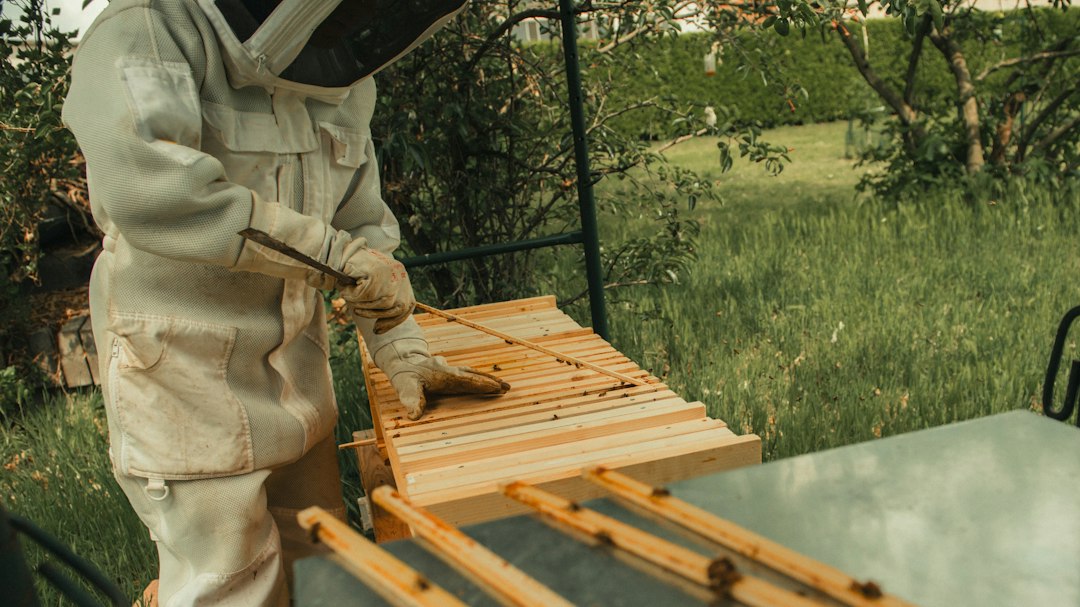
Photo by paolo tognoni on Unsplash
Run the numbers before you build a honey business
Honey yield is the least predictable input in this whole venture, so treat it as a range rather than a promise. Surplus honey depends on forage, weather, colony strength, and how much the colony needs to keep for itself. A strong colony in a good nectar region can give a generous harvest in one year and almost nothing the next. Your regional extension service and local beekeeping association are the most defensible sources for a realistic number in your area, because they reflect local flows rather than national averages.
A conservative planning model
Plan on the low end of what local keepers report, then subtract. Colonies lost over winter, a dearth that cuts the harvest, and honey you leave on for the bees all reduce what reaches a jar. If you plan to sell, you also need to give away or consume some honey for sampling and gifts, so do not count every pound as revenue.
Here is a simple way to structure the math:
- Estimate surplus pounds per colony using the low half of local keeper reports.
- Multiply by the number of colonies you expect to carry through the season, not the number you start with.
- Subtract about 10 percent for sampling, spills, and jar-fill variance.
- Multiply by your target price per pound, then subtract jars, lids, labels, fees, and fuel.
Pricing without guessing
Price from your market, not your costs alone. Walk a farmers market, a co-op, and a local grocery shelf, and note what raw, local honey sells for in comparable jar sizes. Local, small-batch honey typically commands a premium over supermarket blends, but only if the label and presentation justify it. If your costs force a price far above everything else on the table, the fix is usually lower packaging cost or a better sales channel, not a higher sticker.
Your colony count also sets your ceiling. One to five hives can support a farmers market stand and a few repeat customers. Beyond that, you are looking at wholesale accounts, more storage, and a different level of regulation. If you are weighing the bigger picture, our guide to building a profitable beekeeping side business covers the income side in more depth.
Legal setup for a honey business: licenses, labels, and insurance
Rules vary by state and sometimes by county, so this section describes what regulators commonly look at, not what you personally must do. Confirm everything with your state department of agriculture before selling. Our walkthrough of what regulations and licenses you need to start a honey business goes deeper on the permit side.
Business structure and permits
Most small sellers begin as sole proprietors, then consider an LLC for liability separation once sales grow. The U.S. Small Business Administration explains the basics of choosing a structure, registering, and obtaining local permits in its business guide. Expect to register your business name, obtain a sales tax permit if your state taxes honey, and check whether your state or county requires a food handler registration or a home kitchen inspection. Some states treat honey as a raw agricultural product with lighter rules, while others apply cottage food or processing requirements. Do not assume your neighbor’s arrangement applies to you.
Labeling that holds up
Honey labeling is where small sellers get into trouble most often. The FDA’s guidance on proper labeling of honey and honey products is worth reading start to finish. In practical terms, a compliant label generally includes:
- The common name of the food, such as “Honey.”
- Net quantity by weight, stated in ounces or pounds, with a metric equivalent where required.
- Your name and address, or your business name and address.
- An ingredient statement if the product contains anything other than honey.
Honey is sold by weight, not volume. That matters when you buy glass. A 16 oz glass bottle describes fluid capacity, and honey is denser than water, so a full bottle holds noticeably more than one pound of honey by weight. Fill to your declared net weight on a scale, and leave the label claim tied to that weight.
Claims, insurance, and records
Avoid health or medical claims on any bee product. Statements about curing allergies or treating illness can reclassify a food or cosmetic as an unapproved drug in the eyes of regulators. Stick to origin, flavor, and process.
Check whether your homeowner’s policy excludes business activity and whether you need product liability coverage. Many farmers markets require proof of insurance. Keep records of each batch: harvest date, apiary location, moisture reading, and where it was sold. If a customer ever reports a problem, batch records protect both of you.
Equipment you need to extract and bottle honey
At small scale, you need three categories of gear: something to remove honey from comb, something to verify it is ripe, and something to package it safely. Resist buying more than that in year one. If you want a broader comparison, our roundup of best honey extractors for small scale beekeepers and the best beekeeping tools buyers guide cover alternatives.
Extracting
A hand-crank extractor suits one to a handful of colonies. The Goplus 3 Frame Honey Extractor is a stainless steel manual spinner with a bottom gravity flow gate, a clear lid, and adjustable height, which makes it a reasonable entry point for a home apiary. The main tradeoff with any three-frame manual unit is throughput: you spin small batches, so harvest day takes longer than it would with a larger motorized machine. Check the listing for the frame sizes it accepts before you buy, since medium and deep frames fit differently. If your frames do not fit, or you run top bars, crush-and-strain is the more practical option, and our top bar hive management guide explains how that harvest differs.
If you are new to the process itself, read our explainer on honey extraction timing and technique first.
Checking moisture
Moisture is the number that decides whether your honey ferments on the shelf. USDA’s honey grades and standards set a maximum moisture content of 18.6 percent for the top grades, and many careful sellers aim a bit lower for margin of safety. A handheld refractometer gives you that number in seconds. The Atago PAL-22S digital pocket honey refractometer is a digital, hand-held refractometer made for honey. Confirm the measurement range, moisture reading, and temperature compensation details in the product documentation. Test a sample from each batch and log the result.
Selling honey above the standard is the fastest way to lose a repeat customer. Fermented honey foams, smells yeasty, and can burst a lid. A refractometer costs far less than one refunded case.
Packaging
Glass looks premium, resists flavor transfer, and signals quality at a market table. A case such as the Vivaplex 12-pack of 16 oz amber glass bottles with lids works well for a small run, though amber glass hides the color of your honey, which is a drawback for light, clear varieties. Amber tends to suit creamed honey, tinctures, and infused products better than showpiece honey. Clear jars sell the color; amber sells a more apothecary look. Decide based on your product, and buy a small test quantity before committing to a thousand units.
Whatever container you choose, wash and fully dry it, inspect each lid seal, and store empties in a closed box so dust and insects stay out.
Step-by-step: from harvest to your first sale
This is the repeatable process that turns frames into sellable jars. Follow the same order every time so your batches stay consistent and your records stay useful.
- Confirm the honey is ripe. Harvest frames that are mostly capped. Shake a frame gently; if nectar sprays out, wait. Capped honey is generally your best signal of low moisture, but verify with the refractometer anyway.
- Prepare a clean workspace. Use food-safe tubs, stainless or food-grade plastic tools, and a space free of pets and pests. Wash hands and surfaces. If your state requires an inspected kitchen or processing area, confirm it before you uncap a single frame.
- Remove bees and transport frames. Use a bee brush, fume board, or escape board, and keep frames covered while you move them to prevent robbing. For more on keeping your yard calm during this period, see our post on preventing hive robbing.
- Uncap and extract. Slice or scratch the cappings, load balanced frames, and spin gently at first, then faster. Rebalance and flip frames to empty the second side.
- Strain and settle. Filter through a coarse then fine strainer into a bottling bucket. Let it sit covered for a day or two so air bubbles and wax particles rise.
- Test moisture and record the batch. Take a sample, read it, and write down the number, date, and apiary location.
- Bottle by weight. Place each jar on a scale, fill to your declared net weight, and wipe the threads before capping.
- Label, date, and store. Apply compliant labels, add a lot code, and store jars at stable room temperature out of direct sun. Our guide to storing and preserving honey at home explains how to keep quality high until the sale.
- Make your first sale small. Start with friends, coworkers, or a single market booth. Collect feedback on jar size, price, and flavor before scaling.
Which bee product business add-ons are worth your time
Value-added products can raise revenue per hive, but each one adds a compliance question and a time cost. Add them one at a time, and only after the honey side runs smoothly.
| Product | Startup effort | Regulatory complexity | Main tradeoff |
|---|---|---|---|
| Raw or filtered jar honey | Low | Low to moderate | Highest volume, lowest premium |
| Creamed honey | Low | Low to moderate | Needs controlled seeding and cool storage for texture |
| Beeswax candles | Moderate | Low to moderate | Uses cappings wax, but scent and wick testing take time |
| Lip balm and salves | Moderate | Higher | Cosmetic rules apply, and claims can create problems |
| Comb honey | Moderate | Low to moderate | Premium price, but requires special supers and careful packaging |
| Propolis products | Moderate | Higher | Small yields, allergy considerations, and strict claim limits |
Creamed honey is often the easiest first upgrade, because it uses the same honey with a different process and a different shelf appeal. Candles are the most natural wax outlet, since cappings wax would otherwise sit in a bucket. If candles interest you, our step-by-step on making and selling beeswax candles covers wicks, pouring, and pricing.
Lip balm and skin products sit in cosmetic territory, where the FDA expects safe ingredients, accurate labels, and no drug-style claims. Propolis products have similar considerations, and harvesting enough raw propolis is a slow process, as our post on what propolis is and how to collect it explains. A practical approach is to launch with honey, add candles within a season, and treat cosmetics as a later project that requires its own compliance research.
Sales channels that fit small producers
Farmers markets and craft fairs offer the best margins because you keep the full retail price, but they cost time every weekend. Local shops and co-ops move more volume at wholesale prices, which usually run noticeably below retail. Online sales add shipping, breakage, and tax complexity. For most hobbyists, a market table plus a handful of repeat customers is a sustainable ceiling that does not swallow the hobby.
Common mistakes that sink a new honey business
Most failures here are predictable. Avoiding the following problems puts you ahead of many first-year sellers.
Selling before checking local rules. The most expensive mistake is a cease-and-desist letter or a market ban for operating without a required registration. Spend an hour on your state agriculture department’s website before you sell a jar.
Skipping moisture testing. Capped frames can still hold honey that is too wet, especially after a humid harvest. Test every batch. If a reading comes in high, hold the batch back, reduce moisture where appropriate, or sell it as a product that does not need long shelf stability.
Mislabeling weight. Selling by “16 oz” when the jar is fluid ounces of honey can mean customers receive more than the label states, which cuts your margin, or less than the label states, which violates labeling rules. Fill by weight, and use a calibrated scale.
Ignoring colony health to chase harvest. A hive weakened by mites, disease, or over-harvest will not produce next year. Honey you remove should never come at the cost of winter stores. Reviewing varroa management strategies before harvest helps you avoid selling honey from colonies you are quietly losing, and treatments must respect label withdrawal rules for honey supers.
Overbuying packaging and inventory. Hundreds of jars and labels before you have a price or a market is dead capital. Order a small case, sell it, and reorder.
Making health claims. Claims about curing allergies, boosting immunity, or treating wounds draw regulatory attention and erode trust. Describe flavor, floral source, and region.
Underpricing. Pricing honey at supermarket levels signals low quality and burns out the producer. Price against comparable local honey, and protect your time.
FAQ
How many hives do I need to start a honey business?
You can start with as few as two to three productive colonies if your goal is farmers market sales and a few regular customers. More important than count is colony strength and local forage. Two strong colonies in a good nectar region can outproduce five weak ones. Many beginners expect income in year one, but first-year colonies often build comb and stores rather than producing surplus. A practical approach is to treat year one as setup and learning, sell small amounts if you get a surplus, and scale colonies once your process, records, and market feedback are consistent and your winter survival rate is proven.
Do I need a license to sell honey from my backyard?
It depends on your state and sometimes your county. Some states exempt small-scale honey sales from licensing and inspection, while others require registration, a labeled product, or a cottage food permit. Selling at farmers markets may add its own vendor rules. The reliable path is to contact your state department of agriculture and ask directly, then keep the response in writing. Also confirm local business registration, sales tax collection, and insurance requirements. Do not rely on advice from another state or on a general online summary, because honey rules differ widely and are updated periodically.
What moisture level should honey be before bottling?
USDA grading standards set a maximum of 18.6 percent moisture for the highest grades, and many sellers aim a little under that for added shelf stability. Honey above that threshold becomes more prone to fermentation, especially in warm storage. A digital honey refractometer lets you check each batch quickly. Sample from a well-mixed bucket rather than the top, because moisture can vary within a batch. Record the reading with the batch date. If honey tests high, do not bottle it for long-term retail sale until you resolve the issue, and consider using it quickly or keeping it for your own household.
Is a manual extractor enough for a small business?
For one to five hives, a manual three-frame extractor is generally enough, and it keeps equipment costs low. The tradeoff is time: each load is small, so harvest takes longer than it would with a larger or motorized unit. If you plan to exceed roughly ten colonies, or if you expect to spin many supers in a single weekend, a larger extractor and a pump-assisted setup will save labor. Start manual, track how many hours harvest takes, and upgrade only when time rather than money becomes the real constraint on your sales.
Conclusion
The path from hobby hives to a legitimate honey business is less about beekeeping brilliance and more about discipline. Estimate yield conservatively, confirm your state’s rules, test moisture on every batch, bottle by weight, and keep records you would be comfortable showing an inspector. Then add one value-added product at a time, starting with whatever your hives already produce as a by-product.
Your next action is concrete: this week, call or email your state department of agriculture, ask exactly what a small honey seller must register and label, and write down the answers. Everything else in this guide gets easier once that question is settled.
If you found this useful, bookmark the page and check back for the next guide in the series.
Related reading