Identifying and stopping honeybee robbing before it spreads
This post contains affiliate links. As an Amazon Associate, I earn from qualifying purchases at no extra cost to you.
Honeybee robbing is one of the fastest ways to lose a colony, and it routinely catches beekeepers off guard because the early signs look nearly identical to ordinary busy-hive activity. A strong colony can strip a weaker neighbor down to bare comb in a single afternoon. Once robbing behavior locks in, it becomes self-reinforcing: each successful raid recruits more foragers from the attacking colony, which draw in still more, until the target hive cannot recover. For backyard beekeepers managing multiple colonies in close proximity, or nursing a nucleus colony through the fall dearth, robbing is not a remote risk. It is a near-certainty unless you manage proactively for it.
The challenge is that robbing looks similar to a normal peak-forager day until you know the specific behavioral signatures. Many beekeepers spend critical minutes second-guessing themselves while the event escalates from probing to assault. This guide gives you a clear identification framework, a concrete step-by-step intervention protocol for active events, and a prevention strategy that covers the full dearth season.
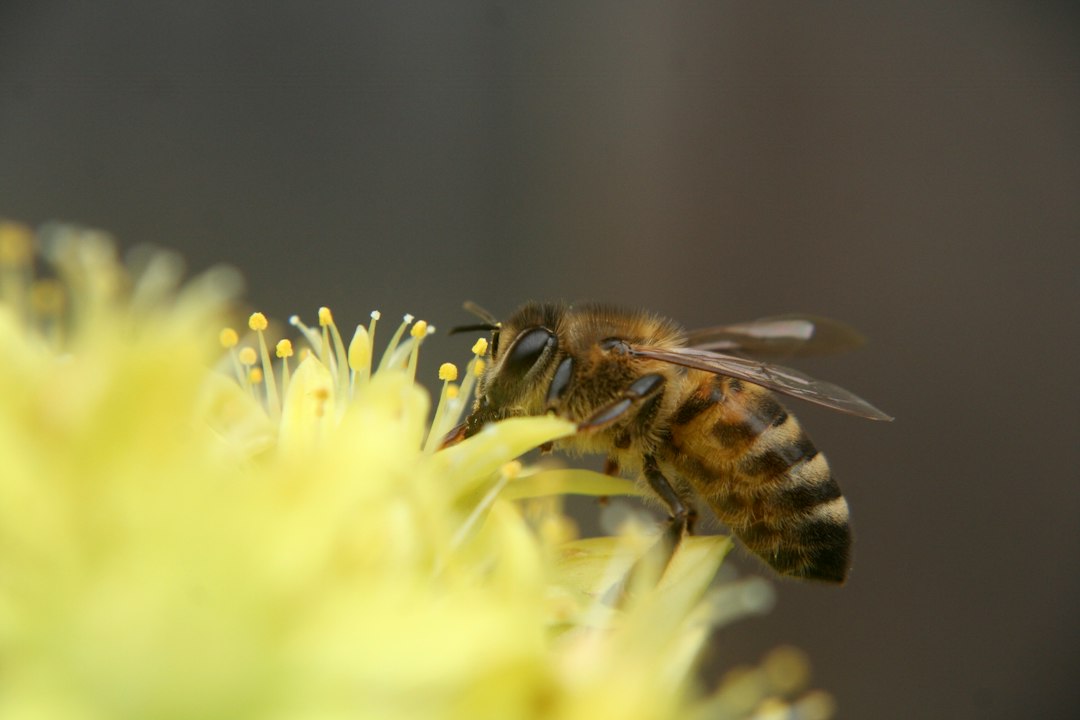
What Is Honeybee Robbing and Why It Happens
Honeybee robbing is the theft of stored honey by foragers from one colony attacking another. It is not random aggression. Bees are calculated foragers, and when natural nectar sources dry up, stored honey in a neighboring hive represents the most concentrated, reliable food source in the landscape. The same colony intelligence that makes bees efficient pollinators also makes them effective thieves when conditions favor the attempt.
Robbing events cluster around predictable windows.
Fall dearth. The most common trigger for most North American beekeepers. Once late-summer blooms finish and before winter preparations are complete, foragers have limited nectar to collect and strong motivation to investigate adjacent hives. This typically spans late August through October, overlapping almost exactly with honey harvest season. Beekeepers who open hives to pull supers and leave honey-wet frames sitting uncovered generate a powerful olfactory invitation for every forager within a mile.
Post-harvest equipment management. Wet supers left outside after extraction, cappings bowls sitting near the apiary, or extracted frames leaned against the hive are reliable robbing triggers. The honey smell from a recently processed super is detectable far beyond your property line.
Weak or queenless colonies. A colony that has lost its queen, failed to build population after installation, or been knocked back by disease or high mite loads is a high-value target. Depleted guard bee populations cannot hold an entrance against determined robbers. This is especially critical if you are running a nucleus colony alongside established hives heading into fall.
Warm spells in late fall. After reducing entrances for winter, beekeepers sometimes relax their vigilance. An unseasonably warm day revives forager activity across the entire apiary, and a colony that appeared secure under a reduced entrance can find itself overwhelmed if that entrance was not reduced aggressively enough. According to Penn State Extension, honey bee colonies can mount robbing expeditions at temperatures above 50 degrees Fahrenheit well into late fall, making late-season vigilance essential even after October.
The mechanism that makes robbing self-amplifying is important to understand. Scout robbers probe a target hive’s entrance and test the guard response. If guards respond weakly, the scout returns to her home colony and communicates the location using recruitment signals, exactly as she would communicate a rich flower patch. Within minutes, a trickle of probing robbers becomes a sustained assault. This is why early identification and fast response are so important: you are racing against an accelerating recruitment cycle.
How to Identify Honeybee Robbing in Progress
Catching robbing early is the difference between a disrupted event and a dead colony. The behavioral signatures are specific enough that with practice you can identify robbing from several feet away before you even approach the hive.
Erratic, circling flight near the entrance. Foragers returning home approach in purposeful, direct flight lines and land cleanly at the entrance. Robbers hover near the entrance, repeatedly approaching and retreating, testing the guard response. The pattern looks hesitant and probing rather than confident. Watch from a few feet back first.
Fighting at the entrance. This is the single most diagnostic sign. Robbing bees and guard bees engage in direct combat at and near the entrance, locking together and tumbling off the landing board. A busy, productive hive at peak forager activity does not produce this. Any wrestling behavior at the entrance, especially combined with erratic hovering, should be treated as robbing until you can confirm otherwise.
Torn and ragged cappings on stored frames. Robbers tear through wax cappings to access honey directly. Pull a frame during or after a suspected robbing event and examine the capped cells. Clean, intact cappings with smooth wax surfaces indicate no theft. Irregular holes punched through capping wax with ragged edges indicate that bees have been forcibly accessing stored cells.
Target colony population declining rapidly. A colony being actively robbed loses bees quickly as guard bees die defending the entrance. A hive that appeared healthy a day ago but now seems thin and demoralized has likely been under sustained assault.
The table below summarizes the key distinctions between robbing and a normal high-activity day:
| Signal | Robbing | Normal High Activity |
|---|---|---|
| Flight approach | Erratic, circling, hovering near entrance | Direct, purposeful flight lines |
| Entrance behavior | Combat, bees wrestling and falling | Orderly arrivals and departures |
| Cappings on frames | Torn, ragged, irregular holes | Smooth and intact |
| Guard bees | Overwhelmed, some fleeing | Active but controlled |
| Colony population | Declining visibly over hours | Stable or growing |
Orientation flights can produce superficially similar hovering near the entrance, but orientation bees face toward the hive memorizing landmarks rather than probing the entrance for access, and they do not produce combat or damaged comb. If you see hovering and no fighting, watch for a few more minutes and check the cappings before taking action.
How to Stop Honeybee Robbing Once It Starts
Speed is the primary variable in your favor. Execute this sequence as quickly as possible once you confirm robbing is under way.
-
Reduce the target hive’s entrance immediately to a one- or two-bee opening. Use whatever is within reach: a handful of grass stuffed into the entrance, a piece of folded burlap, your entrance reducer turned to its smallest setting. The goal is to give the remaining guard bees a chokepoint small enough to defend. The Mann Lake 10 Frame Mouse Guard provides a durable stainless steel narrow slot that works well for this purpose and doubles as mouse protection during the fall months when both threats are active simultaneously.
-
Install a robbing screen if you have one available. A robbing screen is the most effective single intervention during an active event. It redirects the hive entrance to a different position on the hive face, disorienting the robbing bees who have memorized the original location. Resident bees adapt to the new entry point within minutes; robbers are confused and lose effectiveness quickly. The Lehman’s Stoney Acres Robbing Screen is designed for 8-frame Langstroth hives, is easy to install, and is the kind of equipment worth having on hand before robbing season, not scrambling for during an active event.
-
Drape a damp towel or burlap over the front of the hive. The wet fabric disrupts the robbers’ approach path and partially masks the scent plume that is drawing in additional scouts. Resident bees adjust to the obstruction faster than robbers do. Leave it in place for several hours.
-
Remove all exposed honey, wet equipment, and wax from the apiary. Open supers, cappings bowls, and frames set outside the hive are amplifying the robbing signal. Seal them inside a container or building immediately. A robbing event fed by exposed honey outside the hive is significantly harder to shut down than one driven solely by a strong colony’s aggression against a weak target.
-
Keep the entrance restricted for a minimum of 72 hours after visible behavior stops. This is where many beekeepers fail. The frenzied robbing behavior may quiet within an hour after entrance reduction, which makes it tempting to restore normal access. Robber bees will re-test an entrance for multiple days. Releasing the restriction too early regularly restarts events that were nearly extinguished.
-
Inspect and feed the target colony once robbing is fully controlled. A colony that has been robbed for even a few hours may have lost substantial stores and needs supplemental feeding. Use an internal feeder rather than an entrance feeder during the weeks following a robbing event. Entrance feeders leak scent and can reinitiate robbing in a colony that is already on the radar of neighboring foragers. The BeeCastle Bee Pro Feeder Beehive Frame Feeder is a frame feeder designed to sit inside the hive body rather than at the entrance, making it a better choice during high-risk dearth periods.
If the target colony is genuinely overwhelmed and too weak to defend even a severely reduced entrance, combining it with a stronger colony may be the most practical resolution. The How to Combine Weak Hives Safely guide covers the newspaper method and timing considerations in full.
Preventing Honeybee Robbing Before the Dearth Hits
Prevention is easier than response. Most of it comes down to two categories: colony strength and beekeeper discipline around exposed honey.
Build strong populations heading into fall. A populous colony defends itself effectively. A colony with a productive queen, a full complement of foragers and nurse bees, and substantial stores heading into August is not an easy robbing target. The practical implication here is that mite load control matters for robbing prevention as much as it does for colony health. Colonies with high varroa loads in late summer frequently have suppressed populations, compromised immune function, and reduced guard capacity, making them prime targets precisely when dearth conditions peak. Address mite loads in July and August, not October.
Reduce entrances proportional to colony strength before dearth begins. A full-width entrance is appropriate for a strong midsummer colony drawing nectar. The same entrance on a split made in late July or a nucleus colony installed in August is an undefended gap. Apiculture extension guidance generally recommends reducing to a 3/8-inch height for small or developing colonies and restricting full-size hive entrances to 4-6 inches in width once the main nectar flow ends. Do not wait for robbing activity before making this adjustment.
Feed discreetly during high-risk periods. Open feeding methods, including entrance feeders running during dearth, syrup bowls placed near hives, and division board feeders without tight lids, broadcast food-availability signals to foragers from colonies across the landscape. Internal feeders that keep syrup sealed within the hive body eliminate this exposure. If you need to use an entrance feeder, do it in the evening when forager activity is low, and monitor closely for signs of interest from neighboring colonies the following morning.
Control hive inspections during peak dearth hours. Every opened hive is a scent event. During the fall dearth, minimize how long hives stay open, avoid leaving frames sitting on top of the hive body, and close up before mid-afternoon when forager activity from neighboring colonies is at its highest. The Bee Informed Partnership tracks beekeeper management practices across thousands of operations annually, and their survey data consistently shows that colonies managed with tighter late-summer practices have lower loss rates through fall and winter. Robbing-related colony loss is one of the mechanisms embedded in that pattern.
Keep apiary surfaces clean. Spilled syrup, wax fragments, and honey residue on the ground, on hive tools, or on the landing board attract scouting foragers that can initiate robbing events from a standing start. Wipe down equipment after inspections, clean up syrup spills promptly, and avoid processing anything honey-related near hive entrances during high-risk periods.
Common Mistakes That Trigger Honeybee Robbing
Most robbing events are not bad luck. They trace directly to specific, avoidable beekeeper behaviors that create the conditions robbers are waiting for.
Feeding with entrance feeders during dearth. Entrance feeders are convenient and easy to monitor, which is why they are popular with newer beekeepers. They are also problematic during robbing season because they drip, overflow when temperatures shift, and expose syrup scent directly at the entrance. Switching to internal feeders before the dearth period begins eliminates this trigger with no downside.
Opening hives at peak robbing hours without a specific reason. Mid-afternoon on a warm fall day is the worst time to conduct a discretionary inspection. Exposing frames during peak forager activity releases honey scent at exactly the moment neighboring colonies have their most active scouts airborne. If an inspection can reasonably wait until early morning when forager activity is lower, take that option during dearth conditions.
Assuming robbing stops on its own. Robbing is not self-limiting in a way that protects the target colony. Without intervention, it escalates until the target colony’s stores are depleted and the colony collapses. Once robbers have successfully stripped one hive, they retain the memory of the location and may return across subsequent days. In apiaries where multiple colonies are close together, a single unaddressed robbing event can cascade to additional hives once the first target is exhausted.
Leaving post-harvest equipment unsecured near the apiary. Wet supers, cappings containers, and recently extracted frames represent some of the most powerful robbing stimulants a beekeeper can create. Moving this equipment into a sealed building the same day as extraction eliminates the risk. Leaving it overnight near the hives, or even accessible in an open garage with a window, consistently triggers scout activity that escalates to full robbing within hours.
Failing to address weak or struggling colonies before dearth hits. A nucleus that built slowly, a colony recovering from disease treatment, or a hive weakened by a late swarm is both a robbing target and a risk multiplier for the rest of the apiary. Once a weak colony is robbed out, the attacking colony’s scouts return home having identified a reliable food source, reinforcing future robbing behavior. Address weak colonies proactively: combine them if they cannot survive independently, reduce their entrances aggressively, or move them at least two miles away from the main apiary during the most vulnerable fall window.
Underestimating foraging range. Robber bees regularly travel a mile or more. The source of your robbing event may not be the hive immediately adjacent. A strong colony a quarter mile away can and will locate a weak target in your yard. This is why entrance management and colony strength matter even for beekeepers who operate a single hive and assume they have no “neighbor” colonies to worry about.
Frequently Asked Questions About Honeybee Robbing
How can I tell whether my hive is being robbed or just has unusually heavy normal traffic?
The two most reliable indicators are physical combat at the entrance and damaged cappings on stored frames. Normal forager traffic at peak activity, even on a very productive nectar day, does not produce bees wrestling together and falling off the landing board. If you observe paired bees locked in combat at the entrance, treat it as robbing until you can confirm otherwise. Pull a frame and examine the capped cells: smooth, intact wax indicates no theft, while ragged holes punched through cappings indicate robbers have been accessing stored honey. Orientation flights can mimic hovering patterns superficially, but orientation bees produce no fighting and cause no damaged comb.
Can a strong, healthy colony get robbed, or only weak ones?
Robbing overwhelmingly targets weaker colonies, but strong colonies are not immune under specific conditions. If a very populous, aggressive robbing colony occupies the same apiary and a medium-strength hive has a full-width entrance during fall dearth, the stronger colony can overwhelm it. More commonly, robbing risk scales directly with colony strength: splits made late in the season, recently installed packages, nucleus colonies that underperformed during buildup, and colonies recovering from treatment are the highest-risk targets. Keeping all colonies in your apiary at or above a minimum population threshold heading into late summer is the most reliable preventive measure you have.
Should I move the target hive to stop an active robbing event?
Physical relocation by at least two miles will stop robbing because it removes the colony from the foraging range of the attackers. It is also a significant intervention that is logistically difficult for most backyard beekeepers. Entrance reduction combined with a robbing screen should be your first line of response in nearly every situation. Reserve relocation for cases where the target colony is so weak it cannot be protected in place even with maximum entrance restriction and a damp drape over the entrance. If you do move a hive during an active event, reduce the entrance before transport and move it to a separate apiary rather than just across the yard.
How long does a typical robbing event last if I take action?
With entrance reduction and a robbing screen in place, the frenzied robbing behavior typically diminishes within 24-48 hours as robbers lose their orientation to the entrance they memorized. However, residual probing behavior can continue for several additional days as foragers re-test the location. Maintain entrance restrictions for a minimum of 72 hours after visible fighting stops before relaxing them. Beekeepers who relax restrictions too soon routinely find robbing restarts within hours, often more intensely than before because the robbing population now has a well-reinforced location memory. Without any intervention, a determined event will run until the target colony is depleted of stores.
Conclusion
Honeybee robbing is predictable, seasonal, and largely preventable with consistent apiary discipline. The response protocol is straightforward: reduce the entrance immediately, install a robbing screen, clear all exposed honey from the area, and maintain restrictions long enough for the behavior to fully extinguish. Prevention is more manageable still and comes down to keeping colonies strong through late summer, feeding discreetly during dearth, and avoiding the specific beekeeper behaviors that create olfactory invitations for neighboring foragers.
If you are heading into fall with a mix of established colonies and younger hives still building population, now is the time to reduce entrances, stock a robbing screen, and tighten your inspection practices. The beekeepers who lose colonies to robbing are rarely doing something dramatically wrong. They left a super out an hour too long, or skipped an entrance reduction on a nuc that seemed to be building fine. Those small gaps in discipline compound fast during dearth conditions. Fix them before they cost you a colony.
For a full seasonal checklist that integrates fall dearth management with the rest of the year’s critical tasks, see How To Prepare Your Apiary For Winter.
If this guide helped you catch a robbing event early, bookmark it for next fall and share it with a fellow beekeeper who keeps nucleus colonies close to established hives.
Related Reading
- Protecting Hives From Wasps Hornets And Backyard Predators - broader hive defense strategies for external threats throughout the season
- Early Warning Signs Your Bee Colony Is In Trouble - behavioral and physical cues that signal a colony is declining before a crisis develops