Comparing hive types finding the best setup for your backyard apiary
This post contains affiliate links. As an Amazon Associate, I earn from qualifying purchases at no extra cost to you.
Choosing among hive types is the first decision that shapes every later one, and most new keepers make it based on a photograph. A handcrafted top-bar hive looks gentle and natural. A stack of Langstroth boxes looks industrial. Neither impression tells you what the hive will demand of you on a hot July afternoon, when you are holding a heavy box and the colony needs more room.
Here is the position this guide takes: for most backyard beekeepers, a Langstroth hive is the best setup. Extension-service guidance, nucleus colonies, replacement parts, and local mentors all assume Langstroth equipment, and that support network matters more in year one than any philosophical appeal of an alternative. Top-bar and Warré hives are legitimate choices, but they suit a specific temperament and they trade away honey yield and flexibility.
That does not mean the choice is automatic. Box size, your lifting ability, your climate, local apiary law, and your honey goals all change the answer. The sections below compare the main hive types on those practical points, then give you a decision framework you can run through in ten minutes.
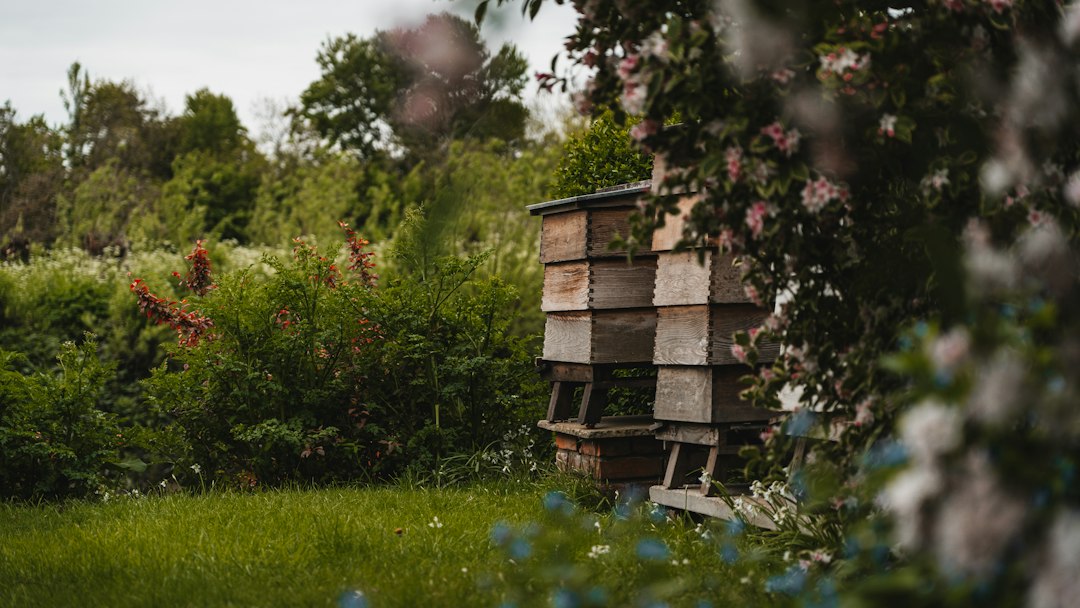
Photo by Eric Dekker on Unsplash
Langstroth Hives: The Standard Among Hive Types
The Langstroth hive was developed in the 1850s around one observation: bees leave roughly a 3/8 inch passage, called bee space, and they do not glue things down in gaps of that size. Build every part to respect that spacing and you get frames that lift out individually, without tearing comb or crushing bees. Nearly every modern commercial and hobby hive in North America descends from that idea.
Why Langstroth Wins on Support
A Langstroth hive is a vertical stack of identical boxes holding removable frames. Boxes come in three common depths: deep, medium, and shallow. Because the dimensions are standardized across manufacturers, a frame from one supplier fits a box from another. Nucleus colonies are generally sold on standard deep frames, so moving a nuc into a Langstroth hive is a transfer of intact frames rather than a rebuild. Our guide on nuc boxes versus full-size hives walks through exactly when that transfer should happen.
Standardization also makes colony management practical. You can swap a frame of brood from a strong colony to a weak one, combine two colonies in autumn, add a super when the flow starts, or remove frames to sample for mites. Extension publications and the Bee Informed Partnership’s management resources at beeinformed.org are written with movable-frame hives in mind, so the advice you read will usually apply directly to your boxes.
The Real Downsides
Weight is the main complaint. A 10-frame deep box full of honey and brood commonly weighs somewhere around 80 to 90 pounds, and a full 10-frame medium is typically in the 50 to 60 pound range. Lifting those boxes repeatedly is the leading reason hobbyists switch equipment or quit. Langstroth hives also involve more parts to buy, paint, and store, and the upfront cost per colony is usually higher than a simple top-bar build.
Eight Frame or Ten Frame?
Eight-frame boxes are narrower and lighter, which helps if lifting is a concern, though equipment is slightly less common than 10-frame gear. Ten-frame is the default most suppliers stock. If you have no physical limitation, 10-frame is the safer choice for availability. If you do, choose 8-frame boxes, and consider using mediums for the entire hive so every box weighs less and every frame is interchangeable.
Flow-style harvesting frames are also built to fit Langstroth supers. They are an option, not a different hive type, which is a point in Langstroth’s favor: you can add a specialty harvesting system later without abandoning your base equipment.
Top-Bar and Warré: Alternative Hive Types Worth Considering
Top-bar and Warré hives appeal to keepers who want lower cost, minimal intervention, or less lifting. Both are real, workable options. They also come with tradeoffs that photographs rarely show.
The Horizontal Top-Bar Hive
A top-bar hive is a long horizontal box, usually at a comfortable working height, with a row of bars across the top. Bees build comb downward from each bar without a rigid frame. Everything happens at one level, so you never lift a heavy box. That is a genuine advantage for keepers with back problems or limited strength.
Harvest is the central tradeoff. You typically cut comb from the bars, crush and strain it, and let the bees rebuild. Bees spend significant energy producing new wax, so honey yields are generally lower than in a hive where drawn comb is spun in an extractor and returned. If you want cut-comb honey and some beeswax, that is a feature. If you want gallons of extracted honey, it is a limitation.
Top-bar comb is also fragile in summer heat and when handled carelessly, and the horizontal layout can make overwintering harder in cold climates because the colony must move sideways through stores. Equipment is less standardized, so a nuc built for deep Langstroth frames will not drop straight in.
The Warré Hive
The Warré hive is a vertical hive of small, square boxes with top bars instead of frames. New boxes are added underneath the existing nest, a practice called nadiring, and honey is harvested from the top boxes. A quilt box above the colony absorbs moisture and adds insulation. The system is designed for minimal disruption, with few inspections.
The weakness is that limited inspection means limited information. Checking for disease, queen failure, or mite loads is harder when comb is attached to the box walls and you are not routinely lifting frames. Varroa pressure is the main reason that approach is difficult in much of North America. Our guide to varroa mite management without chemical treatments shows how much monitoring depends on being able to see inside the colony.
A Legal Check Before You Build
Some jurisdictions require hives to have movable frames or comb that can be removed for inspection, so state apiary inspectors can check for disease. Fixed-comb designs may not satisfy those rules everywhere. Confirm your state or local requirements with your apiary inspector or extension office, and review the USDA APHIS resources on honey bee health before committing to a design. Our post on urban beekeeping regulations covers zoning issues that apply regardless of hive type.
Comparing Hive Types Side by Side
This table summarizes how the main hive types differ on the factors that matter most to a hobbyist. Costs are described in relative terms, because pricing varies by supplier and season.
| Factor | Langstroth 10-frame | Langstroth 8-frame | Horizontal top-bar | Warré |
|---|---|---|---|---|
| Equipment availability | Excellent | Good | Limited, often homemade | Limited |
| Heavy lifting | High (deep boxes) | Moderate | Very little | Moderate, smaller boxes |
| Honey yield potential | Highest (comb reused) | High | Lower (comb rebuilt) | Lower |
| Inspection ease | Excellent | Excellent | Good, but comb is fragile | Limited |
| Nuc compatibility | Direct | Direct | Requires conversion | Requires conversion |
| Mite monitoring and treatment | Straightforward | Straightforward | Workable, more awkward | Difficult |
| Upfront cost | Higher | Moderate to higher | Low if self-built | Low to moderate |
| Best for | Most beginners | Keepers who want lighter boxes | Low-lift, low-yield hobbyists | Minimal-intervention enthusiasts |
How to Read the Table
The columns that matter most to a first-year keeper are inspection ease, nuc compatibility, and mite monitoring. Those three determine how quickly you can find and fix problems, and in the first season, problems are the main source of colony loss. Langstroth scores strongest on all three.
The lifting row is where alternatives pull ahead. If your realistic limit is 30 or 40 pounds, a 10-frame deep Langstroth is a poor fit, but a Langstroth built entirely from 8-frame mediums, a top-bar hive, or a Warré may suit you better. The honey yield row matters if you plan to sell product. A side business depends on predictable extraction volume, which is why our guide on building a profitable beekeeping side business assumes reusable drawn comb.
No row in this table decides the question alone. The framework below weights them against your actual circumstances.
Finding the Best Setup for Your Backyard Apiary
Use these five steps in order. Each one narrows the field, and by the end the best setup is usually obvious.
- Check the rules first. Confirm local zoning, registration requirements, and any movable-frame rule with your extension office or apiary inspector. This can eliminate fixed-comb designs immediately and costs nothing.
- Set your lifting limit honestly. Lift a 40-pound bag of soil from the ground to chest height several times. If that is already difficult, plan on 8-frame boxes, all-medium equipment, or a horizontal top-bar hive.
- Decide what you want from the hive. If you want extracted honey in volume, choose Langstroth. If you want a few comb-honey cuts and wax, top-bar is reasonable. If you mainly want pollination and observation, any workable type will do.
- Check your support network. Ask local beekeepers which hive types they run. A local club that uses Langstroth equipment can lend you frames, diagnose problems, and sell you nucs that fit your boxes.
- Choose standard parts and buy once. Pick one box size for the whole hive if you can, and avoid mixing dimensions across suppliers.
If you finish this list and are still undecided, choose a 10-frame Langstroth, or an 8-frame version if weight worries you. It is the lowest-regret option.
Box Sizing Choices That Affect Your Back
Many hobbyists start with deeps for the brood nest and mediums for honey supers. That works, but it means two frame sizes in the same hive, so frames are not interchangeable between boxes. A single-size system, such as all mediums, simplifies management and reduces weight per box, at the cost of needing more boxes to hold the same brood nest. The main tradeoff is simplicity and weight against box count. If you manage several colonies, single-size equipment is usually worth it.
Starter Equipment Worth Considering
For a first Langstroth setup, one option is the Mann Lake Complete Hive Kit Combo, 10 Frame, Painted, which is listed as including one deep and one medium super box in quality pine. That combination gives you a brood box and a honey box in standard 10-frame size. Before ordering, confirm what is included with the kit, specifically frames, foundation, bottom board, inner cover, and outer cover, so you are not surprised on installation day. Also remember that a deep plus a medium is the mixed-size setup described above, so plan your future boxes accordingly. If you want to compare other bundles, our guide to beginner beekeeping starter kits under 150 breaks down what typically comes in each.
Protective gear matters just as much as the hive. A ventilated suit such as the Humble Bee 430 Ventilated Beekeeping Suit with Round Veil is a sensible option for warm climates, since a ventilated suit with a veil lets you work calmly in summer heat. Calm movements make inspections safer for you and less stressful for the bees.
A hive tool is essential for every inspection. A stainless steel J-hook model lets you open boxes and lift frames without damaging wood or crushing bees. The Sunshane 2 Pack Stainless Steel Bee Hive Tool J Hook Bee Frame Lifter and Scraper is a 10.5 inch frame lifter and scraper, and it’s a tool you’ll reach for at every inspection.
If weight is a concern and you cannot lift a full 10-frame deep repeatedly, an 8-frame Langstroth hive kit maintains full compatibility with standardized equipment while reducing box weight by roughly 20 percent. An 8-frame deep typically weighs 60 to 70 pounds full rather than 80 to 90, a difference that compounds over a season of lifting.
For tracking varroa mites, a varroa sticky board or monitoring board placed under a screened bottom board gives you reliable mite counts instead of guesswork. Early detection of rising mite pressure lets you respond before populations crash, and the tool is inexpensive compared to colony loss.
Safety note: Bee stings can cause severe allergic reactions, including anaphylaxis, in some people. If you have never been stung, or you suspect an allergy, speak with a physician before installing a colony. Keep an epinephrine auto-injector accessible if one is prescribed, never work bees alone if you are unsure of your reaction, and call emergency services if you experience swelling beyond the sting site, trouble breathing, or dizziness.
Common Hive Type Mistakes to Avoid
Most hive-type mistakes come from choosing for appearance, price, or ideology, rather than for how the equipment will be used over three or four years. These are the problems that show up most often.
Buying a design nobody near you uses. If every local keeper runs Langstroth and you buy a Warré, you lose borrowed frames, shared advice, and nuc compatibility. The cost is rarely obvious until a colony has a problem and nobody nearby can help.
Ignoring weight until the first honey flow. A full deep box feels manageable in April and punishing in August. Decide your lifting limit before you buy, not after your back tells you.
Mixing box sizes across suppliers. Boxes that look identical can differ slightly in dimension. Frames that do not fit cause burr comb, crushed bees, and slow inspections. Buy a matched system and verify frame compatibility whenever you add equipment.
Choosing a fixed-comb hive without checking local law. If your state requires movable frames, a non-compliant hive can force you to rebuild or relocate colonies. A five-minute call to your extension office prevents that.
Skipping mite monitoring because the hive is awkward to open. Hive types that discourage inspection make it easy to avoid checking varroa loads, and untreated mite pressure is a leading cause of colony loss. If your hive design makes monitoring hard, build a plan for it before installing bees. Review the early warning signs your bee colony is in trouble so you know what to look for.
Underestimating winter. A hive that cannot be insulated, reduced, or combined easily leaves little room for error. See our guide on preparing your apiary for winter and plan your hive around cold-season needs, not just summer convenience.
Frequently Asked Questions
What is the best hive type for a beginner?
For most beginners, the best hive type is a standard Langstroth, in 8-frame or 10-frame size. The reasons are practical rather than ideological. Equipment is widely available, extension advice assumes movable frames, nucleus colonies arrive on standard frames, and local mentors almost certainly run similar gear. You can inspect brood, check for disease, monitor mites, and combine colonies without improvising. The main drawback is weight, which you can reduce with 8-frame boxes or all-medium equipment. If you have physical limitations that rule out lifting boxes, a horizontal top-bar hive is a reasonable second choice.
Are top-bar hives better for bees than Langstroth hives?
There is no strong evidence that top-bar hives are inherently better for bee health. Colony outcomes depend far more on mite management, nutrition, queen quality, and weather than on box shape. Top-bar hives let bees build natural comb without foundation, which some keepers value, and they avoid heavy lifting. But the same management demands apply: monitoring varroa, preventing swarming, and preparing for winter. Because top-bar comb is more fragile and standard treatment methods are harder to apply, careful keepers must work harder to maintain colony health. Choose a top-bar for lifestyle and philosophy reasons, not because it is assumed to be healthier.
How much honey can I expect from different hive types?
Langstroth hives generally produce the most honey because drawn comb can be extracted and returned, saving bees the energy of building wax. Top-bar and Warré hives usually yield less, since comb is cut or crushed and rebuilt. Actual yields depend heavily on local forage, weather, colony strength, and management, so specific numbers vary widely by region and year. A first-year colony often produces little or no surplus honey while it builds comb and population, regardless of hive type. If honey volume is a priority, particularly for selling, choose Langstroth equipment and expect to wait until the second season for meaningful harvests.
Can I switch hive types later if I change my mind?
Yes, but it costs time and money, so it is better to choose carefully at the start. Moving a colony from one hive type to another typically requires transferring comb or building a new colony in the new box, which is easier from a Langstroth to a top-bar than the reverse. Mixed equipment also tends to sit unused. If you are uncertain, start with a single Langstroth colony and a standard box size. Your equipment will remain useful even if you later add a second hive of a different type, because frames, tools, and protective gear all carry over.
Conclusion
The best setup for your backyard apiary is the one you can inspect, lift, and afford over several seasons. For most keepers, that means a Langstroth hive in the box size your back can handle, built from matched equipment, with local mentors who run the same system. Choose a top-bar or Warré hive only if you have a clear reason, such as limited lifting ability or a specific preference for minimal intervention, and you have verified local rules.
Your next action is concrete: call your extension office or local beekeeping club this week, confirm your legal requirements, and ask what hive types the keepers near you use. Then pick your box size, order matched equipment, and plan your protective gear before the bees arrive.
If this comparison helped, bookmark the page so you can come back to the framework when you are ready to order.
Related reading